One movie is an experience. Four is a consensus. The female filmmakers of America have agreed: modern motherhood is hell on earth. The mommies at the centre of these recent movies are all wealthy, with every societal advantage their husband’s money can buy. (They’re all thin and white too, if we want to make things really awkward.) If only their children appreciated them! Those little kids, who simply have no idea how much work they are, who do not notice how little their fathers care for them, and who are blissfully unaware how much suffering their existence is causing their poor, innocent mothers. Their mothers are people! More than that, they are ARTISTS! Or at least they used to be, before they had their babies. The Last Day manages to go slightly further than If I Had Legs I’d Kick You, Die My Love, and Nightbitch in that it’s about two privileged moms who feel imprisoned by and resentful of their own children. But The Last Day also ignores the bigger picture, meaning it’s also a failure, but here it’s one with an unpleasantly vicious twist.
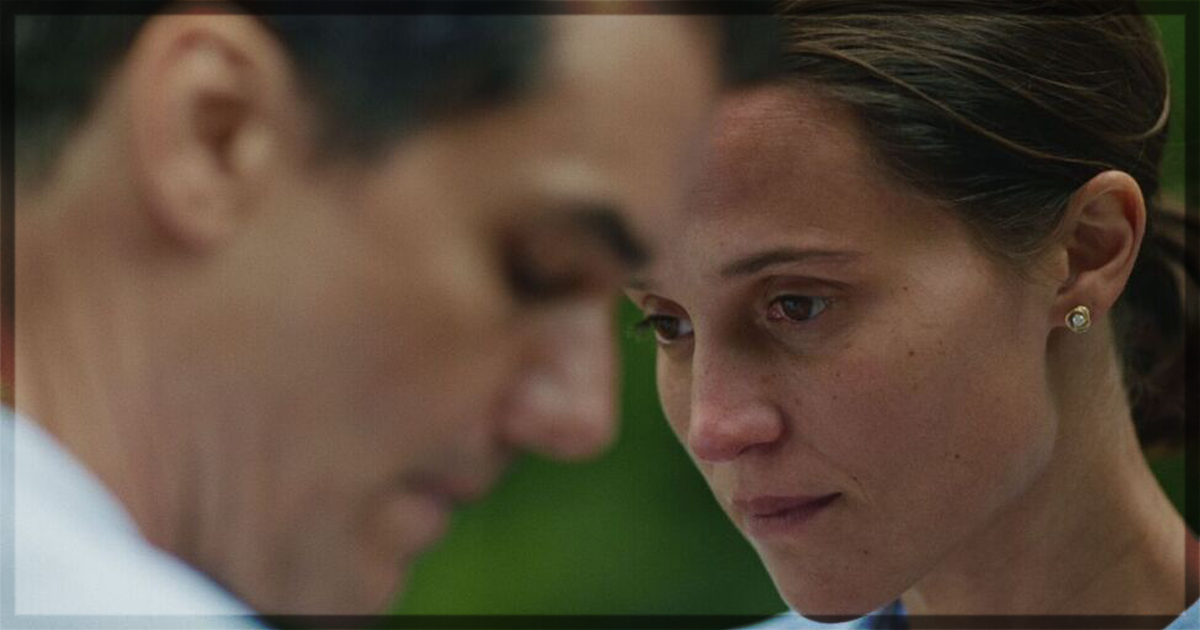
It’s the Fourth of July in upstate New York and they notice each other in a parking lot during a morning coffee and pastry run. Well, Julia (Alicia Vikander) notices Taylor (Victoria Pedretti), since Taylor hasn’t noticed she forgot her wallet on the roof of her car before driving off. Julia picks it up to return later on, and then the two women go about their days. Julia and her husband are hosting their major annual party, with hundreds of guests due in the grounds of their home in eight or so hours. This means Julia’s husband goes to work as normal, Julia delegates everything to the huge team of party planners and caterers she hires every year, and takes her daughter to a doctor’s appointment on the Upper East Side. Taylor’s two older children are taken to daycare by her husband as an extraordinary favour, since she has just returned from an extended stay in a mental hospital. Post-partum depression after having their third child was the cause. But everything is better now. Taylor being left home alone with the baby for hours all day is of course absolutely fine.
While Julia is in that doctor’s office, she ends up getting some Botox while she’s there. She’s anxious about a meeting with her editor (Marin Ireland) to discuss the novel she’s allegedly been working on, though she hasn’t published anything since her child was born. Thirteen years ago. Julia has focused on being a mother and that is of course absolutely fine. Until she bumps into an ex (in the most surprising cameo in any movie in some time, Wagner Moura), who’s been enjoying his own award-winning literary career in the decades since their break-up. Being a parent hasn’t stopped him from working, he gently says in the face of her rudeness and resentment. But it’s different for men! The ex doesn’t agree, but Julia knows she’s right. And well, she’s not wrong. But this spectacularly misses the point.
The real trouble is writer-director Rachel Rose has no idea if anyone other than the children are responsible for the hard time these mothers are having. Maybe we shouldn’t be annoyed with her since Lynne Ramsay, Marielle Heller and Mary Bronstein were also totally stumped, but there’s enough irritation at the short-sighted selfishness demonstrated by all of them to go around. When is someone going to make an American movie that asks how family life is meant to thrive when every relationship, including that of a parent and child, is transactional? One that asks why fathers nope out of their day-to-day parenting responsibilities and then get angry when their wives crack up? How about a movie that wonders about whether cutthroat capitalism has altered the most intimate relationships of our lives? Or maybe even one that questions why American society is so isolating and judgemental that someone would rather [upsetting spoiler here] than ask for help?
Instead all these talented female writers and directors are making the same tiresome movie over and over again. In this movie a woman, who used to be an artist and thought she was smart, has a baby. Pretty quickly she realises the needs of a small child don’t allow space for her artistic career, and therefore her talents, intelligence and time are only enabling a critical and/or absent husband not to have to hire a housekeeper and/or a nanny. But the selfish, spoiled, screaming children don’t appreciate her either. She could drain herself dry and the kids would still throw a tantrum about being thirsty. She could die on the side of the road, like the deer hit by a car whose body bookends The Last Day, and her family would only notice when dinner was late. Nothing is ever enough for them. The woman comes to realise that, despite her intelligence, thanks to her motherhood she has fallen into the oldest trap there is for a woman: financial dependence on a bad man in the name of love that cannot be altered without damaging her children. The final insult is that in all of these movies, the concepts of feminism and community do not exist, mainly because the heroine thought she was too privileged and/or special to need either of those things. Instead these women are left to resolve their problems alone by sacrificing their mental health. And, if we are lucky, their mental health is the only thing they sacrifice.
Eric Yue’s hazy cinematography gives the sense that both Taylor and Julia are waking up from a very bad dream. Ms. Pedretti has only one real note to play as Taylor but she does it to perfection. The picture she paints of spiralling mental illness and desperate attempts to keep it together in the face of a world that couldn’t care less is nuanced, thoughtful, and very hard to watch. That means the choice to keep the focus on Julia is a strange one. Ms. Vikander does her normal excellent work depicting a woman who realises, over one single day, the consequences of using motherhood as a excuse to forfeit responsibility for her own life. But Julia’s day is the least important of the two. All that can be said is that it’s the easiest to watch.
Even so the ending, for which it’s not a spoiler to say that Julia spends her part of it high on ketamine, takes the easy way out. The worst horror is hidden from us, badly blunting its impact, and the focus remains tightly on the characters least deserving of our sympathy. Instead there’s so much selfishness on display that it’s the main thing you remember. All these wealthy people in their big houses think life is about getting instead of giving, and are continually surprised the children they are raising to be self-centered have learned their lessons perfectly.
Perhaps it’s unfair to complain that Ms. Rose is just another one of the directors who has mangled the point of her own movie about motherhood. But I’d like to know is where are the American movies about mothers trying to parent without all this wealth and splendor? Where are the American movies about mothers who get childcare by trading favours, whose exes don’t pay the child support on time, and whose work is backbreaking labour only to keep the wolf from the door? None of these artists seem capable of looking beyond their own fingernails when they make their art about how hard it is to be a mommy. Though a movie that was honest about current working-class motherhood in America, aka any story that didn’t have all this money in it, would be so remorselessly depressing that it would never get greenlit. In fairness to The Last Day it makes its point as well as as the current market will allow. But it’s so shallow and heartless that it’s not worth the watch.
The Last Day recently premiered at the Tribeca Film Festival.
Learn more about the film at the Tribeca site for the title.
You might also like…