Elevated horror. A term coined in the mid-2010s that has since polarised cinephiles. Its existence implies a two-tier approach to the horror genre, where psychologically driven, socially conscious, and metaphorically rich plots are superior to traditional genre fare, comprising slashers, exploitation and creature features. But modern studios didn’t invent this style of horror.
But perhaps the label’s greatest sin is how it virtually ignores and downplays everything that came before it. It’s almost as if the likes of Hereditary, The Witch, and The Babadook invented thought-provoking and subtext-rich filmmaking and nothing made before them came even close.
And while titles such as Rosemary’s Baby, The Exorcist, and Don’t Look Now are the clearer, most popular examples of successful precursors that could fit the moniker’s mould, the truth is that even sleazier, low-budget films with modest profiles have been covering the same ground as their more prestigious contemporary counterparts.
If you’re looking for smart, vintage horror movies with social commentary that beat modern elevated horror at its own game this Halloween, start with these seven classics.
Society (1989)
Brian Yuzna‘s body horror classic rarely makes the rounds when discussing class-exploitation-anchored horror titles. Fellow ’80s releases such as The Stuff and They Live tend to dominate the discussion around the genre’s anti-capitalist tendencies, while Society takes a back seat despite offering one of the goriest and most uncompromising portrayals of class inequality.
Set in Beverly Hills, Yuzna‘s movie centres on Bill Whitney, a teenager born into a world of privilege but always struggling to fit in. His suspicion that all is not well evolves from a possible case of paranoia to a full conviction, as a bloody trail leads him to a terrifying discovery.
Boasting impressive practical effects and a brisk pace, Society turns class exploitation into a literal horror satire, ditching subtext subtleties and having the horror mechanics embody the full political argument. It’s also proof that you don’t need to embrace the finesse of The Menu or Get Out to deliver an equally incisive piece of social commentary. Horror doesn’t need to abandon exploitation, gore or outrageous spectacle to have something intelligent to say.
Where to Watch: Society is available to watch on Fubo or rent on Fandango.
It’s Alive (1974)
Larry Cohen is a paradoxical filmmaker. On the one hand, he’s hardly a creator of highbrow entertainment. On the other, you cannot accuse his movies of lacking depth. And no better movie drives that point home than It’s Alive. In this 1974 release, the Davis family joyfully awaits the arrival of their second child only to be confronted with an unimaginable nightmare: a newborn who is a killer mutant.
Instead of focusing solely on how society deals with difference, Cohen chose to point the camera and the finger towards big pharma, environmental contamination, and commercial interests over human lives as the real culprits behind the Davis family’s tragedy.
Drawing from real-life anxieties, namely thalidomide-caused birth defects of the 1950s and 1960s, It’s Alive turns its outrageous premise into an indictment of corporate negligence and the dangers of unchecked scientific progress, while also exploring the darker side of parenthood. The Babadook and Hatching would tackle this last point, decades later, but Cohen did it first with a far more outlandish blueprint.
Where to Watch: It’s Alive is available to stream on Plex or to rent on Prime Video.
Pin (1988)
Modern horror has virtually claimed a monopoly on trauma. It’s the usual culprit and a regular presence in almost all new releases. Yet Sandor Stern had already delivered one of the most unsettling examinations of family and generational dysfunction in Pin. This 1988 title follows the Linden siblings and their austere, emotionally distant father (played by Terry O’Quinn), who has the peculiar habit of communicating with his offspring through an anatomical mannequin named Pin.
With its focus on psychological unease, Stern tackles the consequences of emotional neglect, sexual repression, and atypical parenting techniques. The titular Pin is presented as a stand-in for genuine affection and a source of guidance the children lack from their parents, blurring the lines between imaginary companionship and parental authority.
Much like Saint Maud and Midsommar, the movie finds its horrors in the real consequences of isolation and distorted belief systems. Unlike these two titles, Stern achieves the same result without scenic backgrounds and with fewer resources, delivering something that could easily have been dismissed as another ‘killer-doll’ movie.
Where to Watch: Pin is available to rent or buy on Prime Video.
The Stepfather (1987)
Several horror entries have tackled the impossible ideal of the nuclear family, but The Stepfather stands as a cut above the rest (pun intended). The second movie on this list starring the legendary Terry O’Quinn finds the actor from Lost as a seemingly respectable suburban patriarch whose obsession with domestic perfection conceals something far more sinister.
What makes this entry particularly disturbing and extremely effective is the whole ideology behind its lead character, one that leaves no room for individuality or disagreement, turning the blissful promise of family stability into a form of psychological imprisonment.
Goodnight Mommy and Speak No Evil would later explore the negative implications of family relationships and domestic appearances, but The Stepfather exposed the horror lurking beneath suburbia’s brand of respectability, showing us how the most frightening monsters sometimes come disguised as model citizens.
Where to Watch: The Stepfather is available to watch on Roku, Pluto and Prime Video.
The People Under The Stairs (1991)
It’s practically impossible to have a list covering proto-elevated horror movies and fail to mention Wes Craven, a man whose horror filmography is filled with excellent candidates. The People Under The Stairs was a commercially successful but critically divisive, prescient tale of growing economic inequality and the lingering consequences of controversial policies, crafted by a filmmaker who never shied away from infusing his movies with social commentary.
In a macabre twist on the home invasion trope, the film finds a young African American boy whose family is getting evicted as he attempts to rob his wealthy landlords, only to discover the sinister secrets that their household conceals.
The landlords’ household becomes a grotesque representation of exploitation of society’s most vulnerable and the self-fulfilling prophecy of a system that promotes divisions through intimidation and deprivation. Long before Barbarian and Us turned residential spaces into nightmarish expressions of society, Craven had made a seemingly normal residence into a monument to institutional cruelty.
Where to Watch: The People Under the Stairs is available to watch on Peacock TV or on Prime Video.
Silent Night, Deadly Night (1984)
Few slashers have generated as much controversy over their plot as Silent Night, Deadly Night. The premise of a homicidal Santa Claus was deemed a step too far for the moral gatekeepers of the Reagan era. Still, underneath its sleazy packaging lies a surprisingly thoughtful examination of childhood trauma, religious repression and the dangers of mixing morality and punishment. Themes that got diluted throughout increasingly sillier sequels.
Charles E. Sellier‘s movie introduces Billy, a young boy whose traumatic encounter with a murderous burglar dressed as Kris Kringle is compounded by a strict upbringing in a discipline-obsessed orphanage, resulting in the creation of a misfit individual with a distorted view of the world.
The religious coercion explored in Heretic and the psychological scars of indoctrination depicted in The Lodge find a considerably less respectable relative in this holiday-themed horror entry, but one that offers far more depth than given credit for. The irony is that Billy doesn’t reject the moral code imposed upon him; he embraces it so thoroughly that punishment becomes a justification for murder.
Where to Watch: Silent Night, Deadly Night is available to watch on Pluto TV and Prime Video.
Who Can Kill A Child? (1976)
Narciso Ibáñez Serrador gave us one of the genre’s most chilling horror entries, released at a time when children-centric plots dominated horror. Opening with a documentary-style montage depicting the suffering of children during wars and humanitarian disasters, the Spanish filmmaker makes his intentions abundantly clear: throughout history, the youngest and most vulnerable have paid for the atrocities committed by adults.
Who Can Kill A Child? sends a British couple on holiday on a secluded island, where the apparent absence of adults and the eerie behaviour of the local children gradually turn an idyllic getaway into a full-blown hellscape.
Like The Innocents and The Witch, the film challenges our assumptions about childhood innocence and the capacity of children to inspire genuine terror. But Serrador takes the proposition further, turning the horrors of the adult world against those responsible for perpetuating them. The result is a deeply uncomfortable examination of collective guilt and the consequences of violence passed from one generation to the next.
Where to Watch: Who Can Kill a Child is available to rent on Prime Video.
Before you queue up the latest arthouse darling in your stream this Halloween, look back at the daring precursors that proved a movie can be horror and still have something profound to say.
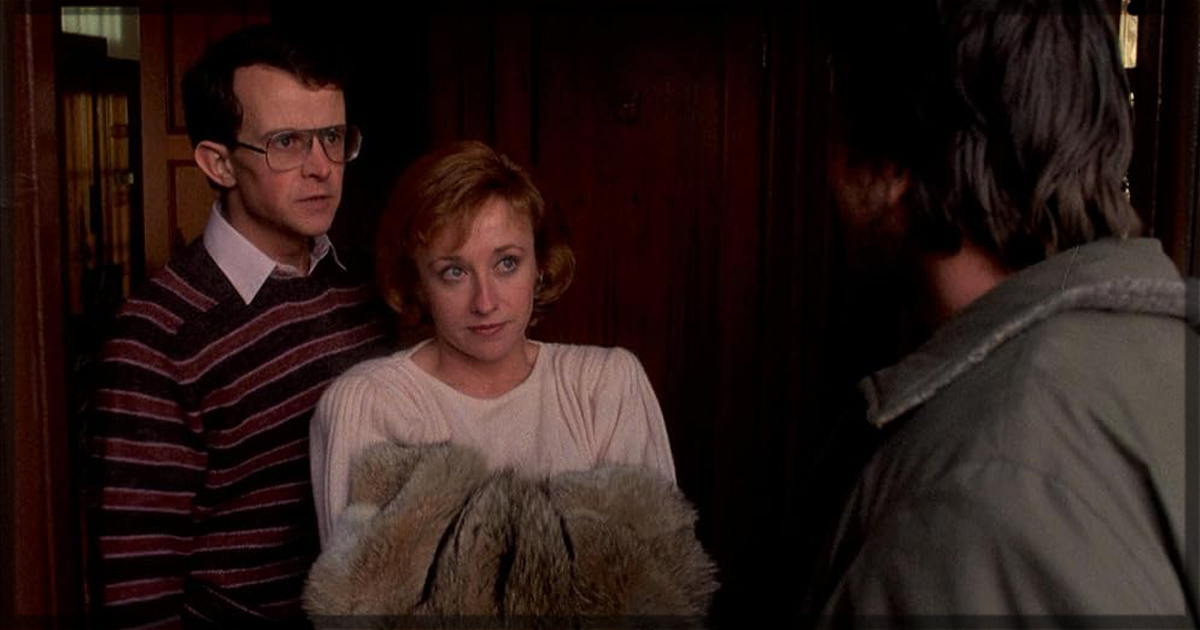
Banner image from The Stepfather. Image courtesy of the filmmakers.