A pile of brutal reviews was waiting for Klara and the Sun before I could get to it, and I’d be lying if I said they didn’t lower my expectations. What worried me more was the man behind the camera. I’ve loved Taika Waititi (Jojo Rabbit) when everything clicks, but my recent rewatches of Thor: Ragnarok and Thor: Love and Thunder left me underwhelmed, mostly because of how his humor goes off the rails once nobody keeps it under control. A quiet sci-fi story about an artificial friend felt like exactly the kind of story where one joke too many could sink everything.
On the other hand, a few people whose taste usually lines up with mine had good things to say, and the cast looked great. I also went in completely blind. I hadn’t read the novel by Kazuo Ishiguro, and I didn’t know the premise at all. So my expectations were moderately low, but I had a little hope.
In a near future where privileged kids are genetically “lifted” to get ahead in life, Klara (Jenna Ortega, X) is an Artificial Friend, or AF, waiting in a store for someone to take her home. She’s solar-powered and endlessly curious, spending her days studying the people outside the window and developing an almost devout belief in the Sun. Then, she’s chosen by Josie (Mia Tharia, September Says), a bright but sickly teenager. Klara moves into the family’s isolated farmhouse, where Josie lives with her guarded mother, Chrissie (Amy Adams, Arrival), and spends her days with her best friend, Rick (Aran Murphy). This household is carrying a loss it rarely talks about, and Klara slowly becomes convinced she can help, with a little assistance from the Sun.
Ortega carries this film brilliantly, and I’d put it among my favorite performances of hers. It would’ve been easy to play Klara as a blank, polite machine. Instead, she builds her out of countless small choices: fun little gestures, glitches whenever something overwhelms her, a face that’s constantly expressive, and a voice that keeps shifting in pitch and rhythm as Klara learns. Her physical comedy is on point, too — watching an AF wrestle with a staircase shouldn’t be this charming. It’s a much more complete and versatile display than most people will give her credit for.
The humor was my biggest fear going in, and it turned out to be one of the nicest surprises since Waititi does hold back. The jokes come naturally, and for the most part they’re genuinely funny, small and warm moments that grow out of Klara figuring out how humans work. They’re never punchlines shoved into the middle of serious scenes. There’s no overreliance on them either. If anything, this is much more a drama than a comedy. I know a lot of critics feel the comedy falls flat and the tone never finds its balance, but I had quite the opposite experience. Waititi shows exactly the restraint you need to work alongside Ishiguro’s material, and this light, gentle kind of humor suits the story.
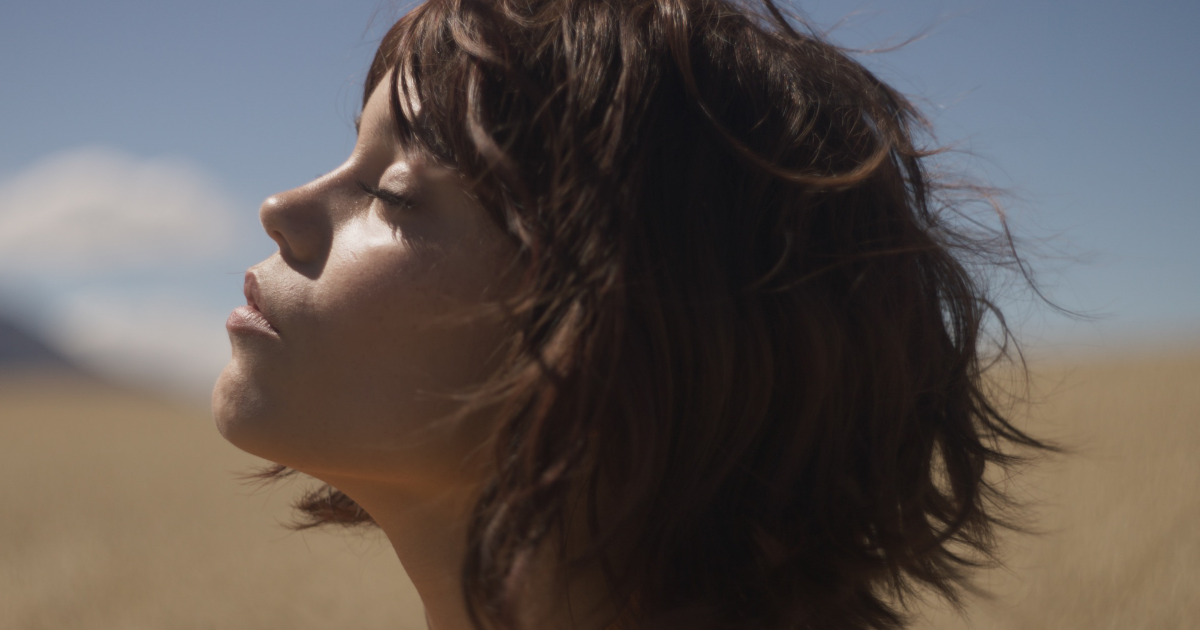
It’s also a lovely movie to look at. The isolated farm, with all that open land and sky, gives everything a fable-like quality, and Klara and the Sun keeps finding beautiful ways to shoot sunlight. That makes sense, given how much it means to Klara. My favorite touch is the “calibration” scenes from her point of view, where the image breaks into pixels while she processes what’s in front of her. It all feels imaginative, at times closer to fantasy than science fiction. Michael Giacchino (Up) handles the score, and as usual, he doesn’t miss.
Tharia was a revelation for me. This is the first time I’ve seen her on the big screen, and I don’t know if she was already getting acclaim for the few shows and films she’s done. Either way, she’s damn good here. Adams is a different case. Early on, Chrissie felt a bit off, almost too stiff to read. Then the narrative starts giving her reasons to be the way she is, and Adams finds her footing as the story goes on. The rest of the cast is pretty great, too. Murphy is good as Rick, Rachel House (Hunt for the Wilderpeople) plays the family’s housekeeper, Melania, and Natasha Lyonne (His Three Daughters) and Steve Buscemi (The Big Lebowski) both pop up along the way.
Klara and the Sun‘s real problem is timing. Most of its intriguing thematic and character insights are saved for the final act, and by the time the movie starts digging into what it’s actually about, there isn’t much runtime left to explore it. It could have been deeper, and it could have been more engaging much earlier. I haven’t read the book, but I’m sure Ishiguro’s version is a lot more nuanced.
It’s repetitive, too. Klara prays to the Sun again. Klara wanders around, gets lost, or turns buggy again. Chrissie and Klara have another tense conversation that goes nowhere new. A few scenes are simply inconsequential. None of them are bad on their own, but stacked together they eat up time the film could have used for everything it keeps for later. It also becomes more sentimental than the story warrants, especially near the end, but still, I felt something when it was over.
Underneath the warm surface, Klara and the Sun is asking what makes someone human. Klara spends the whole story watching, learning, and imitating real people around her, and the closer she gets to understanding them, the more the movie wonders whether there’s anything inside us that can’t be studied and replicated. With AI everywhere right now, that question hits harder than it probably would have a few years ago. Then there’s faith. Klara’s devotion to the Sun starts as the simple logic of a solar-powered machine and slowly turns into something much closer to religion, with hopes, promises, and sacrifices. The adults around her see it as naive, but the movie presents faith as something so universal that even an AI can arrive at it, and that was one of the ideas I enjoyed most.
Loneliness is the other big one, and it’s where I’m most conflicted. Pretty much every human in this story is isolated in some way, and Klara is brought in to fill a gap nobody else is filling. It isn’t the main theme, but it’s hard to ignore the narrative’s message that an AI robot can be a good solution for your lonely kid. I know that’s not what anyone involved wanted to say, and the movie doesn’t seem too worried about it, but in some shape or form, it’s there. The ambiguity of the ending turns Klara into an unreliable narrator, and her own ending doesn’t feel like an answer to this particular question, so it’s a bit of a murky area that might leave some people with a sour taste when the credits roll.
Final Thoughts on Klara and the Sun
Klara and the Sun is a warm, gentle drama that I quite enjoyed. Jenna Ortega carries it with one of my favorite performances of hers: expressive, funny, and much more complete than she’ll get credit for. Taika Waititi keeps his humor under control, and those light, kindly comedic bits suit Kazuo Ishiguro’s story. The isolated farm, the sunlight, and Klara’s pixelated point of view give it an imaginative, almost fantasy-like feel, and Michael Giacchino’s score is great as always. Its ideas about humanity, faith, and loneliness are interesting, but the film saves most of them for the final act, repeats the same kinds of scenes far too often, and gets more sentimental than it needs to. The ambiguous messaging around AI companions for lonely kids sits uneasily with me, but that said, I felt something by the end, and that’s more than I expected walking in.
Rating: B-
Klara and the Sun released in theaters on October 23rd.
Learn more about the film, including how to watch it, at the official website for the title.
You might also like…
