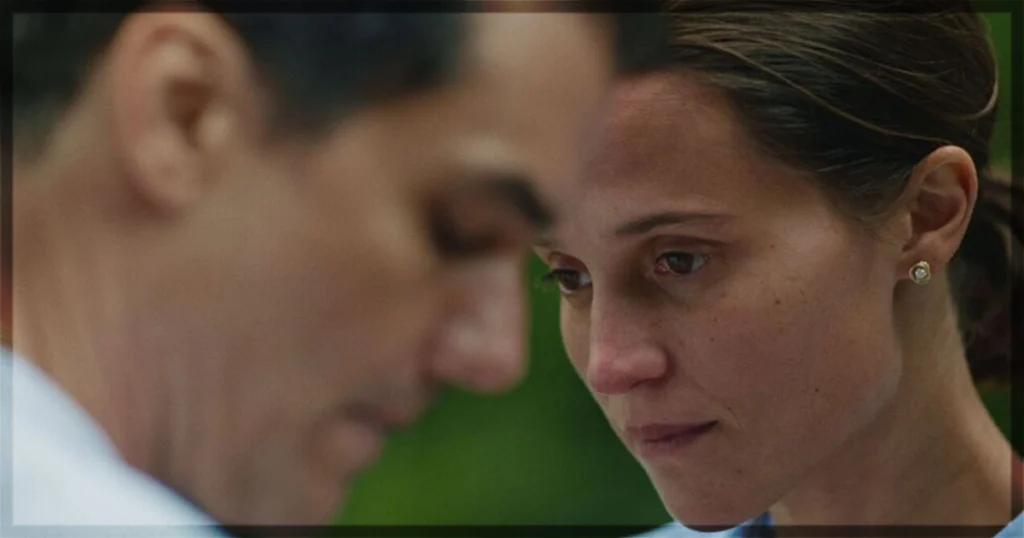
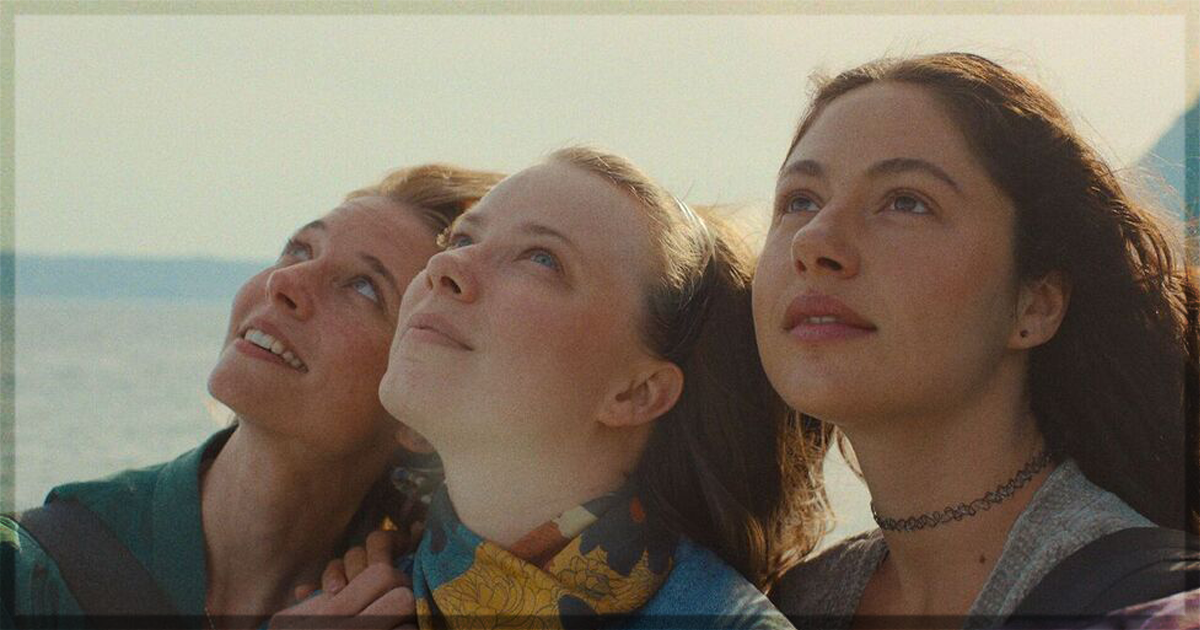
The considerably more dramatic original title of this German movie is Ants Don’t Eat Halva. This is a line spoken during the argument that’s at the core of this sweet and strange story of adult responsibilities assumed much too young. I Spy With My Little Eye has heavy subject matter – the future of a little girl, and how friends look after each other – handled with a remarkable lightness of touch.
They met as little girls in the kind of temporary housing where new immigrant families and abused women and their kids are dumped. Now they’re in their mid-twenties. Iranian overachiever Yalda (Soma Pysall) has been forced to take so much responsibility for her family onto herself that her automatic putting everyone else first has held her back as an adult. Lou (Svenja Jung) is the daughter of German-speaking Romanians and such a prank-loving party girl that it’s a surprise to all that in adulthood she is the first to successfully settle into a career and a relationship. Solveigh (Saskia Rosendahl) is the only German one, thoughtful and studious, but shocked everyone with an unplanned pregnancy during university. Sina (Marlen Lizzi Akarah)’s father was a Ghanaian student who left Germany before Solveigh realised she was pregnant. Solveigh’s decision to embrace single motherhood was even more of a surprise since her own mother Elke (Meret Becker) is the kind of emotionally incapable person you wouldn’t leave a voicemail with, much less a child. This means that when Solveigh commits suicide – the news of which opens the film – Yalda and Lou are the only ones who can prevent Sina from being adopted. The question is how.
The extended flashbacks of the women as teenagers make it crystal clear how entwined the three of them were growing up. It also shows how the shattering titular argument – which took place during an unsupervised girls’ trip to celebrate the end of high school – ended up shaping all of their lives. On the trip Yalda had snuck some homemade halva all the way from an aunt in Iran to share with her friends and is devastated when the precious treat disappears without her having a piece. These ambitious and clever young women don’t have families who can support them; all they have is their intelligence and each other. That argument remained an open wound. Lou reacted by going to university in another city and not really keeping in touch. Yalda became so capable at solving other people’s problems that she has had no time to focus on her own dissertation and complete her education.
As for Solveigh: well, having a baby is a great way to replace one set of problems with another. Plus new people are always a good idea, and Sina (who’s six or so) is a smart and thoughtful child, who wishes her aunties would get along with each other. But Yalda resents the fact that Lou has achieved personal and career success so early and so easily, while Lou is jealous of Yalda’s strong sense of herself and her close bond with Sina. Neither of them impress the social workers for a variety of excellent reasons – surprisingly there are no villains here, not even Elke – and everyone wants Sina to have a happy life. Even Solveigh did.
Writer Judith Rose Gyabaah and director Alisa Kolosova have done a wonderful job exploring complicated interpersonal relationships in which people’s trauma and immigrant status are just another part of life. The “issues” being dealt with here are unique to these three women and that makes them more universal than any finger-wagging polemic could be. All three of the main actresses are also excellent. Ms. Pysall makes sure we understand the enormous chips on Yalda’s shoulders are there by circumstance and not her own choice, Ms. Jung adds a thoughtful and intuitive edge to Lou’s self-focus that enables much to be forgiven, and Ms. Rosendahl makes Solveigh so brave and loveable that her struggles with her mental health are pitiable instead of pathetic. The sense of friendship is so strong that there’s less concern for Sina’s wellbeing than you’d expect. Lou has a way getting what she wants and Yalda’s the kind of person to set herself on fire to keep those she loves warm.
And yet the gauzy cinematography by Meret Madörin provides the sense that this is the story Sina will be told about her mother as she grows up. It means the choice of the English-language title, a game the heroines played together throughout their lives, is their collective dream about their future. It’s rare to feel that not even death breaks up a friendship but in her first feature Ms. Kolosova has achieved this. For a movie so steeped in loss and death it’s a happy achievement.
I Spy With My Little Eye recently premiered at the Tribeca Film Festival.
Learn more about the film at the Tribeca site for the title.
You might also like…