
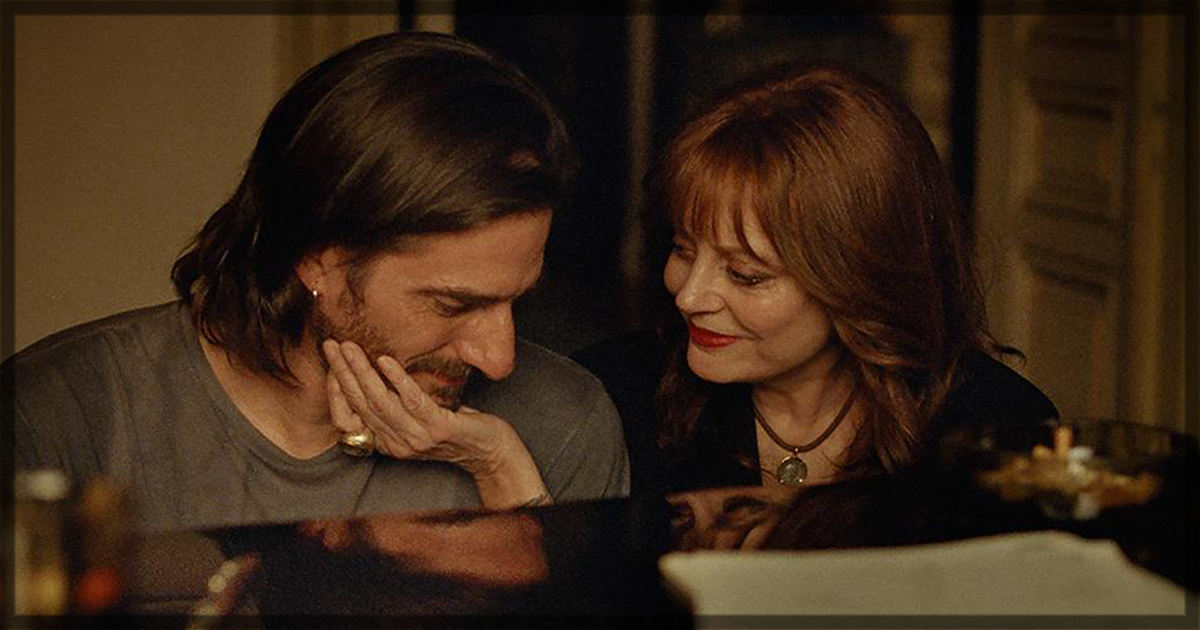
Alicia Vikander has had an impressive year of making extremely interesting choices but, with the noble exception of Hope, unfortunately those choices have not worked out. Some of that is because of the difficulty of the topics, but in the case of The Echo Chamber it’s because of its frightful concept. The major hook here is that one of the credited screenwriters is Bernardo Bertolucci, the titan of Italian cinema who also died in 2018. (The others are Ilaria Bernardini and Ludovica Rampoldi.) But unfortunately The Echo Chamber turns all the hard work of its making into nothing at all.
Anne (Ms. Vikander) is a medical professional who does housecalls in a city that is allegedly London, though the entire film takes place inside the enormous and clearly Italian apartment that belongs to music producer Leo (Luca Marinelli). (The movie was filmed in Rome.) Leo is famous and Anne is starstruck, and they begin a romantic relationship that is basically about Leo shagging Anne so Anne will give him drugs, allegedly for back pain. Anne apparently has neither self-esteem nor professional scruples, because when their relationship ends thanks to an overdose at which she is present, she starts spending her time sneaking into Leo’s apartment while he is gone and mooning about. Director Andrea Pallaoro was clearly going for Chungking Express vibes here but wildly missed the mark.
But Leo is not often alone in the apartment; he has somehow convinced a world-famous singer, Ava (Susan Sarandon in a very brave role), to abandon her retirement and work with him in his home studio to record one last album. Ava, who smokes like a chimney and is so smart she cuts herself, agrees, and we see her and Leo working on songs that Ms. Sarandon sings herself. This means that regrettably they are not very good, as her voice is not what it was, but Ava is up for it because she was impressed by Leo’s moxie in reaching out to her.
To spare you all the experience of cringing yourself to death, in this review a curtain will be drawn over the further details of The Echo Chamber. The ending, which is meant to be desperately romantic, was instead met with laughter in the Venice Film Festival room, and if that’s not a death knell I don’t know what is. But instead let’s think about why this movie was made. The actions here make some kind of sense if you imagine them as the fantasies of an unwell man in his late seventies (the age Mr Bertolucci was when he died), reliant on painkillers and the kindness of his nurses. Choosing to turn those choices into the actions of a healthy if addicted man in his thirties makes them watchable, but also incredibly creepy. Either way it’s the kind of trite masculine fantasy, the ravings of a fool, that might be indulged but isn’t enjoyed. So it’s a surprise that anybody, much less two female screenwriters, tried to turn this thin soup into a filling meal. On the other hand, cinema largely exists to play to the fantasies of foolish men.
And there’s nothing wrong with that, but this would have been really interesting if Anne and Leo swapped positions. Think about it: what if Anne was the superstar willing to discreetly trade sex for drugs and Leo the lonely medical professional swept off his feet? That would have also made it understandable Ava would be willing to resurrect her career for the chance to work with a female producer at last. Why didn’t this occur to anybody? It would have given The Echo Chamber a considerably fresher dynamic with a whole lot more to discuss. Unfortunately, as it is The Echo Chamber will vanish without trace.
The Echo Chamber recently played at the Venice Film Festival.
Learn more about the film at the IMDB site for the title.
You might also like…
‘Remake’ Film Review: A Meditation on the Possibility of Parental Love During an Era of Nonstop Surveillance