
Writer-director Volker Schlöndorff probably remains best known for his 1979 film The Tin Drum, but that underestimates his career. He has been a solid and thoughtful filmmaker both in English and his native German for more than this half-century, without ever quite having a major hit that provides an easier opening to a film review. His newest film, under the English title Visitation, suffers from a similar problem. That unsatisfying title (a problem shared by the source novel by Jenny Erpenbeck) on the surface does little to explain the scope of what is being attempted in this sad and fascinating film: the story of a century, told through the story of a house. This is such a great idea it was also done in last year’s Cannes Film Festival with the excellent (and also German) Sound of Falling. But that was about the damage the world does to girls; Visitation is about the damage war and ideology does to everybody. Its difficult subject matter and some of the choices in its execution make it hard to recommend, but it’s so expertly made that its excellence is likely to be overlooked.
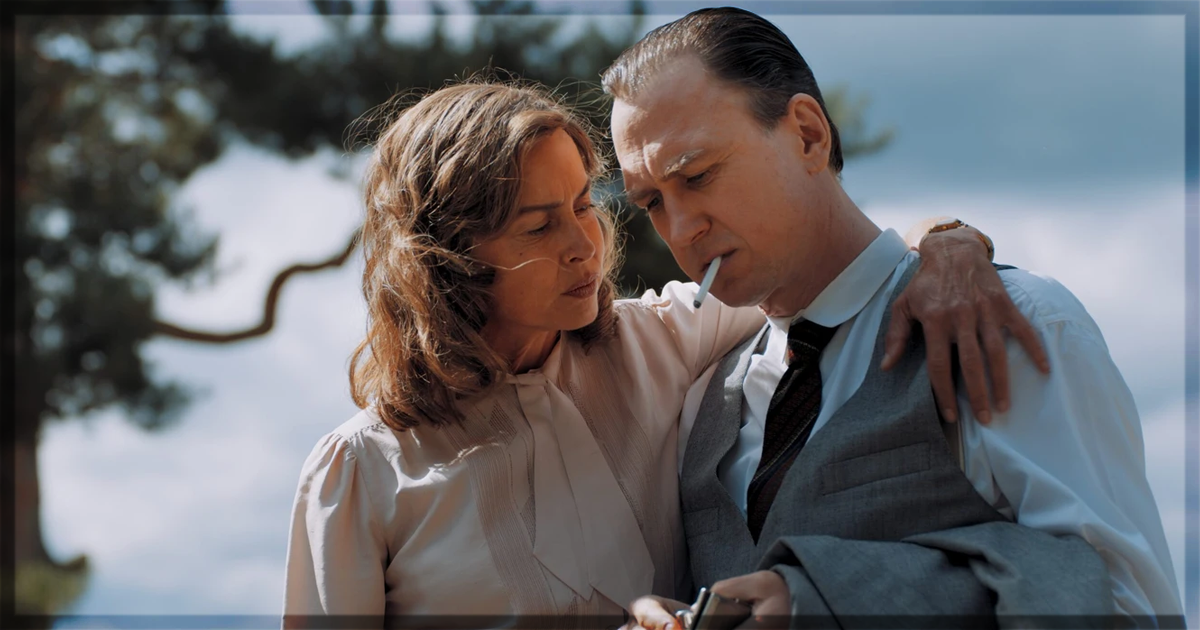
Not everyone gets a name, which is tricky, but the casting is so sharp there’s never a moment’s confusion about who is who, or when we are. We are meant to be in a space between fable and memory. In the 1920s a plot of lakeside land outside of Berlin was meant as the dowry for a farmer’s daughter, but when she becomes pregnant by a man of whom her father does not approve she was disinherited and the land sold. (The French title, Le Bois de Klara aka Klara’s Woods, reflects this beginning, another less than perfect choice.) The land is split in two, with one half sold to a wealthy Jewish factory owner (Ulrich Matthes) and the other to a career-minded architect (Lars Eidinger, who brings an unexpected tenderness to this stereotypical part) and his new wife (Susanne Wolff). The factory owner builds a simple summer house for his children and grandchild to enjoy, while the architect builds his new wife a modernist and permanent home. The factory owner’s granddaughter (Ava Weisbrod) roams both houses freely, at least until the war starts. After the war the modernist house is bought by a writer (Martina Gedeck), a fervent communist who spent time in exile in the USSR with her family. Eventually the writer has a granddaughter (Maria Matschke Engel) who it transpires is the narrator of the film. And over the years, whatever the weather and regardless of the owner, the land is tended by a gardener (Wigan Witting), about whom little is known except he is always there.
The major surprise of the film is its frankness about what happens to the architect’s wife when she is alone in the house as the war is ending and a group of Russian soldiers happen to pass through. There is a surprising sympathy shown for the teenage soldier who finds the architect’s wife in a concealed storage space in their bedroom, and the way in which she is able, to a limited degree, to turn the tables and save herself is quite shocking. When the architect returns he focuses on the damage to his home with no imagination to wonder what else might have happened, and his wife has the sense to say nothing. By then we know the architect’s wife already knew the bargain she was making by choosing the architect. On top of that, enough people have died making survival at any price the only choice. But what men are able to choose, and the choices they allow women, are two very different things. Even as we barrel forward in time, passing the rise and the fall of the Berlin Wall, the writer and her granddaughter have very different experiences of how the world will let them move through it.
It is also nice to see how the imagination has its limits. In the 1970s, some teenagers sneak into the abandoned summer house and find a hidden cache of letters. They share the letters with the writer, and between them they understand about half the implications and decide not to think too deeply about the rest. They know what it means, they know how personally involved they are with it, and they know some losses can never be repaired. Ms. Gedeck also makes a strong impression as a woman who has happily devoted her life to her ideas, and who is astonished when the world decides that her ideas were wrong. Of course as a nation Germany has had to reckon with these ideas more than most – well, that’s not true. Germany has chosen to reckon with its history more than most other nations do, and its art tends to focus on the aftermaths of mistakes more than is enjoyable.
But this is where the metaphor of the title Visitation comes in. Places are forever. People just pass through. The hospital in which you were born will probably not outlast your lifetime, but the land on which the hospital stands will endure. A writer focuses on shaping time through ideas, an architect focuses on shaping the spaces through which the time passes, and a factory owner causes the ideas of the architect and the writer to have form. But ideas have consequences, and it’s impossible to know how a sparky granddaughter or a troop of drunken soldiers out for revenge will react to them. It’s impossible to predict how the past will inform the future, or how our choices of the present have been shaped by either what has been or what is to come. It’s hard to explain how good this is! But this might become the signature film of Mr. Schlöndorff’s career. And it’s certainly one to watch to consider how your moment creates who you are, and vice versa.
Visitation recently played at the Cannes Film Festival.
Learn more about the film at the Cannes site for the title.
You might also like…

Days of Glory in ‘De Gaulle: Résistance / La Bataille de Gaulle: L’Âge de Fer (Cannes 2026 Film Review)