
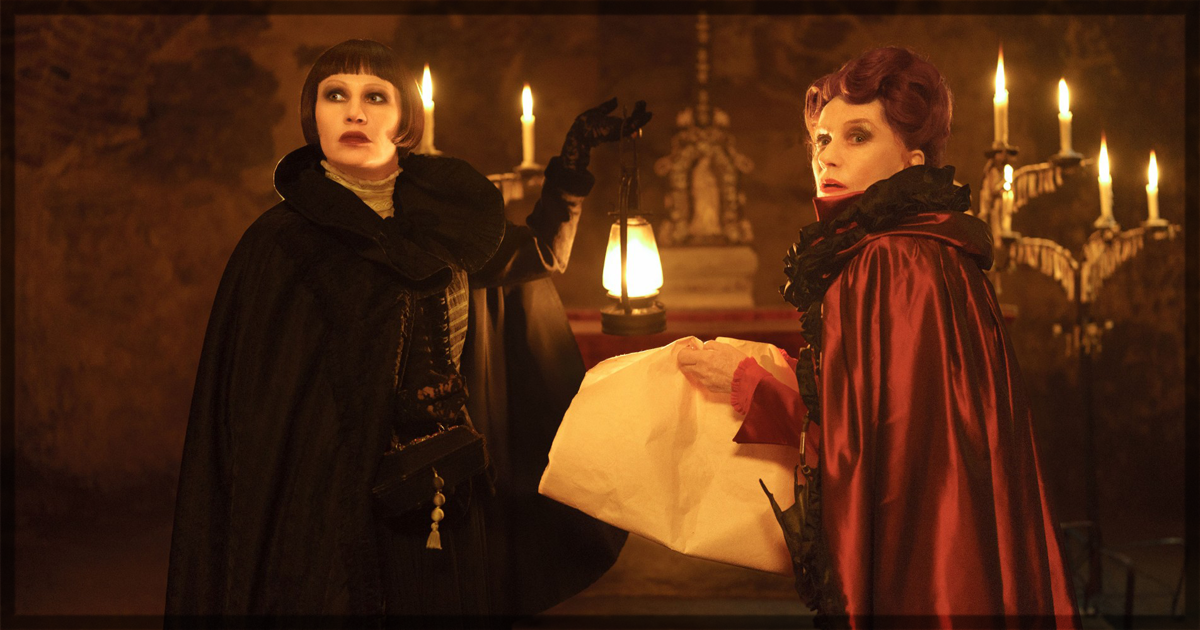
A true Europudding includes plenty of gratuitous nudity and loads of sex, but those are the only things missing from the supremely ridiculous The Blood Countess. This movie is not good, but it is such a stupidly fun good time that you should see it anyway. It is always a delight to see major German-language stars parade around in astoundingly beautiful costumes for no reason whatsoever. Come on! What else are movies for?
The plot, not that it matters, is this: Famed vampire Countess Elizabeth Báthory (Isabelle Huppert, clearly enjoying herself every single stupid second) awakens from her eternal repose, or something, every 25 years for a holiday in Vienna. The sound of her coach-and-two arriving outside the hotel prompts the concierge to wind a giant scarf around his neck. She reunites with her maid Hermine (Birgit Minichmayr), who wears the stereotypical French maid outfit and a Louise Brooks bob, and they embark on a double quest around the city. First, the Countess wants to feast on human blood as much as vampirely possible, and secondly, they both want to destroy a book which is rumoured to restore humanity to vampires, or something. Word of the Countess’ return gets around, not least because the bodies start classily piling up, and several others join in the fun. One is a bumbling policeman (Karl Markovics), another is Ms Báthory’s vampire nephew who delights in the name Baron Rudi Bubi von Strudl (Thomas Schubert). Poor Rudi Bubi hates being a vampire and refuses to drink blood, eating only Viennese pastries instead. We know just by looking that he’s a vegetarian because he is dressed from top hat to lederhosen in bright green, like a leprechaun. And since this is the land of Freud, Rudi Bubi has been busy confiding all to his therapist, Theobald Tandem (Lars Eidinger), who thinks the vampire stuff is just metaphor. Won’t he feel silly when he finds out!
So everyone must run around a stylised Vienna, talking to each other in a mittel-European mix of French, German, Hungarian and who knows what, creeping around catacombs or dusty old restaurants or following tourists around museums on their various quests/nefarious activities. There is a masked vampire ball which literally has guests swinging from the chandeliers. There’s a group dinner on the Ferris Wheel made famous in The Third Man, and sometimes zither music is used on the soundtrack. Occasionally drag queen Eurovision winner Conchita Wurst shows up. It is all completely, totally pointless and completely, totally crazy. Again, this is not a complaint! But the cherry on top is that director Ulrike Ottinger co-wrote all of this with Nobel prizewinner Elfriede Jelinek. Even if Ms. Jelinek didn’t literally have the NOBEL PRIZE IN LITERATURE, her novels are largely serious and aggressive works about sexual trauma and abuse of power. Okay sure, that’s appropriate for a story about vampirism, and Ms. Huppert made an enormous splash back in 2001 in the lead role in The Piano Teacher, which was based on one of Ms. Jelinek’s books. On the other hand, if you’d asked literature students to guess which Nobel Laureate would be most likely to write a bunch of bakery-themed puns for a group of vampires to insult each other with, Ms. Jelinek’s name would have been last on the list. So don’t we feel silly now!
Jorge Jara’s costumes are to die for, in some cases literally, and the production design by Christina Schaffer turns the modern city into a stylised Gothic stage set. Cinematographer Martin Gschlacht has the good sense to keep his work simple and show off the outrageous sets and costumes for maximum impact. But be under no illusions: this movie is not good, but it’s always extremely entertaining. Sometimes you just want a watch a bunch of prettily dressed movie stars prance around making fools of themselves. If nothing else The Blood Countess is exceptional at that.
The Blood Countess (Die Blutgräfin) recently played at the Berlin International Film Festival.
Learn more about the film at the IMDB site for the title.
You might also like…

‘Lali’ Film Review – Something Old and Something New (Berlinale 2026)