
It was notable at this year’s Cannes how many movies re-examined France and the Second World War. It’s been obvious for some years now how the French film industry has been retelling its own stories and creating blockbusters for home audiences without caring too much about how they’ll land overseas. It seems that this appetite for French stories is now extending to ignoring how Hollywood handled ‘the war’ and figuring out how to handle the ways France did, or didn’t, fight the Nazis. American audiences will watch When The Night Falls with the horrifying realisation that this is not a historical story for us. We will also see it as an important reminder of the absolute importance of saving as many human lives as possible.
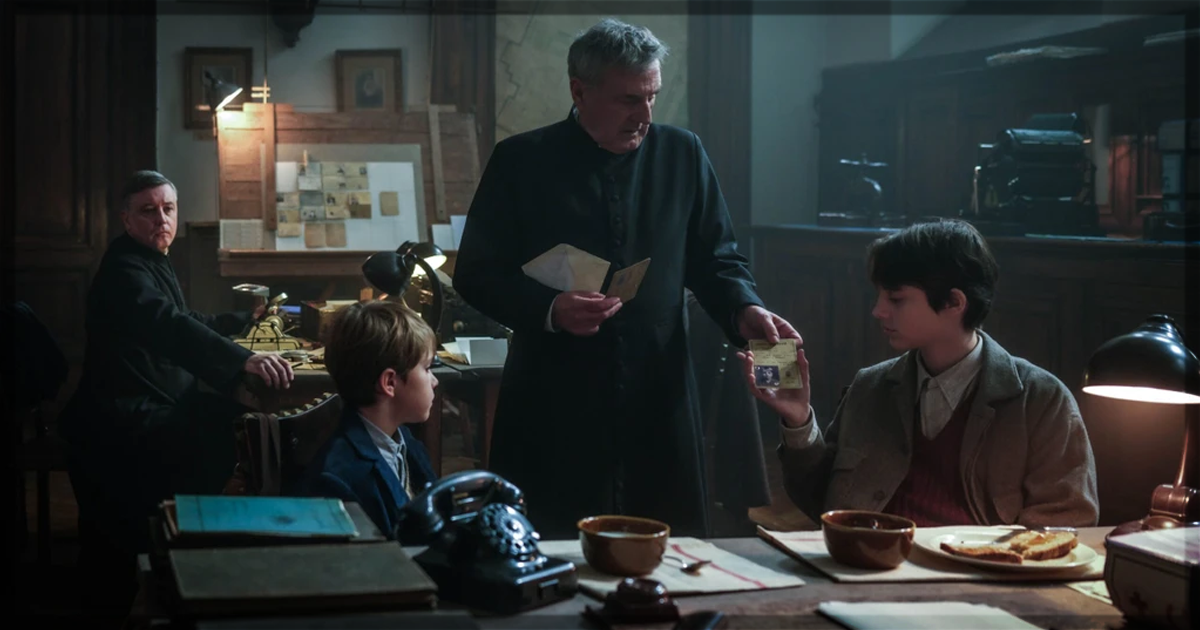
It’s 1942 and Gilbert Lesage (a perfectly cast Antoine Reinartz) is a Quaker (with a beloved cat named Bel-Ami) who works for the Vichy government with responsibility for the ‘non-French’ residents in the southern part of France. In theory he is meant to be encouraging foreigners, by which is meant Jews, not to take jobs from local workers. In practice he is gumming up the wheels of bureaucracy in an attempt to keep everyone alive a little longer. Working to the same goal from another angle is a priest named Alexandre Glasberg (director Daniel Auteuil, who also co-wrote the script with Camille Lugan), whose more obvious acts of resistance are a cause of great anxiety to leaders in the parish. (Glasberg is also a convert to Catholicism, from Judaism, which as you can imagine is a source of some comment.) Both Lesage and Glasberg are horrified when thousands of Jews from the area are brought to an internment camp. Thanks to his bureaucratic position, Lesage is given a list of status markers; people who can prove they meet these complicated criteria are so valuable to France they won’t be deported. Therefore Lesage, Glasberg and workers from several local charities, most importantly a young woman named Lili (Luàna Bajrami), begin frantic efforts from inside the camp to exempt as many of the internees as possible from deportation. However they soon realise they will have to focus on the children.
This is not all handled perfectly. There are far too many extended shots of cars driving around, and the repetitive nature of the bureaucratic wrangling goes on for far too long. The fact the main villain is a collaborating French policeman (Grégory Gadebois) instead of any Nazi also lessens the stakes. That said, none of this matters, because the scenes of the third night, when the family separations begin, are so powerful nothing else matters. Maybe someone can watch scenes of screaming and crying children being torn out of their parents’ arms in perfect serenity, or of parents trying to reassure their children knowing they will never see each other again. I can’t. Maybe someone can look at these images without thinking about how the current political administration in America are the ones tearing families apart with no guarantee they will ever be reunited. I can’t.
And maybe some American film distributor will be brave enough to show this movie in American cinemas. But I can’t imagine that happening in the current climate, either. But despite all its flaws When the Night Falls makes an extremely important point: if you have the ability to save a life, for one day or one hour or one minute longer, then you must. This is a message we need to keep hearing over and over again, because crimes like the ones shown in this movie keep happening. We say ‘never again’ but we don’t mean it, and movies like When the Night Falls reminds us of what happens when we do.
When the Night Falls (La Troisième Nui) recently played at the Cannes Film Festival.
Learn more about the film at the IMDB site for the title.
You might also like…
The Hollow Beauty of ‘Tin Castle / Irish Travellers’ (Cannes 2026 Film Review)