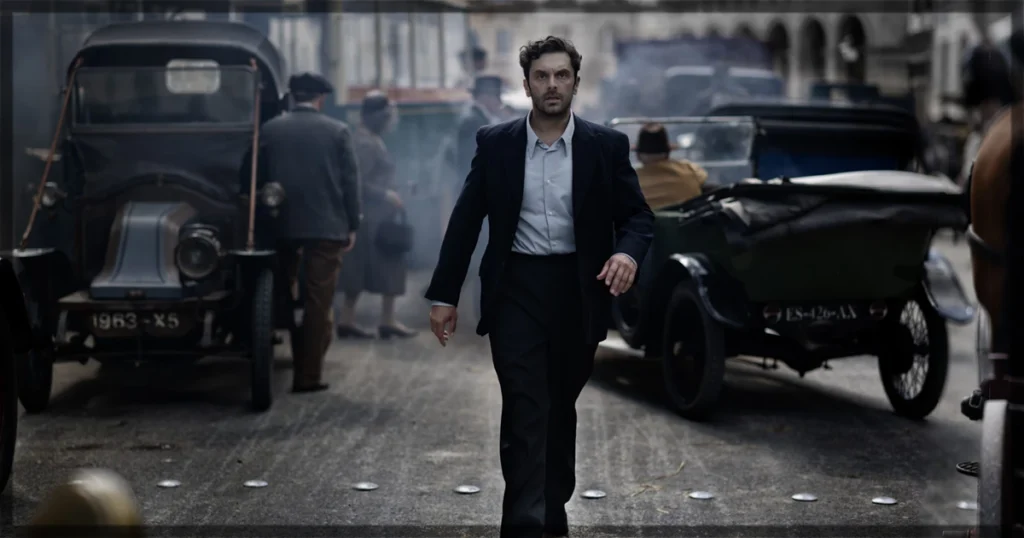
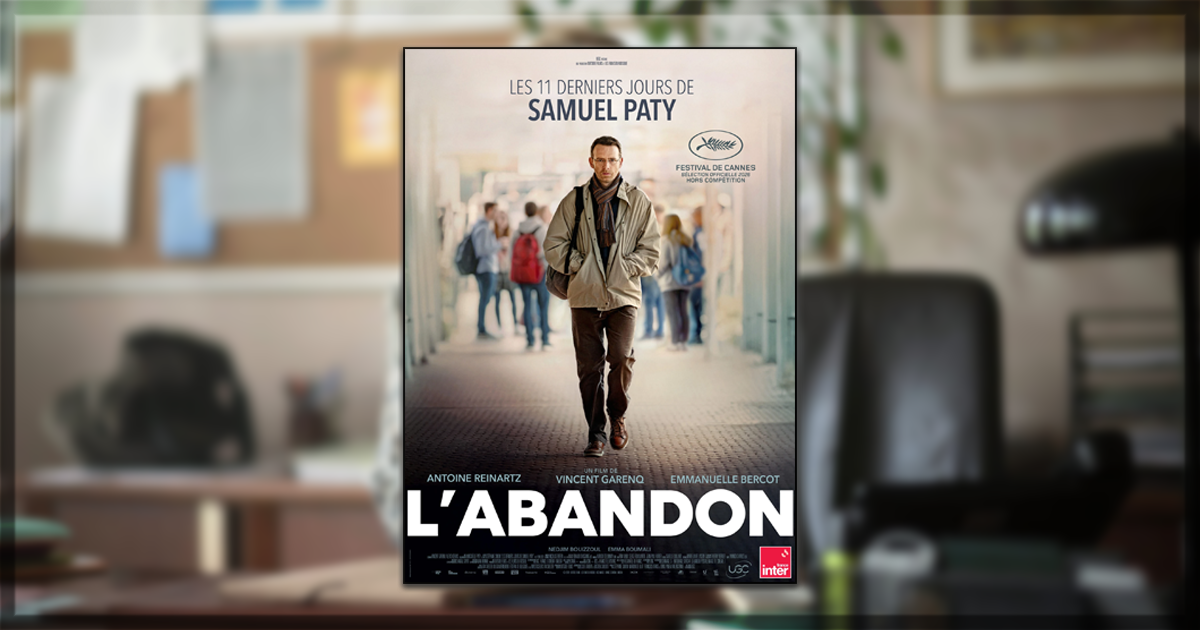
The unhappy true story on which Forsaken is based is one of the most traumatising situations in modern French history. It brought together several of the most hot-button issues of the modern era – freedom of speech and how the state handles issues of religion in a legally secular society – in a modern middle school, meaning children were at the core of what happened. That means Forsaken was made as an act of penance, to try to redress the real-life wrongs and give a fair account of all the people involved. These are sensitive and highly emotional subjects handled with great care, and the power of Forsaken is how well it handles all its issues. It is also clear that some names and facts have been changed from the genuine record, which remains an ongoing issue, as the criminal trials only ended in March.
It’s October 2020 and shortly before the fall break at a school in Conflans, in the far north-western suburbs of Paris. The students are in the American equivalent of 8th and 9th grades, so mostly 13 and 14 years old. Kids. They are also as wholly multicultural as any major city in France, and for the most part normal teenagers. One unhappy exception is Bashira (Emma Boumali), who has a bad attitude and attendance problems her parents are uninterested in addressing. Her history-geography teacher is Samuel Paty (Antoine Reinartz), whose lessons for the week are about freedom of speech and freedom of the press. This includes a section on satirical magazine Charlie Hebdo, whose caricatures of the prophet Mohammed led to a terrorist attack in 2015 that resulted in 12 deaths. A sensitive subject indeed, especially for young teenagers, so Mr Paty suggested that any kid who didn’t want to see the cartoons could cover their eyes or leave, no judgement. In one class a bunch of kids did walk out, most notably Alma (Sarah Zapata), who complained about Muslim kids being singled out to her mother, who complained to the school. In Bashira’s class none of the kids left, though many covered their eyes (but peeked). But Bashira wasn’t there, once again absent without permission, which automatically led to a brief suspension. But when her father Kadir (Nedjim Bouizzoul) learns of the suspension, Bashira lies. She says the suspension is because Mr. Paty specifically singled out the Muslim kids and when she argued with him, he kicked her chair and threw her out. After this, there’s no going back.
Everyone agrees Mr. Paty’s mistake was suggesting that it was okay for any of the kids to leave. The nation allows the kids to be taught this subject and it was wrong of him to imply anyone might have been offended by it, by extension that someone religious might not be able to handle these issues. Mr. Paty refuses to apologise for showing the cartoons but is more than happy to explain why he handled it how he did, having a nice chat with Alma’s mother and reaffirming with his students that he meant no insult to anybody. This is accepted by everyone, mainly because Mr. Paty is well-liked by his students and their parents, calm and friendly, and with a handwritten collection of dad jokes he reads on request. So what is seen as a bad misunderstanding and a lesson for all is quickly cleared up. That might have been the end of it. But Kadir sent a voice note, complaining about a racist teacher’s mistreatment of his little girl, to hundreds of people in a Muslim groupchat. That message was picked up by Tahar (Azize Kabouche), a radical who sees this situation as a chance to attack France’s secular society directly through Mr. Paty personally. Thanks to Tahar’s encouragement, Kadir files a complaint with the police and makes threatening posts about Mr. Paty which go viral on social media. Other parents and other students, even a journalist, tell Kadir over and over that Bashira is lying. Kadir takes their statements as proof of either bigotry or sucking up to the school. This means a teachable moment, like every school sometimes goes through, suddenly becomes a police matter. But the threatening posts and comments on social media go in directions no one can control.
And yet the reason Forsaken has been made is because, in this telling, it’s quite clear that a lot of little things had to go wrong for things to become as awful as they did. This is therefore an attempt by the artistic community to hold power to account. The opening voiceover makes this explicit, as Mr. Paty says he never dreamed he’d be in the history books and all he ever wanted was to make a difference. The final speech of the film belongs to Alma, who talks about how she was never bored in his classes and will always appreciate the lessons he taught her. It’s fairly clear that director Vincent Garenq and his co-writers Alexis Kebbas and Tanguy Viel are slightly overdoing it, but that is the guilt talking, or possibly the fact that Samuel Paty’s sister consulted on the film. It’s also odd that this takes place during the pandemic year without a single mention of or reference to it. The fact that everyone spent the previous six months locked down at home over-identifying with social media isn’t even hinted at.
Miss Boumali does lovely work as a unhappy kid on a rollercoaster of misbehaviour she can’t herself stop, made worse because she can’t get her father to shut up and listen to her. Mr. Reinartz, who burst to international attention as the attack-dog prosecutor in Anatomy of a Fall, does equally lovely work here as a kind and thoughtful teacher who knows he didn’t do anything wrong, and who refuses to go on leave or ask for security because he has nothing to be ashamed of. But he has plenty to fear, and knows it. The ways in which Samuel Paty was let down by his peers and the security services are the reason the movie has its title. But plenty of people believe that it’s a sin to commit acts of violence in the name of religion, and it’s those people who will take the message of Forsaken to heart.
Forsaken (L’Abandon) recently played at the Cannes Film Festival.
Learn more about the film at the Cannes site for the title.
You might also like…