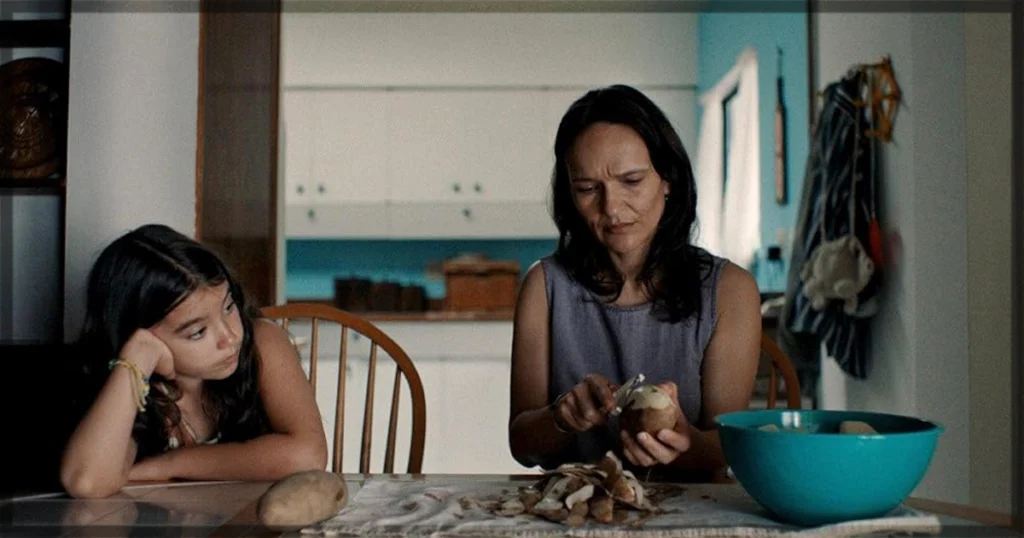
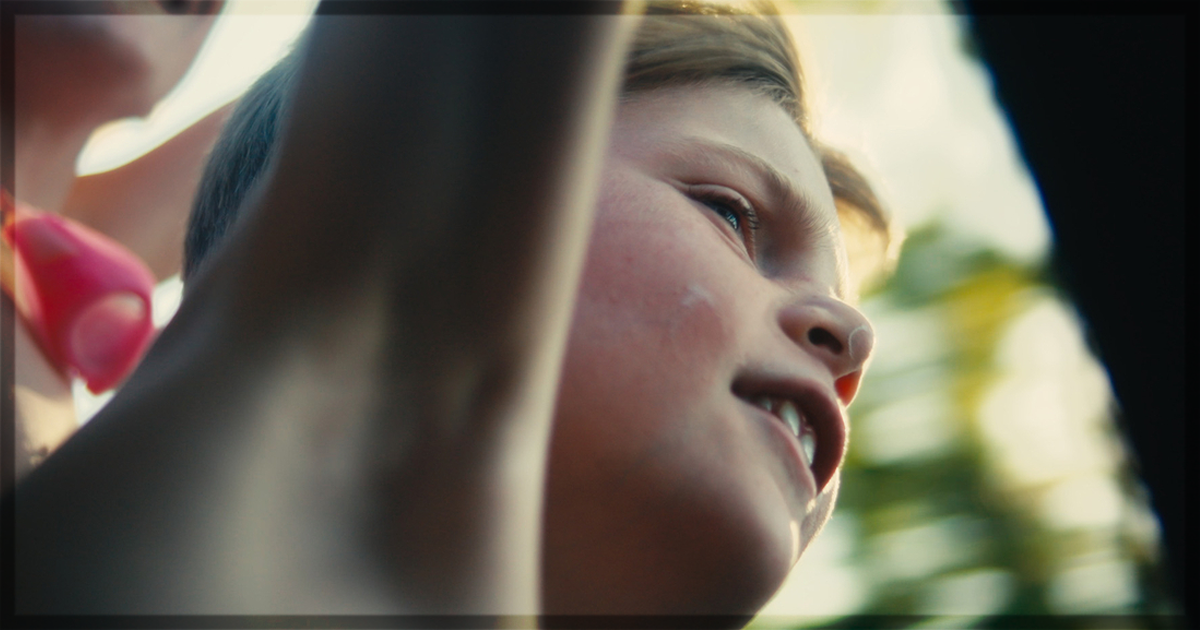
Tin Castle aka Irish Travellers is the very rare documentary worth seeing for its cinematography. Unfortunately the cinematography is the best thing about the film. Director Alexander Murphy also shot the film and some of its images are among the most surprisingly beautiful that have ever been captured in a documentary designed to follow a family over several years. Yet those lovely images are in service to a story so incomplete that we don’t learn the name of the mother of the family until the final shot. It’s clear discretion was the price of access but the beauty of Tin Castle has no substance at all.
For one thing, the father of the family, Patrick O’Reilly known as Pa, disappears from the film for a while for a stay in prison. While some audio from the sentencing is included, we never learn what crime he was convicted for, or what his previous offenses were. Instead we are left to consider the moment when, after his release, he tells several of his children that it’s okay to bite someone’s ear off in a fight. This conversation is about all of the parenting we see Pa do. Considering there are ten of these children, ranging in age from around 5 to 17, a lot of parenting is needed. All twelve of the family live in a trailer (the kind you hitch behind a truck; certainly no American-style doublewide) illegally parked up on blocks between two roads in County Tipperary. There’s a smaller second trailer used for storage, and some horses and dogs stabled nearby, but that’s it. Their unusually isolated presence is highly visible, and often unwelcome. Indeed some minor violence was captured on film. But no facts of their lives are spelled out for us. Mr. Murphy either spent so much time with the family he forgot his documentary needed to answer the obvious questions about their way of life, or the only way he was allowed time with the family was not to ask those questions in the first place.
For the family are Travellers, a specific group in Irish culture that is similar to but not the same as the stereotype Americans hold of ‘gypsies.’ (That word is considered a slur.) It’s a shaming fact that Travellers generally experience dreadful prejudice whether they are settled (aka living in a house) or nomadic, meaning there are huge sensitivities to how they are depicted in media. Reality TV shows like the My Big Fat Gypsy Wedding series raised their cultural profile, but not the accuracy with how they are depicted. The stereotypes and the prejudice are real, and it’s upsetting to hear these clever and funny kids talk about how poorly they are treated in school and in town thanks to their cultural identity. But it is equally upsetting to see the parents – and the failure to use Lisa O’Reilly’s name until that final shot is a major mistake by Mr. Murphy and his editor Nicolas Longinotti – find reasons not to accept help when it is offered, as we see them do a few times during the years the film covers.
There are repeated complaints that they must ship in their water, use portapotties for their bodily needs and run a generator for their electricity. But we never learn either the physical logistics of life in that tiny trailer – where do they sleep? How are mealtimes managed? Are the girl children really expected to do the main part of the housework? – or how they earn the money to pay all these bills. At least we do accompany one trip to the supermarket, where the total for a week’s worth of groceries – again, for two adults and ten children – is just under €110 (so $130 in today’s money). There are repeated shots of Pa sitting around smoking a cigarette with a bewildered expression on his face, but many fewer shots of Lisa doing the tremendous amount of work required to keep ten children fed, clean, safe and happy. The older sons do some talking to the camera, mostly about their plans for the future and how much they love their father, but none of the daughters are interviewed about anything at all.
So, despite the incredible beauty of the images here, the main feeling created by Tin Castle is one of frustration. It is a typically masculine failing, to erase the work of women while paying too much attention to the work of men. Mr. Murphy seemingly decided the images of childish freedom were powerful enough to mitigate the sexism of his movie’s premise. The hollowness of Tin Castle confirms that is simply not possible.
Tin Castle recently played at the Cannes Film Festival.
Learn more about the film at the IMDB site for the title.
You might also like…