Paweł Pawlikowski shared the Best Director prize at this year’s Cannes with the directors of The Black Ball, who spoke first. When he finally gained the podium for his own speech, Mr. Pawlikowski laughed and (accurately) said the staging of this moment was terrible. No such mistakes were made for one instant in his own film, of course – he has a very careful eye for image, with a special focus in this film on mirrors and reflections. Mr. Pawlikowski also has a talent for downplaying huge emotional moments, which mean the feelings land with extended power in the audience. (And if that wasn’t enough, he also gave Emily Blunt her first film role in his 2004 movie My Summer of Love.) Fatherland is so thoughtfully and carefully made it’s somehow easy to take for granted, which would be a big mistake. The ways in which art and politics mirror each other have rarely been so carefully and thoughtfully examined.
Thomas Mann (Hanns Zischler) is the major German writer who won the Nobel Prize for Literature in 1929 and who left Germany in 1933, as soon as the Nazis came to power. In 1949 he is living in Los Angeles in one of those modernist hillside houses that still feel like the future. In other words, as far from Germany as a person can get. But he continues to be an enormous and important figure in German literature, and has been invited to return for the first time to receive the Goethe Prize – an annual award given by a city of Frankfurt, in West Germany, and a very big deal. But the city of Weimar, in East Germany, would also like to give him a Goethe Prize. Anything Mr. Mann does in Germany, east or west, is a political statement. So he decides to accept both awards, and risk being banned from returning to the USA for setting foot in a communist state.
His wife is unwell, so for a translator, driver and general factotum he brings his daughter Erika (Sandra Hüller, once again making the case she’s one of the finest actresses working anywhere). Erika, also a writer and journalist on her own merits, invites her brother Klaus (August Diehl), who is living in southern France, to join them, but he declines. In Frankfurt they are shadowed by the CIA. In Weimar they are shadowed by the KGB. In both cities they are approached by people who wish Mr. Mann to use his influence for their own benefit. One of those people is Erika’s ex-husband (Joachim Meyerhoff). In both cities violence erupts. Awful things happen elsewhere, too. And yet the trip continues.
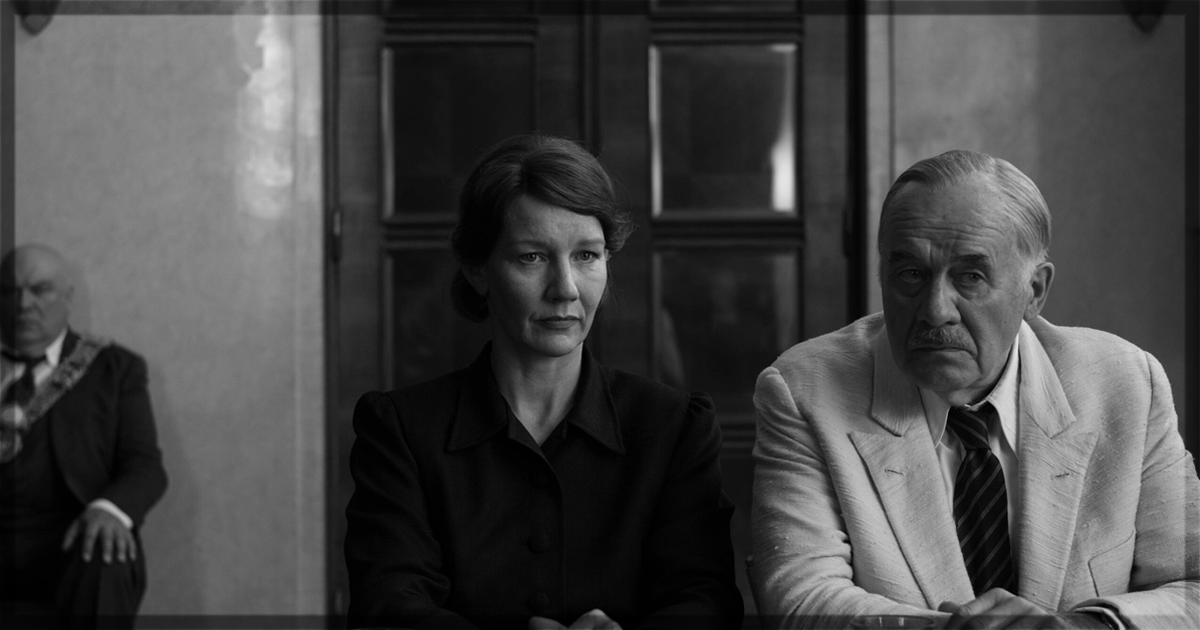
Cinematographer Łukasz Żal, who shot Ida and Cold War for Mr. Pawlikowski and also worked with Ms. Hüller on The Zone of Interest, has a gift for making black-and-white film feel like color stock. This is because the staging is so careful and the lighting is so crisp the emotions have the space to echo like bells, without distraction. This is the unusual period picture where the choice to film in black and white feels appropriate because of how it tightens the way in which we look. The focus on faces – most especially when Mann speaks to audiences full of people paying rapt attention to his every word and gesture – gives the clear and direct sensation that we are also among the crowd, observing, listening. The careful choice of words in Mann’s speeches – which Mr Zischler delivers in such a way that’s its clear he knows he is navigating a minefield with every syllable – are designed for them to tell the political listeners exactly what they wish to hear while also appealing to Germans of every political persuasion. It’s a knife trick, Mann’s international reputation will not necessarily protect him if he gets it wrong, and everybody knows it.
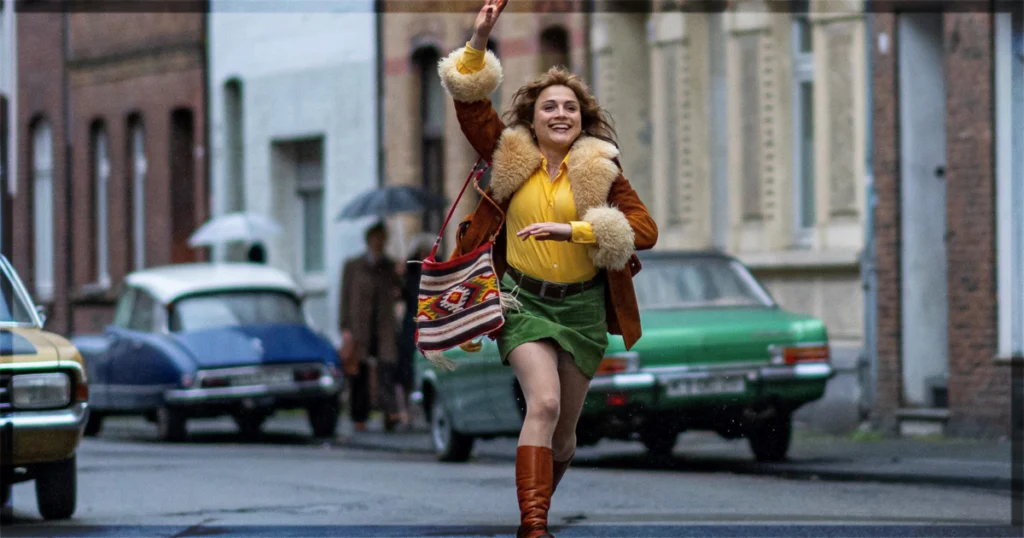
Erika smokes like a chimney and is treated dismissively by most people who only see her as her father’s servant. Some do know better, especially American journalist Betty Knox (Anna Madeley), with whom Erika worked during the war. But because she is not the center the attention, she has more opportunities to observe the whirl around her father and to consider what all this pomp and all the pressure means. Germany was their home, which they fled before it destroyed itself and was destroyed again as punishment. The survivors are beginning to rebuild and Mann’s return is an important symbol of that. But you can’t help but see along with Erika how children react to the fancy car as it drives past their houses, or how other women notice Erika’s good clothes as she walks through a room. The bombed-out landscapes are symbols, but so are the medals and medallions worn by the dignitaries waiting to welcome the Manns, as are the faces of the singers who greet them with song. Mann and Erika are symbols too, but they are also living people, who get hungry and tired and irritable and knocked sideways by grief. How can they survive in all of this? How can anybody?
How can art make a difference to a political regime? How does politics impact the art which people make? But neither of these questions are the true one, which is: what is the best way for us to live our lives? And is it art or politics – a fancy code word for the choices we make about how to live – the most accurate expression of our feelings? Is a person’s home affected by the art or the politics around it? Are any of our choices shaped without either of these things? Or are all of them? How Mr. Pawlikowski, who also co-wrote the script with Hendrik Handloegten, manages to ask all of these questions without ever directly asking them is an incredible achievement. He gives us in the audience the time and the space to reflect for ourselves as we observe how Mann and Erika revisit their world, which of course, is also ours. The finale, which involves Erika and Mann sitting in a ruined building under a snowy sky, makes one very strong case for an answer here, but life is never that simple. Yet somehow Fatherland is. It takes complicated intertwined issues of personal and national identity and makes us feel like they have a yes or no answer. It is the work of an artist at the peak of his powers and one of the finest films of the year.
Fatherland recently played at the Cannes Film Festival.
Learn more about the film at the Cannes site for the title.
You might also like…