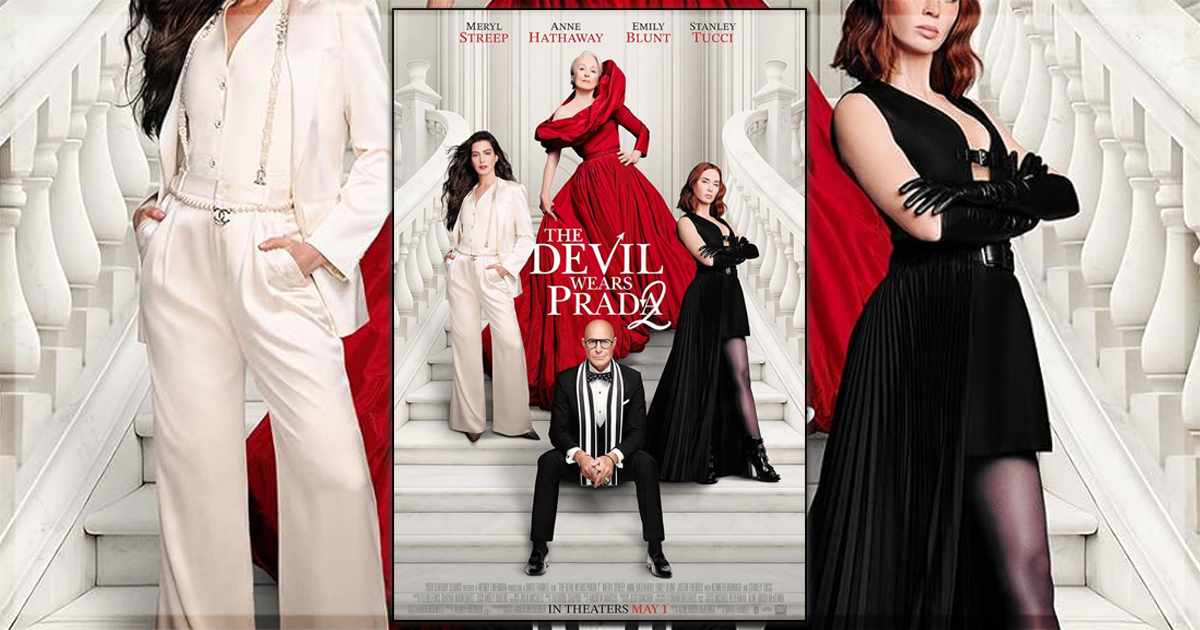
The first The Devil Wears Prada, based on a novel published in 2003, was released in 2006. It was the usual coming of age story in what remains a very unusual context for women: the world of work. An aspiring journalist named Andy (Anne Hathaway) became the second assistant to a powerful fashion magazine editor named Miranda Priestly (Meryl Streep) and had to learn how to survive, or not, in a workplace not designed for her comfort and happiness. Back then there were very few major movies about how women navigate the workplace and while a few more exist nowadays it’s not exactly an everyday subject. But of course the world of work as known in 2006 no longer exists. The gig economy, in which every worker is disposable, has taken over, and even if you are an award-winning professional with a steady paycheck, you can lose your career by text at any instant, as Andy loses hers in the opening sequence of The Devil Wears Prada 2. Writer Aline Brosh McKenna, director David Frankel and the same four key stars have returned to make something even more rare in the modern Hollywood era: a demonstration of the value of humans, of the work done by humans and the importance of appreciating every messy human aspect of it.
As Andy adjusts to the news, she gets a call from Runway magazine with an offer she can’t refuse. The magazine has made a serious mistake in boosting a fast-fashion brand that unbeknownst to them used sweatshop labour. Therefore the owners (a father played by Tibor Feldman and a son played by BJ Novak) go around Miranda to hire Andy as the new features editor to help repair Runway‘s credibility. This plot point might not land with online shoppers used to cheap clothes, not least because in the loos after my showing I overheard three women completely unable to work out why anyone could be upset about fast fashion. But still! On returning to Runway Andy has a happy reunion with deputy editor Nigel (Stanley Tucci) even though Miranda claims not to remember her. Their first order of business is to placate their advertisers, starting with the brand now controlled by Emily (Emily Blunt), who also worked at Runway with the others back in the day.
Some things have changed: Miranda now hangs up her own coats, and her current first assistant Amari (Simone Ashley, who does a lot with a little) is tasked with reminding her of what HR doesn’t permit her to say in a workplace anymore. But the pressures of having a career have only gotten tougher. Runway‘s owners and potential owners do not appreciate the importance of work with substance of any kind, such as artisanal luxury goods which are made from the best materials by skilled experts. Meanwhile Emily is dating a billionaire named Benji (Justin Theroux) who recently went through a high-profile divorce from his first wife Sasha (Lucy Liu), who tends to avoid the limelight. Andy, who remains unrealistically naïve, is surprised to learn hardly anyone buys the physical magazine anymore, so the main part of her work is writing clickbait that stops the social media scroll. Yet despite her grumbles Andy is so confident the role at Runway will work out she allows her best friend Lily (Tracie Thoms) to talk her into buying an expensive modern apartment, and even into dating the contractor who built it (Australian comedian Patrick Brammall). Amazing that being sure where your next meals are coming from helps you relax and plan for the future, eh. But in this day and age, where all the money belongs to the billionaires and everyone else, even in Runway‘s own offices, must fight over scraps, nothing is guaranteed for long.
The machinations of the plot are therefore not the specifics of one clever young woman having one difficult boss. Instead it’s about the whole world realising they are under the control of billionaires who can trash your work and destroy your life with a single facial expression. These billionaires are capable of treating women as peers in the workplace and with effort can remove gendered phrases from their mouths. Still, even someone as superb a businessperson as Miranda Priestly must repeatedly remind them of the value both of her personal skills AND that of her entire line of work. And, to generalise, we all know men are not exactly unswerving allies of so-called girl stuff, whether that’s fashion, chick flicks, or other art created by and/or aimed at women. Being able to report on facts without fear or favour, as Andy has devoted her post-Runway career to doing, is not something the billionaires want to support, either. They believe the world exists only for their own benefit and therefore they only want it to reflect how wonderful they are. They can attend a dinner in Milan in front of a mural painted by Da Vinci himself and never lift their eyes from their phones. They can hire or fire someone who wears t-shirts proclaiming UNION MADE without thinking twice. They can hire or fire thousands of those someones, because they have the money to do as they please and escape the consequences. And they also have the hubris to believe there’s nobody out there capable of holding them to account.
The final twist of the film, which is very easy to see coming, is problematic from one angle and lovely from another. Without spoilers the genuine lesson here is that people succeed, in business and in life, by working together with like-minded people for a collective good. This is a lesson Andy has to be taught again, as the foolish subplot involving Rachel Bloom reminds us. But the value of this lesson for the audiences that are flocking to this film, even those women in the loo who don’t know how their clothes are made, is extremely important.
It’s rarely discussed, but it remains a fact that no one has been able to design an automated system that can sew clothes better than a person. So of course we should care about the working conditions of the people who make our clothes. Of course we should try not to buy things that are so cheap for us because the workers who made them paid the price. Of course we should understand that our reputation is the coin we have to spend as we move through the world, and of course we sometimes have to align with people we don’t adore personally in order to do the right thing professionally. And of course we should always remember that the villains are those wealthy people who already have all the money and power and still want more of it for themselves. The end includes a major strike against AI on top of all this, for heaven’s sake. In the current climate this is all downright revolutionary! Who might have predicted things would have ended up like this?
Because we have to find our real world allies where we can. The dazzling array of cameos, including Lady Gaga, Donatella Versace, Jenna Bush Hager and Karl-Anthony Towns, indicate there are plenty of people in positions of power who are broadly sympathetic. Kenneth Branagh – Kenneth Branagh! – also plays the thankless part of Miranda’s lovely musician husband. While the specifics of fashion are not as centered this time (although the last shot of Andy has her wearing a blue sweater, in a neat little callback to the first film), the business of deciding how to create the ways in which we express ourselves is always there, thrumming in the background. And a lot of people are already complaining about The Devil Wears Prada 2’s imperfections, claiming it is frivolous and stereotypical, to which I would remind them that spoons full of sugar helps the medicine go down. The Devil Wears Prada 2 fights the real enemy and looks fabulous while doing so. Why wouldn’t we treat ourselves?
The Devil Wears Prada 2 is now in theaters.
Learn more about the film at the IMDB site for the title.
You might also like…
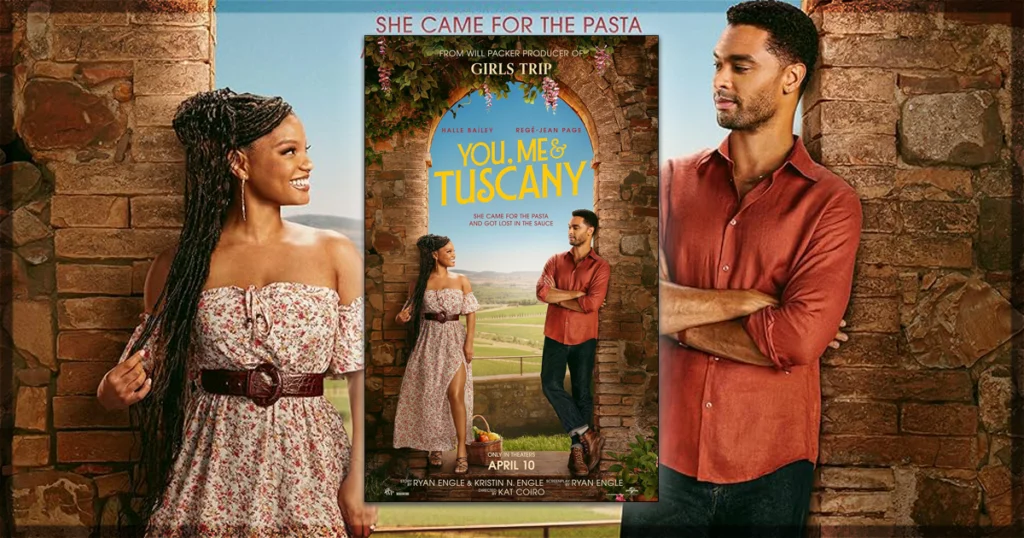
‘You, Me & Tuscany’ is a Delicious Little Treat (Film Review)