I’ll admit I walked into this one with my guard up. Every trailer drop for Spider-Man: Brand New Day — and I avoided them like the plague, though there’s only so much a person can dodge — kept adding another name to an already overstuffed-looking roster: Bruce Banner / Hulk (Mark Ruffalo, Poor Things), Frank / Punisher (Jon Bernthal, The Bear), a rotating cast of classic villains… If you’ve followed the modern Marvel machine as closely as I have, you know exactly what that recipe usually produces: a movie so busy servicing its own cinematic universe that the hero at its center gets buried under distracting cameos. I confess I’ve been burned by that formula before, and I went in bracing for a charming but diluted Peter Parker story wearing a “team-up event” costume.
On the other hand, my history with Destin Daniel Cretton (Shang-Chi and the Legend of the Ten Rings) was extremely positive. Cretton has always been a director interested in grief, family, and the quiet aftermath of trauma rather than spectacle for its own sake, and that’s precisely the sensibility this particular chapter of Tom Holland (Uncharted)’s Spider-Man needed after the emotional gut-punch ending of Spider-Man: No Way Home. What I didn’t expect was just how disciplined he’d be about it — how a film with this many moving parts could still feel like it only has one protagonist worth caring about.
Four years after erasing himself from the memory of everyone he loves, Peter is now an anonymous, full-time Spider-Man, quietly protecting a New York City that has no idea who he is. That isolation has started to change him in ways he can’t fully control, physically and emotionally, right as a strange and increasingly dangerous pattern of crimes pulls him toward a threat unlike anything he’s faced before — one that will force him to reckon with old wounds he thought he’d buried along with his old identity.
What struck me most is how a story with so many major characters somehow never once feels like it’s chasing them instead of Peter. That’s the trap I was bracing for, and it’s the trap Spider-Man: Brand New Day simply refuses to fall into: every single face that shows up — whether it’s Frank, a soldier from another corner of the universe, Bruce Banner’s greener alter ego, a rogues’ gallery of classic Spider-Man villains, or quite a few other surprises — ends up meaningfully tied to Peter’s arc rather than existing to trigger applause. Nothing here plays like fan service bought with a checkbook. It plays like a Spider-Man movie, full stop, about the exhausting, lonely tightrope of being both Peter Parker and Spider-Man at once, and about what happens when a person tries to solve that tension by disappearing into only one half of himself.
Spider-Man: Brand New Day‘s most quietly devastating discovery is Sadie Sink (Stranger Things), who plays the mysterious figure at the center of the film’s central threat. I’ll tread carefully here because part of what makes the performance land so hard is genuinely not knowing *exactly* what’s coming. What I can say is that her motivations, once they come into focus, turn out to be inseparable from Peter’s own identity crisis. Hers is a story about grief curdling into something explosive because no one ever gave it anywhere safe to go; his is a story about that same grief calcifying into isolation instead. The movie treats these as two versions of the same wound: one person who buried her pain until it detonated, and one who buried his until it went quiet and hollow. Sink’s arc becomes the mechanism through which the whole film’s thesis clicks into place — that loneliness isn’t a neutral state you can simply endure but a pressure that has to go somewhere, whether outward as devastation or inward as a slow erosion of self.
That’s really what Spider-Man: Brand New Day is chewing on underneath all its action-movie plumbing: the idea that change, however frightening, is natural and shouldn’t be fought or hidden from, and that memory and loss can either isolate you or, if you let them, connect you to the one other person who understands exactly what you’re carrying. The film uses Sink’s character not as an obstacle to defeat but as the one person capable of truly seeing Peter, and that choice — letting connection, not combat, be the actual climax of his arc — is what elevates this beyond a typical superhero showdown. Self-acceptance, in this movie, doesn’t come from winning a fight. It comes from being known.
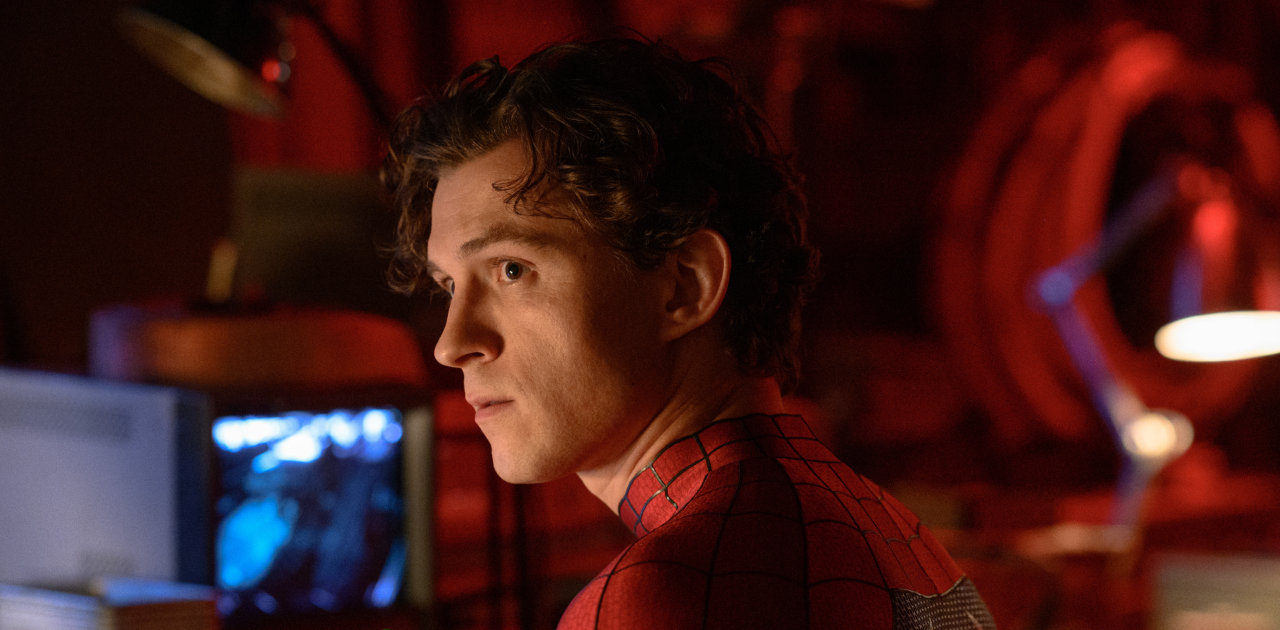
Performance-wise, this is Holland’s best work in the role by a wide margin: looser in the quiet scenes, heavier in the ones that require him to carry real accumulated exhaustion, and finally allowed to play an adult rather than a kid catching up to adulthood. Sink delivers the kind of performance that makes you forget you’re watching a superhero film at all for long stretches. Zendaya (Dune: Part Two) and Jacob Batalon (Spider-Man: Far From Home) are at their sharpest whenever they’re bouncing off Holland and each other directly, and tellingly, the script hands nearly all of its remaining humor to their scenes together, along with a handful of dry quips between Peter and Frank. It’s a smart choice: this is a far more contemplative, subdued Spider-Man flick than we’re used to, and rationing the comedy that way keeps the tone from ever feeling confused. Bernthal brings real warmth to Frank’s unlikely rapport with Peter, while Ruffalo makes the most of an appearance that could have easily been throwaway but instead feels earned, reinforcing the movie’s central themes rather than just checking a box. There are a few more surprise appearances I won’t spoil, and like everything else here, they justify their presence rather than simply cashing in on it.
Technically, this is also Cretton’s most confident directing work to date, and I’d argue it’s the most cohesive Spider-Man film Marvel has produced since Sam Raimi’s Spider-Man 2. The action is some of the best this character has ever been given on screen: the swinging sequences are as immersive and kinetic as ever, but it’s the fight choreography that impressed me most, since Spider-Man: Brand New Day pits Spider-Man against such a wide range of opponents that no two encounters move or feel the same. Michael Giacchino (Up)’s score, as always, is superb, and here it does the quieter work of underlining a more grounded, melancholic tone rather than just amplifying the action.
The criticism I can’t wave away is length and density: this is a lot of movie, and there are stretches where the sheer number of threads being juggled starts to show its seams. It never derails the experience, and everything eventually earns its place in service of the film’s larger ideas about self-acceptance, loneliness, and the necessity of change, but it’s, at times, a genuinely messy watch. That said, these are minor scuffs on something this ambitious.
Final Thoughts on Spider-Man: Brand New Day
Spider-Man: Brand New Day had every excuse to become a bloated victory lap for the MCU’s biggest names, and instead it turns out to be the most emotionally mature, personal Peter Parker story we’ve gotten yet — one that treats its sprawling cast as tools in service of a single, aching question about isolation, identity, and what it costs to keep pretending you don’t need anyone. Tom Holland has never been better, Sadie Sink announces herself as a genuine star, and Destin Daniel Cretton proves that even inside Marvel’s most crowded corner, a story can still belong entirely to one person. With some of the best Spidey action I’ve ever witnessed, a standout Michael Giacchino score, and terrific performances across the board, this is definitely top-tier MCU.
Rating: A
Spider-Man: Brand New Day releases in theaters on July 31st.
Learn more about the film, including how to buy tickets, at the official website for the title.
You might also like…