The Difficult Bride is rare on two counts: it is a Bangladeshi film, and its director, Rubaiyat Hossain, is a woman. It is rarer still for being both incredibly supportive and furiously critical of its heroine, who is also both a traditional woman (getting married very young) and a modern feminist. The Difficult Bride also features a large element of the supernatural while also being bluntly realistic about everyday life. In other words, it’s a diamond.
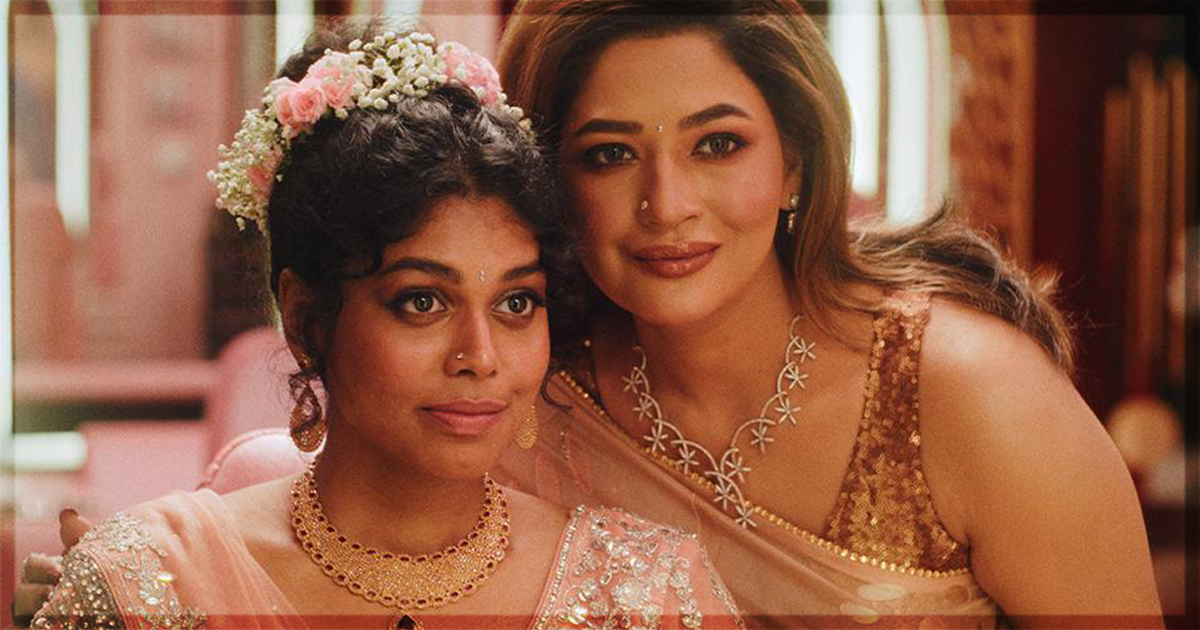
Zaineen (Zaineen Chowdhury Karim) is back in Dhaka in preparation for her marriage to Aarman (Dameer Khan), a good boyfriend who is looking forward to them being back together in grad school in Brooklyn. There they will be able to live together freely, away from the family fuss that’s making the run-up to their wedding so stressful. As part of this, Zai must spend a ton of time (and her family’s money) getting a proscribed series of beauty treatments at a fancy salon. The salon manager (Azmeri Haque Badhon) is very good at her job of making women feel bad about themselves, the only cure for which is the treatments her salon provides. Zai’s favourite therapist, a hijabi named Minoti (Reekita Nondine Shimu) is around her own age, and they have spent so much time together recently they think of themselves as friends. Zai lies on a lounger discussing her feelings as Minoti smears concoctions all over her hair and body, and thanks to generous tips Minoti is happy to go buy Zai weed or cigarettes in the parts of town a spoiled little rich girl isn’t allowed to go. Even when Zai tries to assert her independence by travelling to appointments by rickshaw, her family sends the driver in their fancy car to follow her through the city, just in case.
But the real danger is elsewhere. Zai has heard an urban legend, one that Minoti takes seriously even though everyone else laughs it off, that another bride getting beauty treatments in the salon died there. Without saying anything to anybody, Zai becomes convinced this bride’s presence is following her around, both in the salon and at home. Disturbing things start happening, some which Zai notices and some she does not. And while there’s never any question about whether Zai loves Aarman, it starts feeling like Zai going through with the wedding might be putting her life at risk. But the preparations continue, parties and family dinners. Zai sneaks cigarettes and worries about the things she sees in the street. Her hen do takes place in a Westernised nightclub, complete with the same terrible pounding EDM. And there’s somehow the slow, growing sense that maybe her time is running out.
At the Venice Film Festival I was able to eavesdrop on an interview Ms. Karim gave to a journalist, in which she emphasised both how privileged her character is and how blind her character is to that privilege. And Zai is indeed blind to it, complaining about having to chat to the driver who still brags about driving her home from her birth in the hospital, and taking Minoti’s kindnesses as friendship instead of what a working woman has to do to keep her job. This means when Zai starts wondering if the urban legend of the other bride is real, it is possibly the first problem of her life that her privilege has been unable to solve. Aarman backs her up totally in every possible way but even this might not be enough. Ms. Hossain, cinematographer Leonor Teles and sound designer Marie-Clotilde Chery do amazing work of making a snail or a lizard crawling feel like a harbinger of the apocalypse. And when the portents do turn – in a moment that had the Venice audience gasping – the worry becomes whether it’s even possible for Zai to survive.
What’s fascinating about The Difficult Bride is that it keeps its focus very clearly on Zai without losing a sense of her place in the world. Even when Zai moves around the city the camera is tightly aimed at her, we feel her exhilaration or her discomfort or her boredom while also being able to judge for ourselves whether or not she is right. The centering of the beauty rituals for the wedding also means the story has a universality that makes its very relatable for people who couldn’t even find Bangladesh, much less Dhaka, on a map. And because Zai is so privileged, in a weird way even as we worry, we don’t have to worry about her. She might be in big trouble but she will always get bailed out. If the demons are entirely internal that’s one thing. But if they are as external as the salon makes them seem, that’s another question entirely.
In her first film Ms. Karim carries the part with a confidence that belies her inexperience; the press notes probably shouldn’t have talked that up so much. We feel how Zai’s Westernised education has made her feel superior to the working locals she is spending a lot of time with without ever agreeing with that perspective. It’s a difficult angle to pull off but The Difficult Bride makes a lot of things look very easy. It really is a diamond of a film.
The Difficult Bride recently played at the Venice Film Festival.
Learn more about the film at the IMDB site for the title.
You might also like…