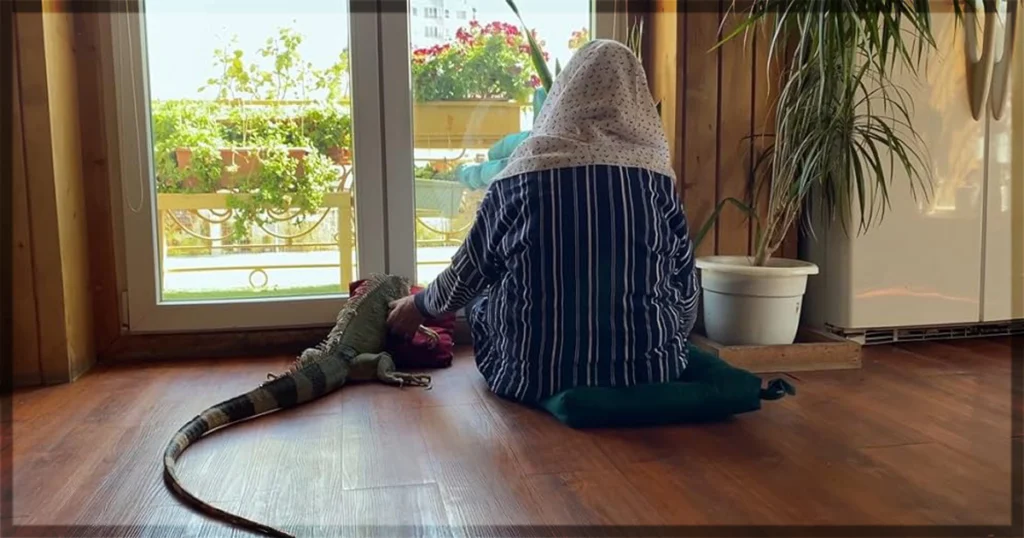
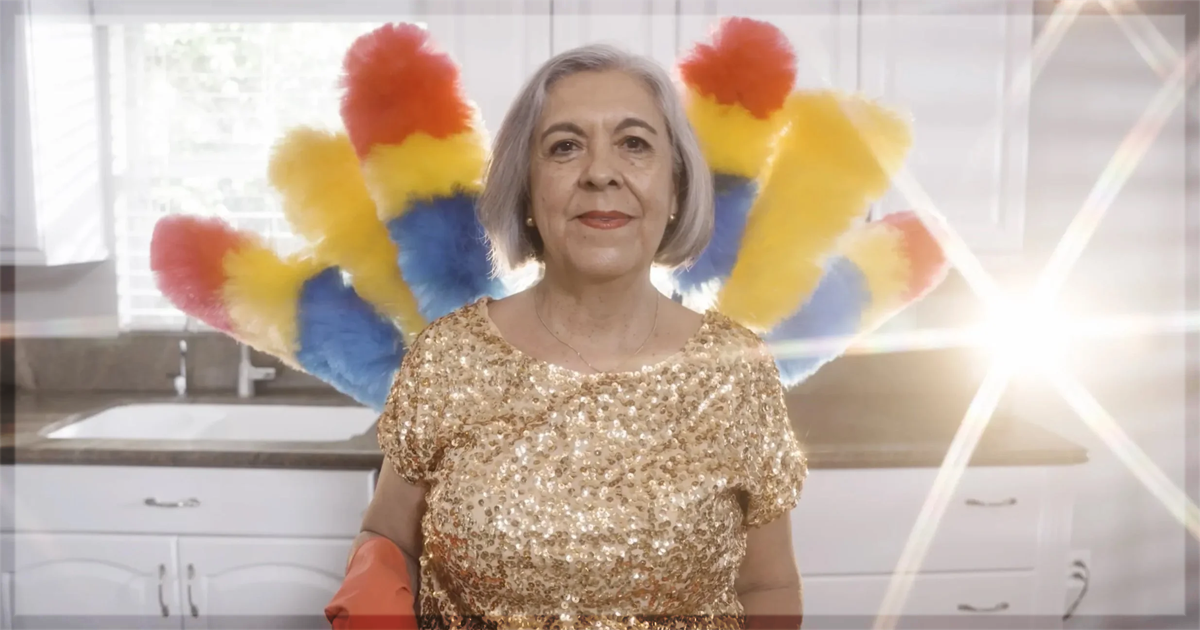
Documentary filmmaking also works as a personal chamber for filmmakers to pour their hearts into films. Throughout the diary or poetic non-fiction, the directors can discuss their personal lives, the formality of cinema, and themes they are passionate about. It is a chance to unveil themselves and the world surrounding them. In her first feature documentary, the Colombian Carolina Gonzalez Valencia documents her mother’s history and the family’s immigration trajectory in How to Clean a House in Ten Easy Steps. In the first scenes, the director introduces us to Beatriz, her mother, who was a cleaning lady. However, in the first question of the interview with the cameras, the director asks her, why did you write this book?. Therefore, we meet the book author within the limits of her mother. She is a strong woman who wrote Como Limpar Una Casa en 10 Pasos Fáciles as a way of teaching other people how to become entrepreneurs in the business and make a living out of it.
Nonetheless, in the following minutes after a TV excerpt of the book launch and people enthusiastically mentioning their relationship with the writing, we learn about the fictionality of it all. The director’s mother did not write a book on how to clean houses efficiently or become a millionaire from it. She was unable to reach that herself. Instead, Carolina Gonzalez Valencia utilizes the fiction to touch on the wounds of their immigration to Florida, which occurred gradually, separating the mother from her teenage children. In this sense, the filmmaker equates the requirements of the labor. In the 1990s, her mother moved out of Bogotá, Colombia, due to the economic crisis in the country. In her case, she moved from Florida to Maine, the farthest state in the United States, to teach at a university. However, as she mentions, it is the pains of labor.
Consequently, How to Clean a House in Ten Easy Steps is a mix of approaches to fulfill the gaps in memory. In most cases, hybrid documentaries are a formal choice. It is also the circumstance of this film; however, it also fills in the blanks left by the lack of photos from their immigration and the lack of resources to document life back then, especially in the context of the Global South. In the third world, accessing memory is also a privilege, reserved for the rich and those able to acquire the tools to document their history and lives. Then, Valencia represents the pains of distance involved in immigration through a child’s drawing of a house. It becomes dirty, sad, and broken as time flies. Hence, several techniques complement the oral telling of this tale, including the animations and the use of envelopes to unveil history.
In this sense, each step refers to their history, not the cleaning of a house. The first one is La Hija – La Cineasta (The Daughter, The Filmmaker), which presents the intentions of the director to construct a persona for her mother, and explores the notions of immigration and the American Dream. In the following phase, La Autora (The Author), Carolina, tells about the mother’s background, the working-class history, and how she met the children’s father. Consequently, each new step is an arch of this made-up story, but it unveils the true history of a Colombian mom who left her children behind to work in better conditions and send them money back home. Similar to Beatriz, millions of mothers and fathers leave their birthplaces, envisioning a better future for themselves and their children. In each corner of the United States, there is a writer like Carolina’s mother, whose pen is a mop and a broom, cleaning the houses of the others, spaces they are probably never acquiring for themselves. Thus, the American Dream is an illusion of progress. It is portrayed as the perfect economic method for the upper classes, exploiting desperation.
How to Clean a House in Ten Easy Steps has brilliant ideas and provide a different tone to the documentary approach, but there are some excesses regarding the fictional elements. There is confusion between the fiction and documentary material that derives from problems in its execution, such as the writing of those moments, instead of a natural instigation of which element refers to which. For a first feature, Carolina Gonzalez Valencia creates noteworthy solutions throughout the most unexpected tools, such as drawings, montages, collages, and the fictional writing of a whole universe. Even with its excesses, the director attempts to confront the conditions that took her mother from her, while admiring their story throughout each frame captured by her cameras, regardless of whether they are fiction or nonfiction.
How to Clean a House in Ten Easy Steps recently premiered at the True/False Film Festival.
Learn more about the film at the IMDB site for the title.
You might also like…