The question of how you tell an untellable story is at the heart of Agata the Writer, which was evidently a passion project for writer-director-cinematographer-editor-composer Kuba Dorabialski (who also plays the small part of Janek). Its awkward thoughtfulness sets an unusual tone that will not resonate with a lot of audiences, but anyone who has ever wondered about a work of art will find a lot in here to appreciate.
Agata (Mia Wasikowska) is struggling with writer’s block over her next book, which will be a romance set during the Bosnian war. Her publisher has kindly given her access to a house in Sarajevo for a month, owned by a friend of theirs, and whose friendly son Malik (Zoran Jevtic) comes and goes. The living room is dominated by what the credits tactfully call the “scat painting,” by a painter who is also Polish (though Agata is Polish-Australian). A friend named Davina (Mia Morrissey) comes to stay to work on her own project as well, so Agata at least always has someone to talk to. But through the publisher’s contacts Agata also begins meeting various people around the city as research for her book. Most notably this includes theatre director Jasmina (Vedrana Božinović), who objects so heartily to the project that Agata takes offense. And because Agata is offended – any artist should have the right to create on any topic, whether they have personal knowledge of it or not – Jasmina feels bad and backpedals. But their budding friendship is no help when things start getting weird in the house.
The survivors Agata meets, and for whom Jasmina occasionally translates, have told the story of what happened to them during the war so many times that they no longer feel like the events happened to them. But it also becomes clear that some of them deeply resent telling their unbearably personal and intimate story of murder, rape, loss and suffering to a writer who will then use their feelings and experiences for her own purposes. At these times Agata is clearly hurt, though wise enough not to say anything. Other times Agata becomes so distracted by her own discomfort she can no longer continue the interview. But despite all these setbacks she is firm: she has her idea and is sticking to it. But Mr. Dorabialski is much cleverer than that single note.
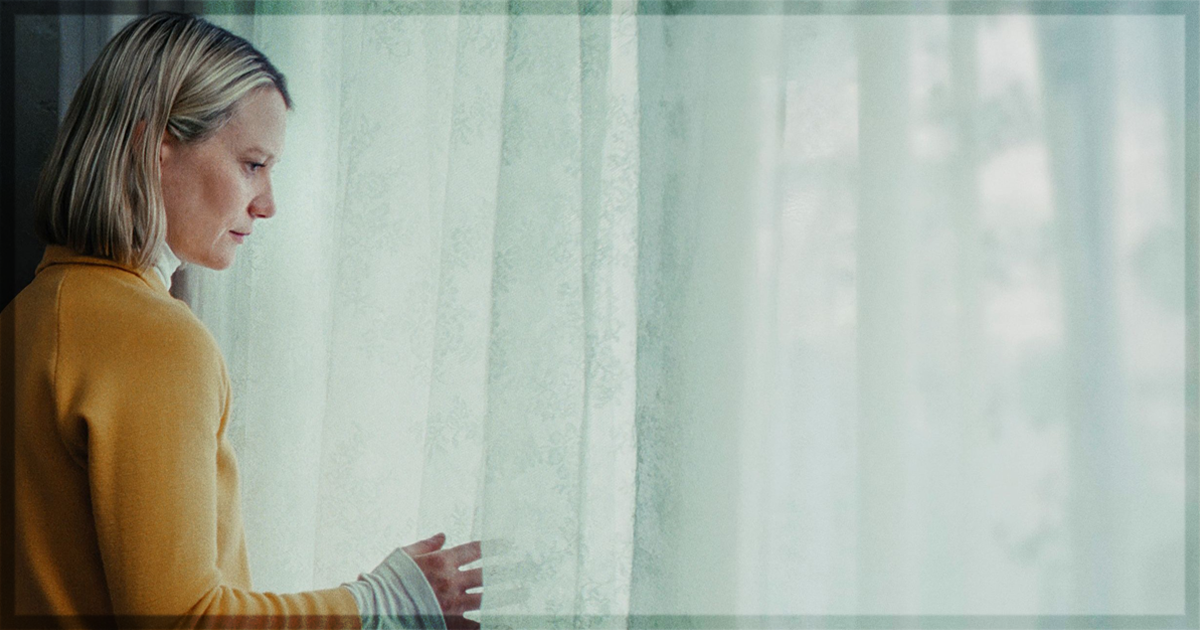
How Agata’s story evolves is the final third of the movie, done largely as a monologue from Ms. Wasikowska speaking straight to camera underlined with Mr. Dorabialski’s improvised and emphatic piano music. The question is not whether Agata has the right to write about a war to which she has no personal connection. The question is whether Agata doing so will result in art that’s any good. As an artist herself Jasmina unsurprisingly has strong views about this, but since Jasmina works in theatre she is used to collaborating with and considering the opinions of others. Agata is a novelist, who lives and works inside her own head, and who can’t help but be surprised when other people expect her to consider their opinions about her thoughts. Ms. Wasikowska is the core of the movie, with a contained physicality – she is constantly wrapped in enormous scarves, for example – that displays a tentative unease with the world. But despite being the core of the action, somehow she is not the center of the story. That’s why the imagery of the painting, which really is unusually graphic, is both amusing and obscene. You can’t get around it, and you can’t ignore it, and it’s a weirdly valuable work of art. How metaphorical!
But there are stories so awful that time neither heals nor improves them, and in those cases it’s usually better for everyone to tell them from an indirect angle. The solution Agata the Writer finds for the problem it set itself is clever indeed, though it might not be as successful as more straightforward tales of the war. But any artist who has tried to get inside someone else’s head will appreciate the journey of Agata the Writer. The elegance of the solution here is a remarkable success.
Agata the Writer recently played at the Venice Film Festival.
Learn more about the film at the IMDB site for the title.
You might also like…