Who could have imagined that the choice of name for a baby born in 1995 in London to Kosovo Albanian parents would prove to have a global influence? The baby grew up with a short, easy to spell, and easy to pronounce name with an adorable meaning: ‘love.’ The unusual name was a personal gift from her grandmother, but with her talent and charm pop star Dua Lipa gave the name to the whole world. In 2024 Indian movie stars Deepika Padukone and Ranveer Singh even chose it for their daughter. And now that name belongs to a thoughtful movie about how life in early 1990s Kosovo shapes how a girl, also named Dua, grows up.
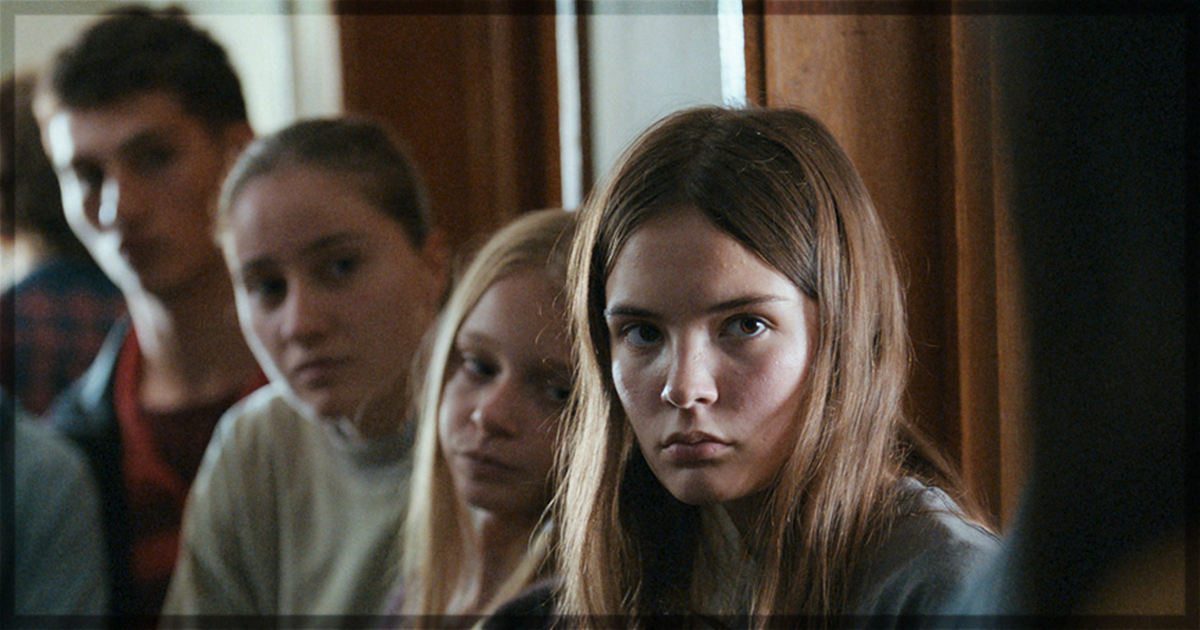
Dua (Pinea Matoshi) is the youngest of four, three girls and a boy, all still teenagers living at home in Prishtina. Her father Bekim (Kushtrim Hoxha) has been out of work for a while; her mother Zana (Yllka Gashi) does sewing for the neighbours. They are just about managing, though everyone has switched to using Deutschmarks instead of the local currency and Serbian shopkeepers charge Albanian speakers more money for worse food. The bigger concern is the war that is coming closer by the day. Dua’s brother is keen to join the rebel army but the parents are adamant that he is too young. Dua’s school has seemingly moved to someone’s apartment, and on the walk there she and her sisters occasionally see the murdered body of a classmate. Some families are choosing to leave, for Germany or anywhere, breaking up the kids’ friend groups. Refugee kids from the countryside also start showing up, including one named Maki (professional basketball player Vlera Bilalli) who lost a year of school thanks to having to hide in the woods all that time. Maki is also a keen judoka, and when something nasty happens to Dua one day on her walk home, she starts joining Maki’s judo lessons. Because both her parents are unemployed, the sensei lets her attend for free. But whether or not this new friend and learning how to fight will keep Dua safe is anybody’s guess.
Director Blerta Basholli also co-wrote the script with Nicole Borgeat. It has the whiff of thinly-veiled autobiography, not that there’s anything wrong with that. But whether or not that is the case, the point Dua the film wants to make is that Dua the girl is just a thirteen-year-old, upset at not yet having started her period and willing to fight a sister over a Skunk Anansie t-shirt. A normal teenager, in other words. But she is also a teenager who has to avoid a gang of slightly older Serbian boys, who call her every possible slur and threaten her with all kinds of violence, every time she leaves the apartment. Her family crowds around the television every night, waiting for the news that the international community will step in to stop the slaughter. As much as Dua and her siblings squabble, they are a tight family who love each other very much and try to make things better for each other. The grimmess of their circumstances is not always felt in their happy home. But their resources are limited, whatever they decide to do has no guarantees, and their time is running out.
The freedom Dua has, war zone or not, will be shocking to modern teenagers. The opening sequence is of Dua and her friends at an unchaperoned dance, ironing each other’s hair and discussing what boys they want to kiss, before a police raid breaks up the fun and everyone must run for it. The way Dua reacts to the nasty thing, which has major consequences for her entire family, will also be a surprise. It’s unusual these days for movies to show the heroes make mistakes. Dua has some very good reasons for making her very bad choices, but the fact a young teenager has the freedom to make those decisions for herself almost overshadows what follows. If the story was told from Zana and Bekim’s point of view it might have landed more strongly. How, in these impossible circumstances, can any parent keep their kids safe, much less provide a normal life? How do they get these kids to appreciate that actions have consequences? And how can those kids understand that during wartime those consequences are even worse? Following Zana and Bekim as Dua hurtles through her growing up might have provided the movie with a stronger emotional center. Even as she hangs out with Maki, gets better at judo, and starts feeling her own way in the world, Dua is not the person driving the plot. Her parents are. The shocking decision towards the end would have landed more strongly if we had seen the realisation of its necessity from the people, Bekim and Zana, who make that choice.
Instead the focus is Dua’s reaction to it. That means Dua has been designed as a movie for teenagers, with the aim of relatably showing them the realities of life in wartime. Lucie Baudinaud’s handheld camera keeps very close to Ms. Matoshi, possibly because the movie was clearly filmed in real locations, but mainly to ensure we can see Dua’s every passing thought. And the ways in which Dua the girl deals with the war coming ever closer will provide younger audiences much food for thought, while allowing older viewers to reflect on what’s changed for kids back then as compared to kids now. Therefore Dua the film is a valuable depiction of what war feels like for a girl.
Dua recently premiered at the Cannes Film Festival.
Learn more about the film at the IMDB site for the title.
You might also like…