
In the first seconds of Rehmat by Gurvinder Singh, a black screen explains the political context of the film. During the forced migration in the Indian subcontinent, the Punjab was partitioned. Independence in 1947 divided the country along religious lines: Hindus and Sikh east in India, Muslims in the west in Pakistan; meanwhile, the movement for a Sikh homeland in Punjab was killed by the government. After intense amount of information at the beginning, the following two and a half hours are the result of what we read. The split from the Northwestern part of the country led to open wounds. Singh, a major name in that regional cinema, produces a triadic narrative.
In the first one, a woman finds a hurt man in a room in her house. She helps that individual; however, the woman discovers he was responsible for an event that affected her. There lies the dilemma. Should she abandon that man to his own luck? Fascinatingly, this story style reminds one of the Iranian filmmaking, such as Jafar Panahi or Asghar Farhadi, although not as political. Therefore, someone ought to decide whether to help another individual connected to the trauma. Indeed, on a moral subtext and analyzing the psychoanalytic aspects of it, this tale is the strongest of the three. In this sense, the righteous judgment of that character is enough to grip the audience in that situation. There is a basis for the dubious, the right to grieve, and to feel guilt. It is a fascinating experience.
At the same time, the second story is about a family grieving the death of a loved one. It is not as compelling as the first one; still, it narrates these Punjabi wounds. The pain is immense while the region is split as a whole, creating a sense of the families being separated and the people being killed in the conflict. Fascinatingly, Singh crafts a film that subtly sparks the conversation on the hardships created after the 1940s. In a sense, the subplots and the undercurrents discuss more than the dialogues, and that is the engaging core of it. Unlike the first, no thread or moral ground glues the second part to the rest of the film. Hence, there is an imbalance in the narrative as a whole. Visually, it is a film that provides little room to analyze its aesthetic propositions, and the directing takes the simpler route.
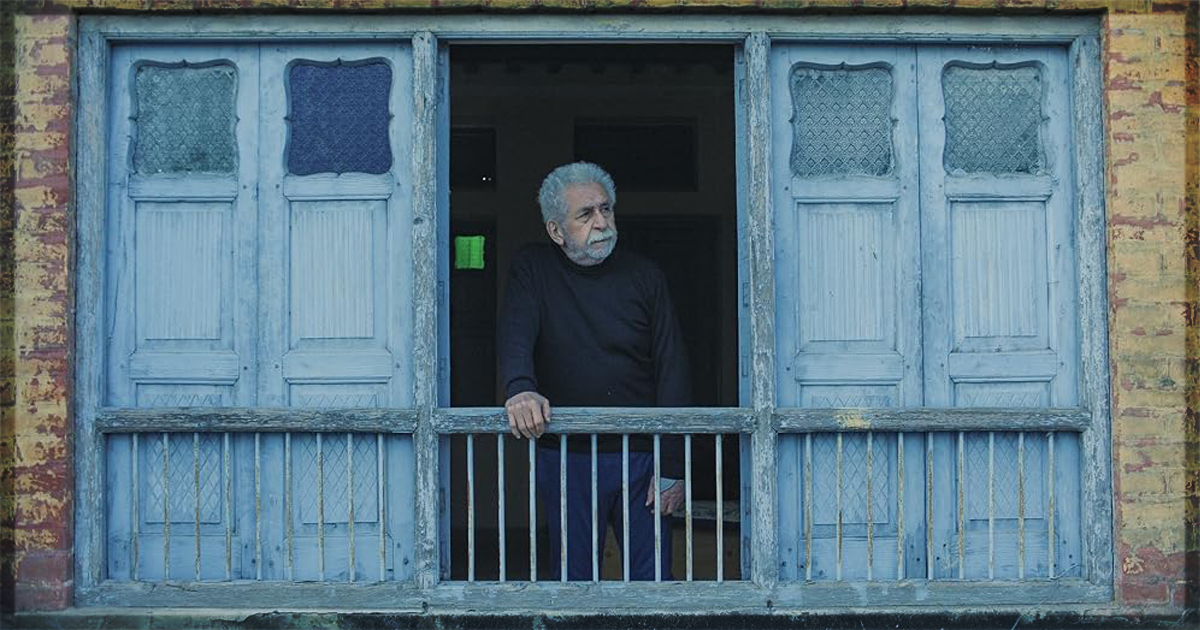
However, the third part, the last one, invites the audience to analyze this context morally. A man, played by the veteran Naseeruddin Shah, arrives in a village and calls himself a God. It is an ambiguous analysis of the collective. People do not want to contextualize his version, but they are not as willing to enter his story. The director’s approach is more contemplative, similar to Tsai Ming-Liang’s works and the Walker series. In that environment, he is someone living his truth, calling himself a divine creature. Tthe humanistic performance by the veteran convinces us of his peace with the idea of divinity. The substance lies in the day-to-day aspect, paced by the flowy cuts that provide a rhythm to this journey.
In this sense, analyzing the film as a triad does not work as well. The first chapter provides a moral compass that nudges us toward the woman’s decision. When it shifts to the second one, the family’s collective pain, it loses the impact of the confrontation between individuals. Finally, the third one is an exercise of time and pace. People have the right to comprehend themselves as Gods, but there is a smooth nature to the film. In this aspect, the first and third parts are coherent with the idea of collective ground, the pains growing with the elderly nature of the separation. Singh divides it into three different perspectives: combat/confrontation, collective pain, and imagination of being. Then, it becomes the different cuts of the same society, dealing with the sentiment of division in varied forms.
In the end, Rehmat is a cut of the Punjabi community, expanding it into three different stories that connect thematically, even if not as much as a whole. It is a film in which one part or chapter coheres more than the other. Thus, throughout its contemplation and different propositions, it loses the steam somewhere in the middle, starting strong and ending fascinatingly, but lacking more to make it a hit.
Rehmat recently played at the Locarno Film Festival.
Learn more about the film at the IMDB site for the title.
You might also like…