
The global appetite for American stories is shrinking. The American political climate has an international impact which hardly any ordinary American person realises, but why should they, when they are too busy trying to survive it directly themselves. Bored kids with no money, nothing to do and no future to aspire to are the perfect creators of mess. But while immaturity and short-termism is to be expected when you’re a teenager, it’s just embarrassing thirty years later when you have adult children of your own. When American stories do break containment – even or especially in documentary form – they tend to pander to the ideas international audiences already have about American lives. That is to say, they tend to be about the wealthy and comfortable, people living happy lives in well-ordered homes where problems are easily solved. Too Much Sugar is not that at all, and therefore it will struggle to be appreciated over the borders. It is about messy American lives with too many kids, not enough money, hardly any work, and way too much violence. Every day is a challenge and the future impossible to see in ways people from elsewhere just don’t understand. But what Too Much Sugar does to help everyone understand is attempt to use the act of filmmaking to solve its subjects’ problems. It is an unusual documentary designed around kindness, and the kindness here is what matters.
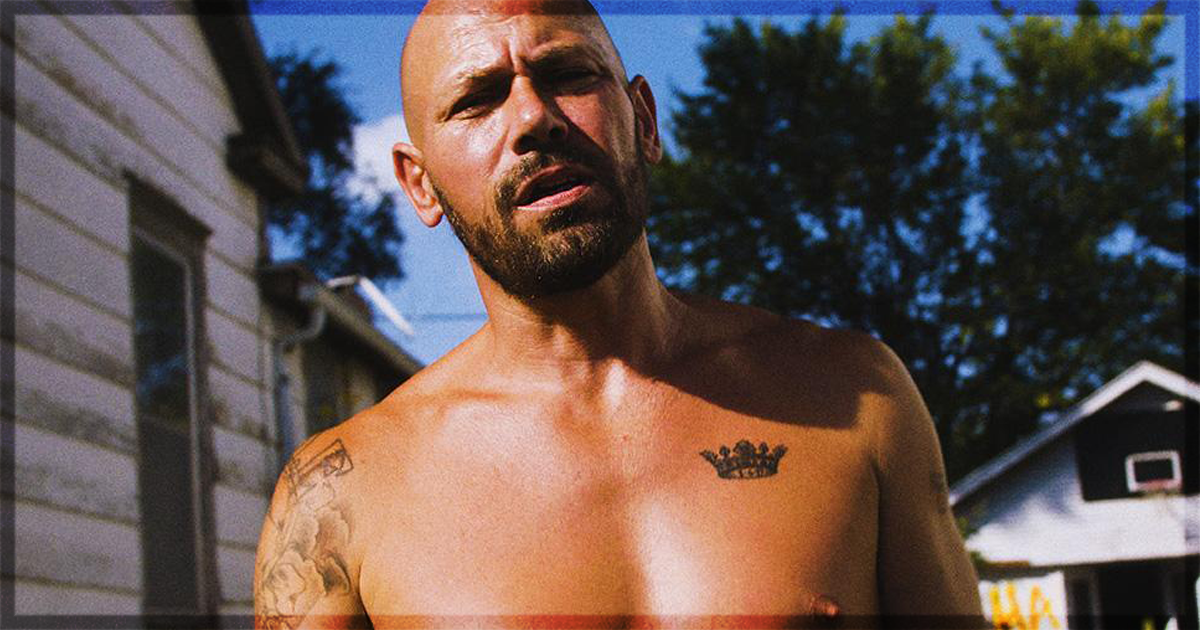
A few years ago director Robert Greene moved to the part of Missouri (it’s not explained why, but presumably for a teaching job) where Ryan Holliger has lived his entire life, an hour north of the state capital Jefferson City. They met when their kids were in the same basketball rec league. Ryan’s parenting is very important to him, as it may well be, having six kids by five women. Tray is an adult who Ryan is coaching to be a professional boxer in a homemade gym. Gavin, who only learned Ryan was his father in his mid-teens, is also an adult but a young one struggling to figure out his own way, made tougher because he doesn’t think he’ll live very long. Wayde, Hank and Bonnie are regular teenagers living at home, and though Bonnie has a different mother they are all being raised by Ryan’s long-term partner Amanda. Ryan’s youngest, Ja’Ryan, doesn’t really feature as he lives with his own mom. (The laughter from the Venice Film Festival audience at that name had ugly classist and racist undertones that are especially unpleasant when aimed at a little kid. Europe is not as perfect as it likes to pretend.) So messy is something of an understatement.
Ryan has a construction business he runs with his best friend Michael, known to all as AccRite, though AccRite is struggling badly with grief. His sixteen-year-old son DeQiran was shot and killed at a party in 2023, and since not one of the other kids present was willing to tell police what they saw no one has been held responsible for the murder. So while Mr. Greene filmed their daily lives, the rounds of school and work and custody drop-offs and meet-ups in the park, it became clear he and his cinematographer Robert Kolodny knew they’d struck gold. The purpose of the documentary becomes working with anybody in these families – this includes Ryan’s mother Candy, a horror movie aficionado, and AccRite’s daughter Auveon, who plans to be an actress herself – to make their own short movie on whatever subject they wanted. To let these people who are more normally written off because of their messy lives and no money speak for themselves.
This style of using people to tell fictional stories indistinguishable from their real lives, except not, is Mr. Greene’s wheelhouse. He calls it “therapeutic documentary,” and while it’s hard to describe it’s very easy to understand. If no one has ever paid you positive attention before, who wouldn’t jump at the chance to demonstrate all the cool things you were capable of for a supportive audience? Amanda’s movie is easy; she wants everyone to appreciate what a good mom she is. The teenage boys want to be a superhero or a gangster, and Candy wants to star in a horror movie, which is kind of easy too. But AccRite wants a movie that will re-enact the last night of his late son’s life, starring Auveon playing her brother. And Ryan wants a movie that shows him being a good dad.
Whether or not he is one is debatable. Tray’s general silence speaks volumes, while Gavin (the smartest and most articulate of everybody here, which is not to say he’s the most insightful) has quite a lot to say about Ryan’s general behaviour. And Ryan’s general behaviour is not the kind we see a lot of in art. The title is a reference to his childhood aggressiveness and hyperactivity which in adulthood (and after several years in the local prison) has morphed into a demanding positivity. He repeats the kind of inspirational mantras people in trouble cling to, which makes it crystal clear Ryan has never figured out how to control either his emotions or his behaviour. That is not necessarily his fault; the stories about his childhood are not exactly soothing bedtime ones, and it’s obvious there’s not much cushion in any aspect of the local environment. At one point during filming AccRite and his partner were injured in a car accident and in the immediate aftermath obviously never saw a doctor. (Doctors cost money. Nobody in America needs that explained, so the movie doesn’t, but everybody in the rest of the world with socialised healthcare does.)
But controlling his emotions and behaviour is Ryan’s responsibility, and he’s not always up to it. Even though Ryan is the focus of the film, Amanda is the heroine of everybody’s lives, a point all the kids make so repeatedly the word ‘long-suffering’ is unfortunately appropriate. Therefore the decision she makes at the end has an outsize impact. What’s right for her is wrong for a lot of other people, and the question is whether those other people will appreciate her need to put on her own oxygen mask first for once in her life. Too Much Sugar’s major flaw is it doesn’t address whether its existence prompted those changes. If you’re going to interfere in other people’s lives, regardless of your intent, you have a responsibility, and if you’re making art (and profit) out of someone’s lives you have to be honest about that with everybody. But the great achievement of Too Much Sugar is that it is honest, even when everyone here is playing pretend for the cameras. It likes these people, it enjoys hanging out with them, it is upset by their setbacks and it wants to help things get better. Whether or not it worked in real life is not our business, but as a movie Too Much Sugar is a fascinating and thought-provoking experience. It reminds its audience that there’s true gold even in the toughest lives, and you shouldn’t be so blinded by stereotype that you miss it. It’s a major reminder for everyone about the importance of kindness.
Too Much Sugar recently played at the Venice Film Festival.
Learn more about the film at the IMDB site for the title.
You might also like…