So this is how the world ends: not with a bang, but with a bunch of French politicians arguing with each other in a meeting room. As France grapples with the new world order, where America is no longer an ally and Russia is very much worse, its art has been working hard to define how the nation might be positioning itself. Therefore anyone who is interested in how movies deal with the zeitgeist would do well to watch Jupiter. It is, more than anything else, a predictor of things to come.
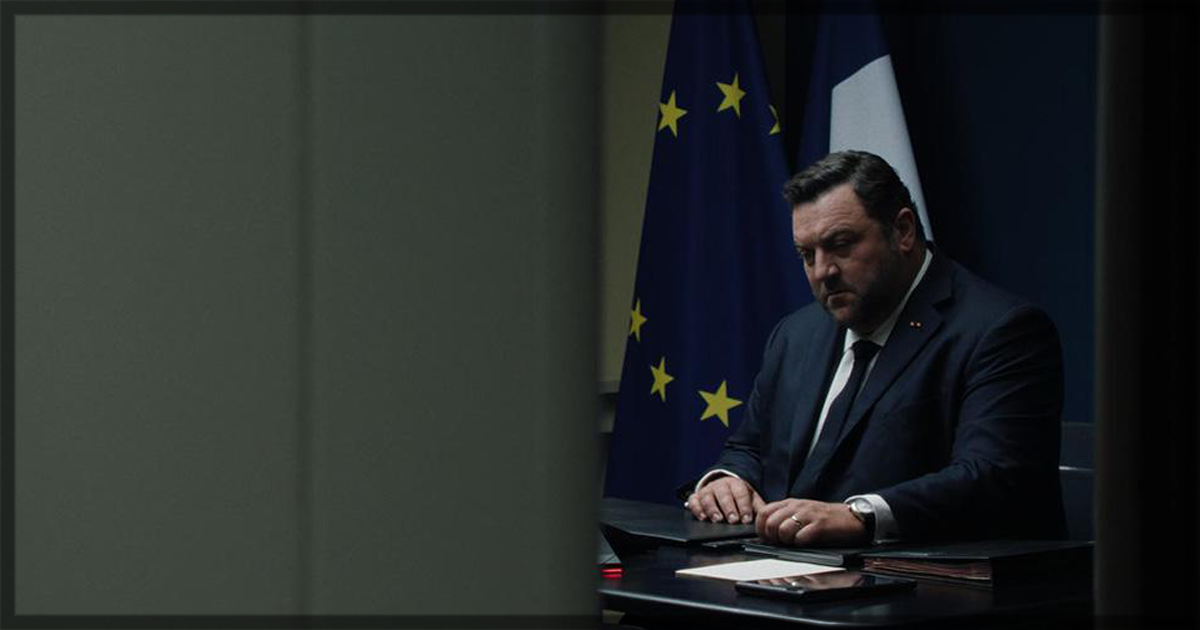
Paul Archambault (Denis Ménochet) has been president of France for about one minute when he gets news his adult daughter has died. But the nation needs him more than he needs his grief: Russia has launched an attack on Ukraine so severe that nuclear weapons might be the only way to stop it. As France is the only not-America nation in western Europe to have its own nukes, suddenly Archambault has to decide whether or not to use them. His cabinet and his staff – precisely who is who during the arguments barely matters – retire to the central bunker code-named Jupiter along with some military leaders to figure out what to do. Over videocalls done in perfect English Archambault speaks to various world leaders and tries to reckon with the impossible. Is he actually going to be the person who presses the nuclear button?
Director Alexandre Smia, who cowrote the script with Thomas Finkielkraut, is here showing us how people in power under pressure make their decisions. Some members of the cabinet are adamant nuclear weapons must never be used at any cost, while others are so horrified at the havoc being wreaked that they are coming to believe any price is worth paying to stop it. Mr. Ménochet – who only two years ago played a much more amusing leader of the French nation in Canadian film Rumours – takes everything here very seriously. The weight of the world is suddenly on France’s shoulders, and with his hands Archambault makes it clear he will endeavour to do as much good as possible. That starts with letting as many people as possible cram into the bunker whether they’re special fancy staff or not, and continues by trying to choose the smallest possible targets for the nation’s missiles in order to minimise loss of life. But if nuclear weapons are in fact used it is a catastrophe, a disaster of world-changing proportions. And no one ever forgets this, not for a second.
An 87-minute movie which is almost entirely people arguing in meeting rooms is not normally so tense and well-paced, but the stakes being so high, the fear being so genuine and Olivier Marguerit’s score pressing all the right buttons keeps the action flowing. And the action is all entirely believable, with a good mix of realpolitik with completely imagined disaster. Jupiter is the kind of quietly competent film that studios used to churn out by the dozen, and which France will now be churning out a lot more of as it asserts its position in the current moment. This is not a complaint; the world could stand a lot more political thrillers without an American perspective, and the world could stand a lot more well-made movies like Jupiter that know precisely where they stand.
Jupiter recently played at the Venice International Film Festival.
Learn more about the film at the IMDB site for the title.
You might also like…