I almost skipped this one. The press screening for The Social Reckoning was early in the morning, I was exhausted, and a follow-up to The Social Network without David Fincher (Se7en) directing or Jesse Eisenberg (A Real Pain) playing Mark Zuckerberg didn’t sound urgent enough to drag myself out of bed for. I went anyway, mostly out of habit.
Some context on where I stand: I’ve never treated The Social Network as the untouchable classic a lot of people consider it, but I love it, and it was one of the best films of its year. This time, Aaron Sorkin (The Trial of the Chicago 7) directs his own script, as he’s done since Molly’s Game, and I’ve liked or loved everything of his I’ve seen, so he wasn’t my concern. Here’s the hot take, and I’m aware of how it will sound, so ready yourself: I think this one is as good as The Social Network, possibly better. The first movie was about how Facebook was built and how Zuckerberg screwed over his partner along the way. This one is about the damage, and the information it puts in front of you matters a lot more.
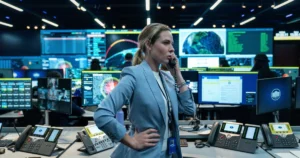
Frances Haugen (Mikey Madison, Anora) joins Facebook in 2019 for a personal reason. She watched a friend get pulled into extremism online, and she believes the company’s civic integrity team is where that problem can be fixed from the inside. After the 2020 election, the ground starts shifting around her, and Jeff Horwitz (Jeremy Allen White, The Iron Claw), a Wall Street Journal reporter convinced Facebook is hiding something big, keeps trying to get her to talk. Moving back and forth between 2019 and 2021, The Social Reckoning follows the two of them as they assemble the internal research that became the Facebook Files, while Zuckerberg (Jeremy Strong, The Apprentice) and the people around him decide what, if anything, the company owes anyone.
Since the screening, I’ve been telling friends and family to go see it. When I mention it’s about the Facebook Files, every single one of them has asked me what the Facebook Files are. Not one of them knew. I bring this up because the most common complaint I’ve seen so far is that the film arrives years too late, since all of this has been public since 2021. Public, sure. Known is something else. Very few people ever had the actual numbers in front of them — the percentages, how much influence one company had over what millions of people came to believe, and the ones who skimmed a headline back then have mostly forgotten it. If a story stopped being worth telling once it had been reported, a big chunk of the movies made this decade would have to go. And I’m fairly sure plenty of people will watch this and still refuse to believe it.
The Social Reckoning keeps escalating, and some of the reveals are genuinely upsetting. What hit me hardest was the algorithm, despite not coming as a surprise. Most of us carry a vague sense that social media rewards our worst instincts. Sorkin replaces that vague sense with a decision: a deliberate change, made by people who understood their own research, that pushed rage-inducing posts higher because anger keeps people engaged. From there, the film traces a line to the growth of extremism and misinformation over the following years, and to all the garbage that ended up in people’s heads. It’s still happening, on a bigger scale. I was angry for most of the runtime, and also just sad. One supporting character, a woman who spent years working for progressive causes, gets slowly radicalized by what her feed serves her, and the movie treats her as one case among thousands of thousands of real ones.
This is also why I laugh a little whenever someone on any social media platform announces they’re moving to a nicer, supposedly hate-free place. The new app just doesn’t know you yet. You haven’t liked or reposted enough for it to learn what makes you furious, so the feed looks calm for a while. Give it time. Maybe that’s cynical of me, but I don’t think the problem was ever one specific app.
Frances is the reason The Social Reckoning never turns into a simple takedown. She isn’t the “I hate my company, I’ll burn it down” whistleblower. She loves her job and believes in what Facebook was supposed to be: people connecting without being afraid of seeming awkward, making friends through a keyboard, getting to be their best selves when they’re typing alone. She joins the company to fix it after it radicalized a friend, and the film lets her hold on to that hope for a long time before she can’t stand what she’s seeing anymore. Madison has a lot of information to carry and gets it across without ever lecturing. Whether that’s the writing or her, it doesn’t really matter. I loved her performance and character.
White plays Horwitz as someone who won’t let go of the story or of Frances, and a lot of the movie’s momentum comes from him showing up again after she’s already said no. We learn almost nothing about his life outside the investigation, which bothered me a bit. He gets one of my favorite lines, telling Frances, roughly, that his problem with tech has nothing to do with it taking journalism jobs and everything to do with how badly it does them. I wish I’d written more of these down. The script is full of them, and I was too busy getting angry in the dark to take proper notes.
The Social Reckoning does repeat itself. It makes the same points about Facebook’s reach and about Zuckerberg more often than it needs to, a problem many investigative journalism films share, and here I mostly didn’t mind because the how and the why kept pulling me along. It also looks like television. Not ugly, just plain, nowhere near Fincher’s precision. But… who cares? A story this grim doesn’t need flashy angles or a candy-colored palette, and I’d rather have it told clearly than decorated. I don’t really understand why Sorkin takes so much criticism as a director, since here he keeps everything legible, which is the job. Editor Alan Baumgarten (American Hustle) cuts back and forth between 2019 and 2021, and while that might lose some viewers, I found it easy to follow, and it means no stretch of the movie passes without something new landing. Alexandre Desplat (The Shape of Water) keeps the score low and pulsing under the scenes. I’ve seen it called overbearing. I didn’t hear it that way at all.
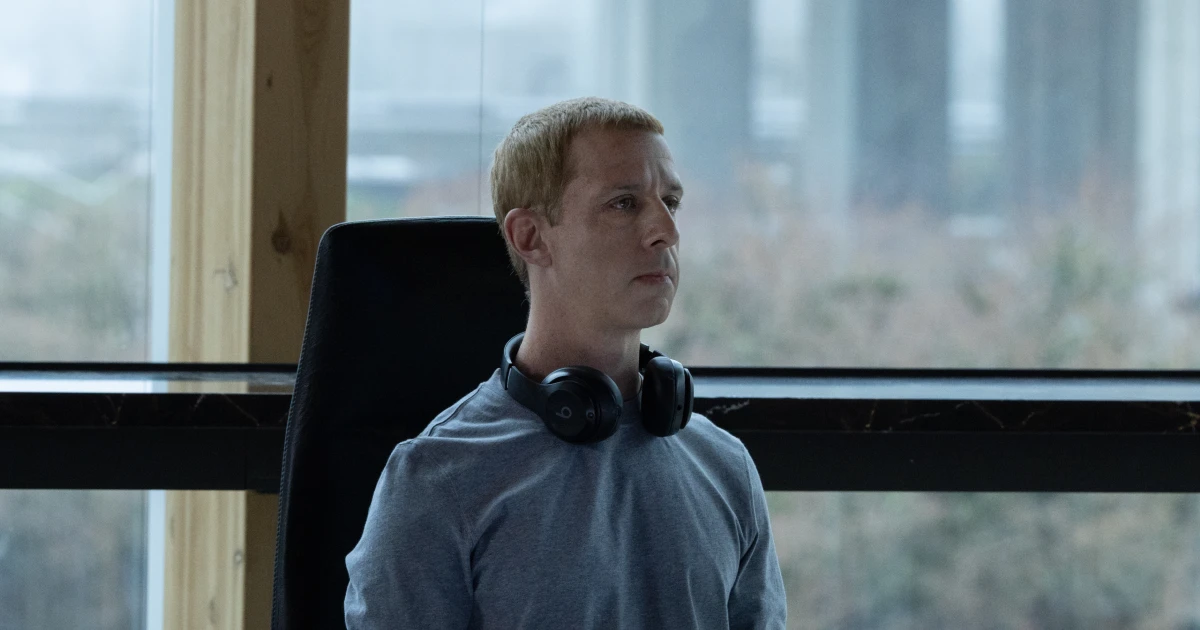
The thing that excited me most was the free speech argument. Strong’s Zuckerberg is a caricature, a man with almost nothing behind the eyes, but he nails the voice and the way this person comes across to everyone in the room, and I honestly doubt the real one is much further from it than closer. Still, Sorkin hands him a real argument: once you start censoring, free speech is in trouble. The problem is what that freedom produces at Facebook’s scale, from false narratives and people pushed into extremist views to amplified bullying and real damage to people’s mental health, and I genuinely don’t know where the line should sit when the percentage of people affected is that high — and let us not forget a LOT of these people are teens. The Social Reckoning doesn’t tell you either. In one exchange, Zuckerberg says his company isn’t the referee, it’s the public square, and Charlie (Bill Burr, The King of Staten Island) compares him to a crossing guard standing outside a school with his arms at his sides while cars drive straight through the kids. Burr was the surprise of the cast for me. Raya (Wunmi Mosaku, Sinners) shares many of those scenes and holds her own, and Betty Gilpin (The Hunt) and Billy Magnussen (Game Night) fill out a cast I have nothing bad to say about.
That “public square” line reads differently once you go through the Facebook Files. Facebook told the world its rules applied to everyone. At the same time, a program called XCheck kept millions of high-profile accounts out of the usual moderation, and plenty of them used that cover to post harassment and calls to violence. Inside the company, employees proposed broad changes to the features that amplified the most inflammatory posts. The company rejected those proposals because they would slow engagement and growth. What Facebook did instead was make one-off calls on specific groups it decided were dangerous, like the Patriot Party movement that far-right activists tried to launch after January 6. That is refereeing, just with rules nobody outside the building could see. Another article in the series shows management keeping political optics at the center of its decisions, more worried about being accused of bias than about what was actually spreading. So the neutrality Zuckerberg defends in The Social Reckoning was never really on the table, at least not the way he describes it.
A word on the January 6 sequence at the Capitol, since some are already calling it cheap. It isn’t staged as a third-act action set piece and was never built up as one. It’s a short illustration of what happens when none of this is controlled, and judging it as spectacle misses its purpose. The adaptation choices more broadly are smart. The Wall Street Journal series ran to 17 articles, drawn from tens of thousands of internal documents, and no two-hour film could carry all of that. Sorkin concentrates on what has the widest consequences and leaves the rest to the reporting, and I agree with his picks.
And the reporting goes well beyond American politics. Employees warned that human traffickers in the Middle East were using the platform to recruit women into exploitative jobs, that armed groups in Ethiopia were using it to push violence against minority ethnic groups, and that people were selling organs on it, and in many cases the company’s response was weak or simply didn’t exist. In India, Facebook’s own researchers watched hate speech jump by 300% during deadly riots, traced part of it to groups tied to the government, and held back from acting because of the political fallout. Closer to the teens I mentioned earlier, Instagram’s internal research kept finding the app was harmful to a large share of teenage girls, while the company kept minimizing those findings publicly, even when talking to Congress. Facebook’s own surveys suggested about one in eight users felt their use was compulsive enough to hurt their sleep, work, parenting, or relationships. Even Zuckerberg’s personal push to get people vaccinated against COVID was undercut by anti-vaccine activists turning the platform’s features against that campaign, and he couldn’t steer his own creation where he wanted it to go.
I have no doubt this would be received better if The Social Network didn’t exist. That comparison is unavoidable for a lot of people, and it’ll hurt the movie. It’s also possible that if you already knew all of this in detail — the real figures and not just a general feeling that social media is evil — it won’t grab you the way it grabbed me. I didn’t know nearly enough. I was riled up for two hours, and I kind of teared up during the climax.
I came home and started reading the original investigation, and I haven’t been able to stop. If the movie gets to you, read it. All 17 articles of the Facebook Files are here: https://www.wsj.com/articles/the-facebook-files-11631713039
Final Thoughts on The Social Reckoning
Personally, I put The Social Reckoning on the same pedestal as The Social Network, and I genuinely value it more because what it tells us is more shocking and more necessary. The script is full of analogies that land, and the free speech debate at its center doesn’t pretend there’s an easy answer. Mikey Madison is excellent as a whistleblower acting out of love for what Facebook could have been, Jeremy Allen White keeps the investigation moving, and Jeremy Strong’s Zuckerberg is a caricature I believed anyway. Sure, it repeats itself, and it looks like TV, but Alexandre Desplat’s score and the back-and-forth editing keep it gripping regardless. It’s one of the most riveting films I’ve seen this year, and I’m still angry about it.
Rating: A
The Social Reckoning releases in theaters on October 9th.
Learn more about the film, including how to watch it, at the official website for the title.
You might also like…