
My timing with this franchise has always been a little off. The original four films came out before I was really into movies, and, a little ironically, that changed right around the time Katniss’ story wrapped up. So, when I recently rewatched the entire saga, the first time I’d seen any of it since release, it was about as close as I’ll ever get to discovering a franchise from scratch. Other than the ending, I barely remembered a thing. I couldn’t have told you which one was my favorite, let alone my least favorite. That’s also why I skipped The Hunger Games: The Ballad of Songbirds & Snakes when it came out, more or less on purpose. I didn’t have time for the rewatch, and I wasn’t going back to Panem without it.
Having now seen all five, I can safely say I really enjoy this saga. I don’t dislike any of the films, though The Hunger Games: Catching Fire is the only one I’d say I truly love. After that comes The Hunger Games: Mockingjay – Part 2, then The Hunger Games, Ballad of Songbirds & Snakes, and The Hunger Games: Mockingjay – Part 1 in last place. My bigger feeling about the franchise as a whole is that it had the potential to be far more memorable and impactful than it turned out to be. Almost every entry plays it a tad too safe, even for a PG-13 saga. That’s where my head was walking into The Hunger Games: Sunrise on the Reaping, with Francis Lawrence (I Am Legend) directing his fifth movie in the series and the spotlight finally on the drunk, sharp-tongued mentor from Katniss’ story.
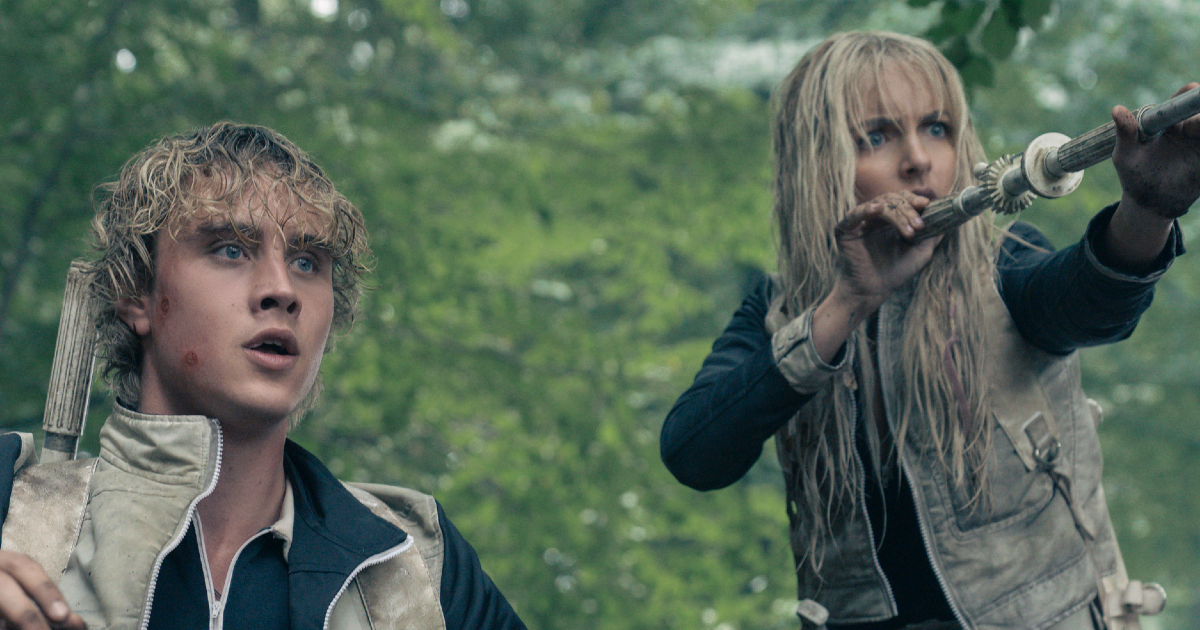
The 50th Hunger Games are about to begin, and reaping day happens to fall on the sixteenth birthday of Haymitch Abernathy (Joseph Zada, The Speedway Murders), a carefree District 12 kid who’s head over heels for his girlfriend, Lenore Dove (Whitney Peak, Hocus Pocus 2). This year is a Quarter Quell, and the Capitol’s special twist is to double the number of tributes, so four kids from every district are sent into the arena instead of two. An incident at the reaping puts Haymitch on the train to the Capitol alongside Maysilee Donner (Mckenna Grace, Ghostbusters: Afterlife) and two other District 12 tributes. Waiting for them are a vicious escort named Drusilla Sickle (Glenn Close, The Wife), a young Effie Trinket (Elle Fanning, Predator: Badlands), an ambitious host in Caesar Flickerman (Kieran Culkin, A Real Pain), and a cameraman called Plutarch Heavensbee (Jesse Plemons, Civil War). President Snow (Ralph Fiennes, Conclave) keeps a close eye on the boy from District 12 who won’t stay quiet.
In the original films, Haymitch was mostly an archetype: the bitter mentor who drinks too much and says the things nobody wants to hear. It worked largely because Woody Harrelson (No Country for Old Men) is the kind of actor who can make a type feel lived-in. We always knew Haymitch won his Games, and we always knew he came out of them broken. What Sunrise on the Reaping finally gives us is the how and the why. It introduces him as a happy, slightly cocky kid with a girl he’s crazy about and zero interest in the Capitol’s spectacle, and then it takes things away from him one at a time. Every cruel moment leaves something behind that he carries long after the arena, and by the end, the wreck of a man Katniss meets decades later makes complete, devastating sense. A character I’d only ever seen as a familiar type, lifted by a great performance, is now a complex, fully fleshed-out person whose story is sad and, somehow, inspiring.
Zada carries most of that weight, and for his first big leading role, he’s extremely compelling. He leans hard into Haymitch’s warmth early on, which is exactly why the later scenes hurt so much. My only nitpick is his accent, which slips every now and then. It’s far less noticeable than what happened with Rachel Zegler (West Side Story) in the previous flick, but it’s strange how something this trivial, which rarely bothers me, has now caught my ear in two installments in a row.
Which brings me to my main issue, and it’s a franchise-wide one. For one of the most popular sagas ever made, this is a remarkably formulaic series. There’s always a reaping. From the second movie on, there’s always a twist on the Games, whether it’s a victors-only edition, one where the mentors are the real players, or now one with twice as many tributes. Most competitors die off-screen in the opening bloodbath, and the winner is the least surprising choice possible, either because it’s obvious or because, with two prequels, we literally already know. The aftermath is almost always something short of a real victory, with Katniss’ final chapter as the one exception. The only time the series broke its own mold was when it split the last book into two films, and that created problems for both of them. Every franchise leans on formulas, but this one repeats entire scenes, with nearly identical dialogue and nearly identical consequences, installment after installment. Even the themes keep coming back with only a few new wrinkles.
Sunrise on the Reaping doesn’t escape that. Haymitch’s story is built as a deliberate mirror of young Snow’s in Ballad of Songbirds & Snakes: two boys shaped by the same system and the same kind of tragedy, one of them choosing cruelty and the other choosing to fight it. I understand the parallel is the point. It still felt all too familiar, especially with Lenore Dove, who plays almost like a second take on Lucy Gray. Peak does everything the role asks of her, and she even resembles Zegler on screen, which only makes the echo louder. These movies are still entertaining and engaging for the most part, this one included. They’re just very, very familiar.
The theme that hit me hardest is the one hiding in the title. When we meet Haymitch, he treats the reaping the way you’d treat the sunrise: it happened yesterday, it’ll happen tomorrow, and there’s no point wondering whether it could ever stop. Lenore Dove sees it differently. For her, nothing about Panem is a law of nature, and a morning without a reaping is something you can actually picture. That disagreement is the spine of Sunrise on the Reaping. Haymitch’s arc is about moving from quiet acceptance to the stubborn belief that things don’t have to be this way, and then acting on it when the odds are absurd. That’s what makes his story inspiring instead of just sad. Rebellion here doesn’t start with weapons or speeches, but with one person refusing to believe that the way things are is the way they must stay. There’s a small irony in a franchise this attached to its own formula telling a story about exactly that.
It helps that these are the best Games of the classic arena format. The Capitol streets of Mockingjay – Part 2 remain the most emotionally engaging “Games” of the saga for me, and I liked the scrappy rawness of Ballad of Songbirds & Snakes, but this is the first time the Games actually feel like a proper event. The arena is huge and bursting with color, a mountain landscape (volcano included) so beautiful that it’s easy to forget any flower or stream might kill you. I never quite knew where its edges were, and that made the whole place feel genuinely dangerous. The action is also clearly improved. My one disappointment is the Quarter Quell twist itself. Twice as many tributes is a nice idea that the film barely uses, as the vast majority are dispatched off-screen so quickly that it might as well be the usual 24. That’s always been one of the most underwhelming parts of these Games, and doubling the headcount only makes it more obvious.
Like Ballad of Songbirds & Snakes, this one is split into three acts, but it fixes most of what bothered me there. The Games don’t end too early, and when they do end, it isn’t rushed or abrupt. It feels like a real conclusion. A good chunk of the third act still takes place in the arena, and the post-Games stretch is actually compelling instead of circling an ending we can all see coming. It puts the final touches on Haymitch’s arc, shows how much he gave up over the decades that follow, and then gets out. At 158 minutes, this is the longest movie in the franchise, and I honestly never felt it. The balance is just right. James Newton Howard (Nightcrawler) delivers another strong score, and I appreciated that the film doesn’t drown itself in songs like the last one, or stop every few minutes to wink at the audience with a reference to something or someone.
The cast is great across the board. Grace is a fun case: in real life, she’s famously this franchise’s number one fan, and at this point she seems to leave a footprint on every major franchise in Hollywood, so it’s a little funny how little of that excitement she brings to Maysilee. Her tribute is serious, fearless, even a bit menacing, a girl who’s plainly in the arena to win and has no interest in putting on a show for anyone. Close is the other name people will be talking about: Drusilla is grotesque, and the way her cruelty erupts out of nowhere makes her genuinely unsettling. Plemons and Culkin make Plutarch and Caesar their own instead of chasing their predecessors, while Fanning nails Effie. Maya Hawke (Do Revenge), Kelvin Harrison Jr. (Waves), and Lili Taylor (The Conjuring) do good work as the mentors we already know as Wiress, Beetee, and Mags. Fiennes is underused as Snow, though I don’t really mind — we literally just had a whole movie with Snow as the protagonist, and this one didn’t need any more of him.
One of my favorite things about Sunrise on the Reaping is how many younger versions of familiar faces it introduces. Effie, Beetee, Wiress, Plutarch, Caesar, Snow once again, plus relatives of major characters, with some very pointed surname drops. It’s more than fan service. Seeing all these people decades before Katniss makes it clear that the rebellion wasn’t a spark that caught overnight. Revolutions don’t happen in a matter of weeks or months, and this one took years of planning, patience, and waiting for the right moment, from people who kept going long after it would’ve been easier to stop. Most of them pay dearly for it. That’s the cost of rebellion the film keeps coming back to: the people who start this kind of fight rarely get to see the morning it was all for, and the movie lets that sink in without turning it into a lecture.
Propaganda, the franchise’s constant theme, is here too, with a slightly different flavor. This Panem is crueler and less polished than the one Katniss grows up in. Capitol residents treat tributes like livestock, and the people running the Games barely bother pretending they’re anything other than a tool to keep the districts in line. The spectacle hasn’t been perfected yet, so you can see the machinery still being built. Plutarch starting as a man behind a camera is a smart detail in that sense, and Sunrise on the Reaping keeps asking how much of what Panem remembers was decided by whoever controlled the footage. It’s ground this saga has covered several times by now, but tying it to Haymitch gives it a personal edge since we’re watching history get edited around someone we’ve come to care about.
And then there’s the reunion. Everyone already knows that Jennifer Lawrence (Silver Linings Playbook), Josh Hutcherson (Bridge to Terabithia), and Harrelson are back, which was a terrible, terrible thing to make public before release. So I’ll just say that, as expected, they share a single scene, and yes, it’s nice and genuinely special to see them together again. It doesn’t feel forced at all. If you’re going to bring those three back, this is the perfect moment to do it.
Prequels are always fighting uphill. Keeping a story interesting when everyone knows how it ends, and how everyone in it ends, is hard. Sunrise on the Reaping handles that better than I expected any of these films could, and it’s more compelling and intriguing than most of the original series. As a character study, it also works much better on Haymitch than Ballad of Songbirds & Snakes did on Snow. Familiar formula and all, this is the closest I’ve come to loving one of these movies again…
Final Thoughts on The Hunger Games: Sunrise on the Reaping
The Hunger Games: Sunrise on the Reaping is my second favorite film in the franchise. Joseph Zada is extremely compelling in his first big lead, and the story finally turns Haymitch from a familiar archetype into a complex, tragic, oddly inspiring character. Mckenna Grace, Glenn Close, Jesse Plemons, and Kieran Culkin lead a great ensemble around him. These are the best Games in the classic format: a vast, colorful event, though the doubled tributes go mostly to waste. The three-act structure also fixes much of what dragged down the previous prequel. Its ideas about refusing to accept the way things are, the long and costly road of rebellion, and the usual propaganda angle all land. The saga’s formula is still firmly in place, from the reaping to the off-screen deaths to the Haymitch-Snow mirror, and Lenore Dove feels way too close to Lucy Gray. The Hunger Games: Catching Fire is still the one I love, but this is the closest any other entry has come.
Rating: B+
The Hunger Games: Sunrise on the Reaping releases in theaters on November 20th.
Learn more about the film, including how to watch it, at the official website for the title.
You might also like…
