Content warning: sexual assault, child-centric trauma
Writer-director Beth de Araújo has been open that Josephine is based on a true incident from her childhood. The trouble is that knowing this fact hampers the ability to speak critically about the film. Anything negative might feel like a personal attack against the real person the character is based on. But film critics are nobody’s therapists. Quite frankly the whole point of Josephine is to knock sense into people who should have known better. This is a fictional film about how a child deals with a trauma she isn’t mature enough to understand. Well, other than by growing up to make movies about it. Josephine is for adults, specifically for parents and people who work with children who’ve experienced trauma. For all its bleakness it succeeds because we never lose the child’s perspective.
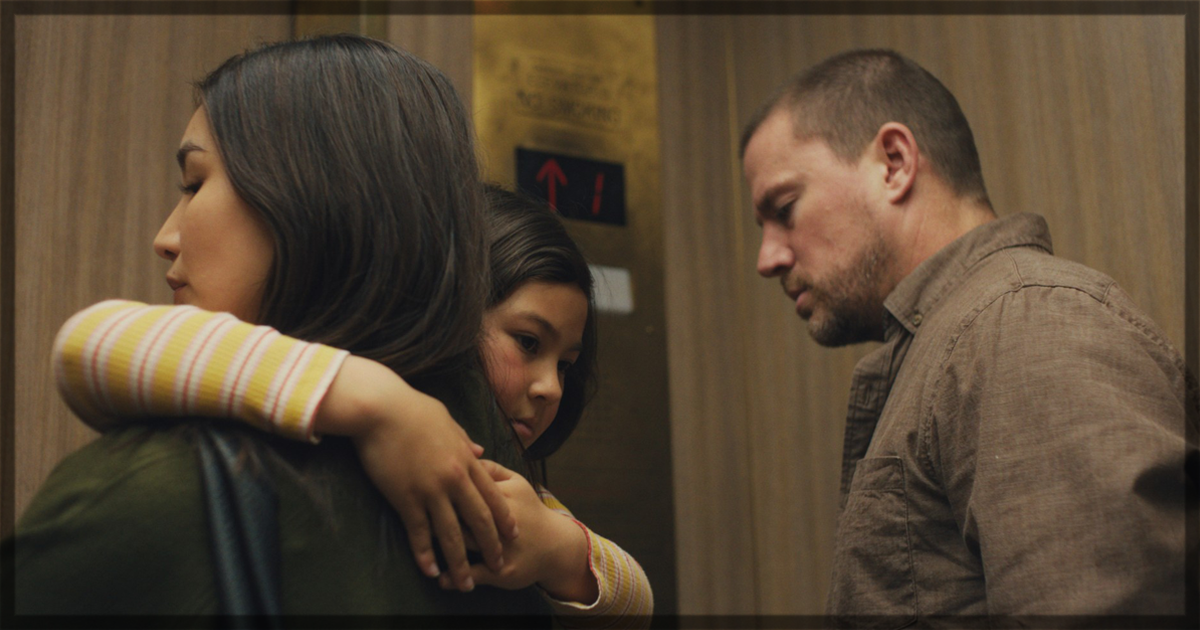
Josephine (an exceptional Mason Reeves) is the eight-year-old only child of wealthy parents Damien (Channing Tatum, more on whom later) and Claire (Gemma Chan). They live in splendor in San Francisco but send Josephine to the local public school. Claire is a modern dancer and all we learn about Damien is that he’s athletic and insomniac, and his own dad was a violent man. They both have two flaws common to parents: they expect Josephine to do as she’s told, but rarely explain to her why. They also, like everyone, make mistakes. Damien’s life-altering mistake is to become separated from Josephine during a regular early-morning run in a local park. In those ten or so minutes by herself, Josephine witnesses a rape. We see it too, in its entirety, when the lady (Syra McCarthy) is attacked and knocked to the ground unconscious by the man in the green shirt (Philip Ettinger) and everything that follows. It is very clear to any adult what is happening, but all Josephine understands is that it’s very bad. When Damien does show up, he immediately plays the hero. This means giving chase to the man in the green shirt and calling the cops and leaving Josephine and the lady alone. Eventually the cops do come, the lady is taken to safety, and no one seems to know what to do with the little kid who’s also there. In the aftermath, Josephine is alone. Well, not entirely, which is much worse than you’d think.
The maddening thing about the aftermath is how entirely the adults are focused on their own feelings. Claire and Damien are not upset something bad happened to Josephine. They are upset they have to handle the bad thing that’s happened to Josephine. They seem to think Josephine’s ignorance over what she saw will protect her. Damien sticks to their regular sporty routines and says talking won’t help. Claire expects Josephine to take the initiative in talking about it, except when Josephine does, she cries. Ms. Chan does a nice job of implying some buried trauma from Claire here, but Claire’s amazing inability to consider her kid’s point of view is infuriating. It takes a police officer’s comment to make them realise that Josephine witnessed more than they know. And basically everybody thinks that explaining the meaning of what Josephine saw to her will make things worse. As if not talking about it will make it go away. All her youth means is that she doesn’t have the words to explain what she’s feeling. The upsetting ways she acts out are how she’s trying to articulate her feelings. Not that the adults bother to understand this; they really don’t seem to understand how it’s all connected. Most of all, none of the adults want to acknowledge that the moment Josephine saw the man in the green shirt was the moment her innocence was murdered. Her innocence didn’t die. It was murdered as surely as the lady was raped.
As time passes we see Josephine eavesdropping on the parents talking to each other, and the lawyer (Michael Angelo Covino) talking to her parents. The lawyer has a gruff frankness that’s almost kindness, except he is only interested in what’s directly relevant to his work, which Josephine’s feelings aren’t. It’s like a Charlie Brown cartoon, with all the adults going wah-wah-wah over Josephine’s head with her having to figure everything out for herself. Even when Josephine gets into a bad fight with a boy at school, we only see the teachers talking to Claire, never directly to Josephine. The only person who does talk with Josephine is Kerry (Eleanore Pienta, who’s a breath of fresh air here), her court-appointed advocate. And why does Josephine have to talk to a lawyer, and need a court-appointed advocate? Because even though the lady has chosen not to participate in the legal case against the man in the green shirt, Damien and Claire have decided that Josephine will.
You want to reach into the screen and shake all of these adults. All these adults – fully grown people! – these lawyers, cops and parents as well as the lady allow the entire justice system to rest on the shoulders of a child. Josephine is a kindhearted and smart child, who doesn’t make much of a fuss about her fears, but she is still just eight years old. Greta Zozula’s camera makes excellent use of panning techniques and occasional first-person camera shots to reflect Josephine’s viewpoint at all times; most often scenes are shot with the camera looking up at the adults, mimicking Josephine’s eye level. We experience all of this from her level. And despite all these adults talking around Josephine and over Josephine and about Josephine all the goddamn time, none of them talk with her.
When Josephine pitches a fit in a toy store for a toy gun, her parents don’t understand she’s looking for protection and give a long lecture about why guns are bad. When she spends a night using string to build a trap in front of her bedroom door, Damien and Claire just laugh. And by the time the reality of Josephine’s fears becomes visible – in a moment that provoked a collective gasp across the screening I attended at the Berlinale – Josephine has been made to feel so alone she doesn’t tell anybody about it. It’s so unbelievably unfair it’s hard to fathom. Miss Reeves does some excellent work here, so excellent it would be fascinating to learn much more about the process of working on such sensitive subject matter with an actress this young. This is all the more tricky because it’s bananas how incapable the adults are of understanding how Josephine is feeling.
But in an odd way this is Mr. Tatum’s movie. His stardom is based on an unusual expertise in modern American masculinity, by which is meant an understanding of how men think about and then act out their roles as fathers, lovers, providers and warriors. His expert physicality and his knowledge of what men count as strength is perfectly used as a man who wants only to be the protective barrier between his daughter and the world. Except when it mattered, he wasn’t there. If he hadn’t let Josephine run ahead, none of this would have happened. But the worst mistake Damien makes is refusing to talk about it with Josephine, because if he did, he’d have to admit he failed. And yet the consequences must be dealt with whether he wants to or not.
Because in the end Josephine is about consequences. The little heroine has learned that bad things happen, that parents can’t always keep kids safe, that men sometimes like hurting women, and that nobody will ever protect you like you can protect yourself. These are facts of life that can send mentally robust adults into screaming breakdown so it’s no wonder Ms. de Araújo has made this movie. If she had to live this as a child, we should honor her knowledge and watch a damn movie about it. Being able to talk about the bad things that happen to you is very important, and it’s rare for art to have such first-hand knowledge of what can happen when you can’t. The major sense the movie leaves us with is that Ms. de Araújo has very richly settled some scores. Anyone who watches Josephine because a child near them needs their help will hopefully be motivated to do much better than this.
Josephine recently played at the Berlin International Film Festival.
Learn more about the film at the IMDB site for the title.
You might also like…