
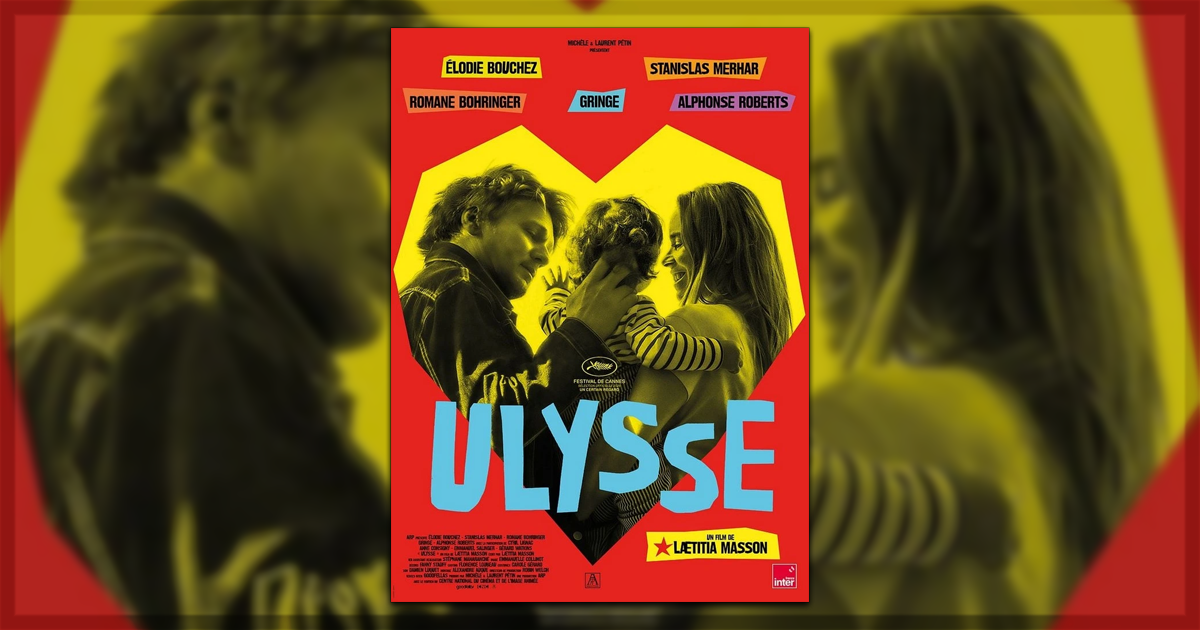
Ulysse is once again the kind of daily-life film at which French cinema excels. Here the family is a mother, her disabled son, and the army of professionals whose job it is to help her son find his way in the world. It is indeed an odyssey, told from the point of view of the mother. This choice is not necessarily new, but it is reassuring, and it’s so well done it feels like a victory.
Alice (Élodie Bouchez) is a sociologist researching what teenagers want to be when they grow up when she gets pregnant by her pianist partner Volodymyr (Stanislas Merhar). Volodymyr wants to name the baby after Glenn Gould’s favourite piano, while Alice wants Pip, the name of her favourite Charles Dickens character. Eventually they settle on Ulysse, and things are great until they realise he’s a year old and neither walking nor talking. Specialists inform them Ulysse has a certain syndrome, and it’s a bad shock for these members of the intelligentsia to realise their boy will never be a normal child. It’s fair to say he is slow, with bad fine-motor skills, and a fussy eater who eats only bread-and-butter for so long he has it for birthday cake. But Ulysse is also a curious child who wants to be part of the world, who is kind and thoughtful and able to get there eventually. It’s just eventually takes years longer for him than it does for most other kids. But once the diagnosis is accepted, Alice is firm. She will not wrap Ulysse in protective packaging. He has got to get to the stage where he can function in the world without her. This decision receives the full support of her makeup-artist best friend Laura (Romane Bohringer) and Ulysse’s speech therapist Ahmad (Gringe), who is sweet on Alice. But it does not receive the support of Volodymyr.
Almost the entire picture writer-director Laetitia Masson paints here is of Alice’s interactions with the many professionals of ‘acronym land,’ the people whose job it is to help Ulysse learn. There is a bewildering army of therapists he works with as a child, even as Alice must argue with some of them to get Ulysse’s needs met. The bad days within the family aren’t seen at all. No tantrums, no rages, no bad mistakes are made by anybody (with one single exception late in the game). By the time Ulysse is a teenager (now played by Alphonse Roberts, around whom the entire film was arranged, as Ms. Masson said at the Cannes Film Festival premiere) Alice knows how to manage the system and how Ulysse’s ‘difficulties’ can best be worked through. Ulysse is doing his best, too. But Alice is shocked to learn that once Ulysse turns eighteen, the only options anybody suggests are either Ulysse staying in her house all day long by himself forever (boring) or being dumped in a day center with other disabled adults (even more boring). And sure, Ulysse will never be either a sociologist or a professional musician, but there is work out there he is capable of. He has things to offer and he can contribute to society. They just have to figure out how.
Ms. Bouchez manages to make Alice a very good mother without her ever being a saint. Ms. Bohringer shows up from time to time to inject a dose of fun and chaos into the film, putting everyone into silly costumes or chattily joining Ulysse and Alice in his favourite activity of riding the local merry-go-round. Mr. Merhar has a lot less to do, as fathers often do, but this less showy part is also the mouthpiece for the ideas many people have about disabled people. Their lives are not emotionally different to those of more intellectually able people and the expectations for them should not be different. The problem in this life of course is that the rules are the same for everybody, and the cruel unfairness of this can be the hardest thing to manage. But the rules can also be changed. It’s fairly clear that Ulysse has been designed to show to tough things are out there for disabled people and their families, and to cry for help in making life happier all around. Whether that’s better monitoring of schools for disabled children, creating jobs to support disabled adults, or just expecting people to be more open-minded in how they interact with others, Ulysse wants us to know there are lots of small things we can do.
It’s a shame the movie was not framed around Ulysse’s point of view, because there have not been a lot of movies about a disabled child transitioning into a more independent adulthood. On the one hand we’d lose the scenes of Ahmad telling Alice that Ulysse’s ability to talk is his job, and her work as a mother is completely separate to his. But then we might gain sight of how someone whose life has been defined by his limitations learns how to begin managing his limitations for himself. But this is a movie for the mothers who are battling the overwhelmed care and support systems in France, or indeed anywhere in the world, and want some reassurance that someday their work as mothers will be over. That someday their kid will be able to take care of themselves the same as anybody else. And in that sense Ulysse is a wonderful beacon of hope that an awful lot of mothers will cling to.
One final thing: I would be very keen to learn Jon Favreau’s thoughts on the movie, as his 2014 film Chef is a major plot reference in the final third of the film, including the final shot.
Ulysse recently played at the Cannes Film Festival.
Learn more about the film at the IMDB site for the title.
You might also like…
‘All of a Sudden’ Has an Appetite for Discussion (Cannes 2026 Film Review)