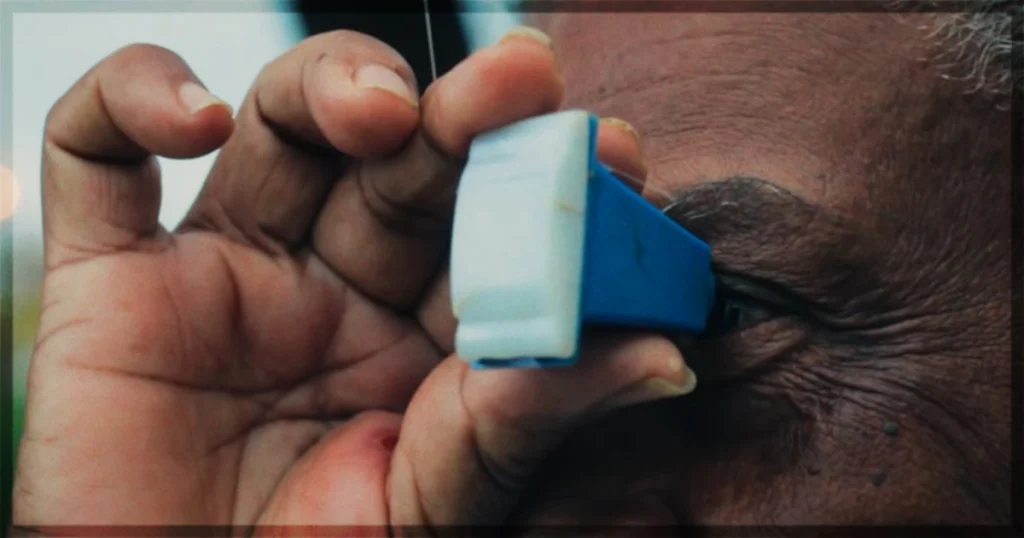
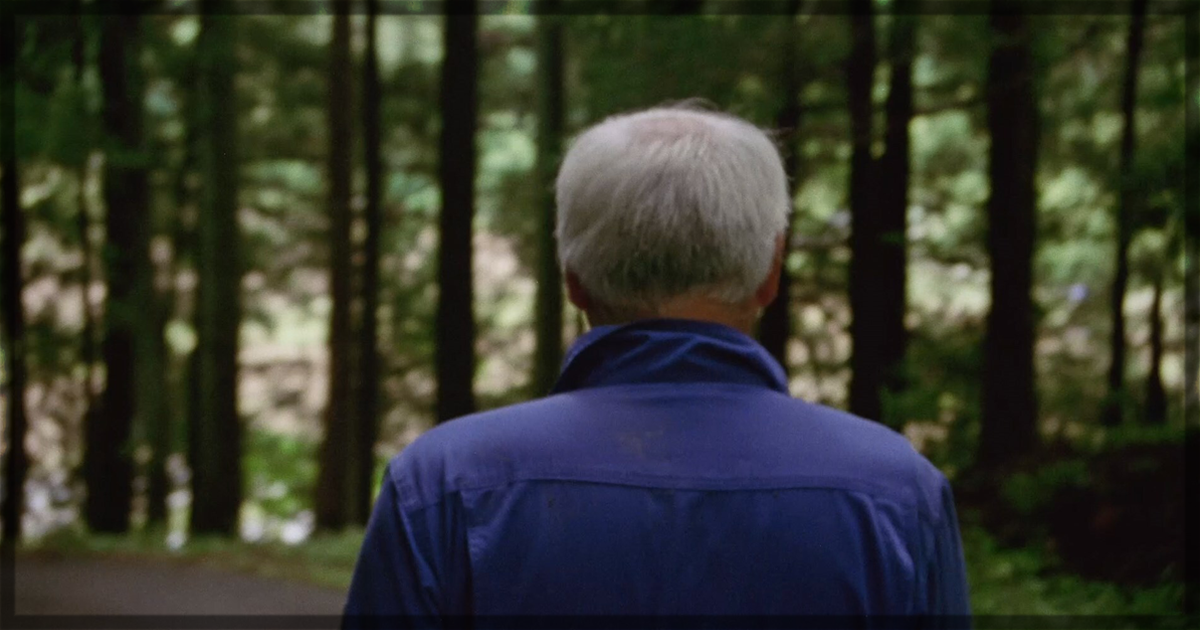
The Brazilian experimental filmmaker Ana Vaz is probably best known for her 2022 project É Noite na América (It is Night in America). The project premiered at the Locarno Film Festival, and she has now returned to it with Fire Flower (Hanabi). Shot over the last ten years, her latest is based on Journal of a Radioactive Brain by Yoko Hayasuke, a Japanese writer who lives on infected soil as a result of the 2011 Fukushima nuclear accident. It contaminated the water and affected the people living around it, resulting in at least fifty deaths and the displacement of forty thousand people. The Scientific Committee of the United Nations classified it as the worst nuclear incident since Chernobyl. Fifteen years after the Japanese accident, Vaz attempts to document its aftermath.
At first, the film is shot in a highly personal form. The director is the producer, editor, and cinematographer, and is also responsible for emailing Hayasuke and other people portrayed in the project. She flies to Japan to shoot Tokyo nights and the sunrise on the soil that replaces contamination with life. Over the emails, the modern-day letters, she captures the writer’s perception of the last decade, which created uncertainty for the citizens living near the sites of the earthquakes. The friction between the tectonic plates was so strong that it reached a rare 9.0 on the Richter scale, a magnitude that has occurred only five times in history. Hence, the Tōhoku disaster is an outlier in modern history, something infrequent, but that happened in Japan at the beginning of the 2010s decade, and still causes aftereffects.
In its 90 minutes, the director creates a document of survival and how individuals deal with the natural causes that destroyed the land. In a sense, the project is a contrast between the never-ending growth of the capital, Tokyo, and the wounded land affected by nuclear calamity. There lies a difference between the two regions: one where progress comes from neon billboards on a crowded avenue, home to the world’s largest metropolitan area. In contrast, the other region is chill and offers a higher quality of life to its citizens. In the traditional portrayal of the Japanese megacity, in a nighttime car scene with the blur of motion over the film, the director shoots with a 16mm Bolex, reinforcing the notion of progress. Yet, in the rural area, she searches for the son’s reflection on the soil, the solar effect that creates light and a beautiful shot on screen.
Vaz creates a film that operates on the logic of memory, recalling the accident even though the world has forgotten it due to today’s fast-paced system of information distribution. Fifteen years seems like a long time in the 21st Century. Still, the Brazilian director uses 16mm and video recording to take our attention back to the rarity of that tragedy. It is one of the five times in history that the scale that translates earthquakes into registered numbers has been used; the 9.0 is something very singular to the archives, but the director portrays what the numbers cannot. Even if we understand the magnitude of the disaster through scales and numerical data, imagery better conveys how the land suffered. More than that, it shows how the people who use the soil to survive and live their lives continued after all the destruction and nuclear danger. In 2011, again, Japan was dealing with the effects of nuclear material, this time, a consequence of the failed security protocols.
In a sense, Ana Vaz adapts the memories of an individual on the verge of a breakdown during a catastrophic moment in world history. Yoko Hayasuke’s Journal of a Radioactive Brain is the result of a time of despair. The author captures the struggle of the period, in which both the writer and the filmmaker collaborate to document the tragedy’s aftermath. Hanabi is an experiment with memory, the journal of time, and the ways the director, editor, producer, and cinematographer use the medium to convey a moment of reestablishment of the person and the community with the land. It has a few pacing issues, such as the placement of material, but as a whole, it works as a register of that reality and its territory. Vaz continues studying how the soil affects us as humans, as in her previous work, but differently; it is an exercise in dealing with the past and present.
Hanabi recently played at the Locarno Film Festival.
Learn more about the film at the IMDB site for the title.
You might also like…