Writer-director Katharina Rivilis is clearly telling an personal story with I’ll Be Gone in June, an observant film about one German girl’s year as an exchange student in New Mexico. (How personal? According to the press notes some of the costumes are her own clothes from the time.) The southwestern USA has as different a landscape from eastern Germany as you can get, but the ways in which the young heroine learns to navigate those differences shows how feelings can matter more than facts.
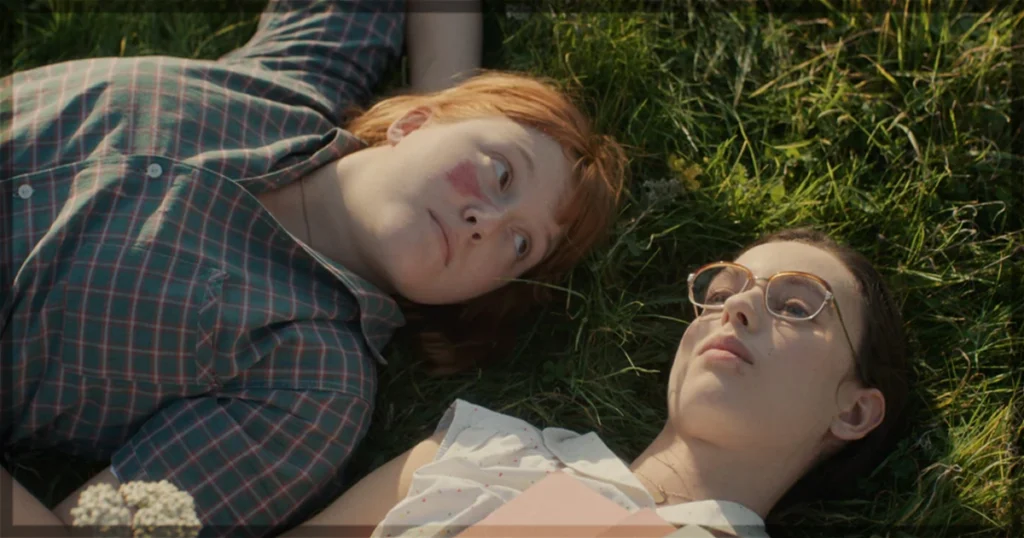
Franny (Naomi Cosma, steady as a rock) has ended up in the town called Las Cruces by the luck of the draw. Her host family is complex, frustrating, and strict. After her first day at school, Franny gets lost on her way to the pick-up spot, only to find being just a few minutes late means they left without her. She has hours in this pre-cellphone era to wonder whether or not her big journey to this strange country was a good idea. (If this seems unbelievable, when I was a 16-year-old exchange student myself, my own host mother did the same thing to me. Cutting a teenager who is not yet fluent in the local language no slack whatsoever is a great way to make yourself clear.) But Franny is not alone. There’s one other German exchange student in the school, Ida (Rebecca Schulz), and they both make friends with Sam (Bianca Dumais), a troubled local girl who’s keen to learn German, or any skill that will help her get the hell out of town.
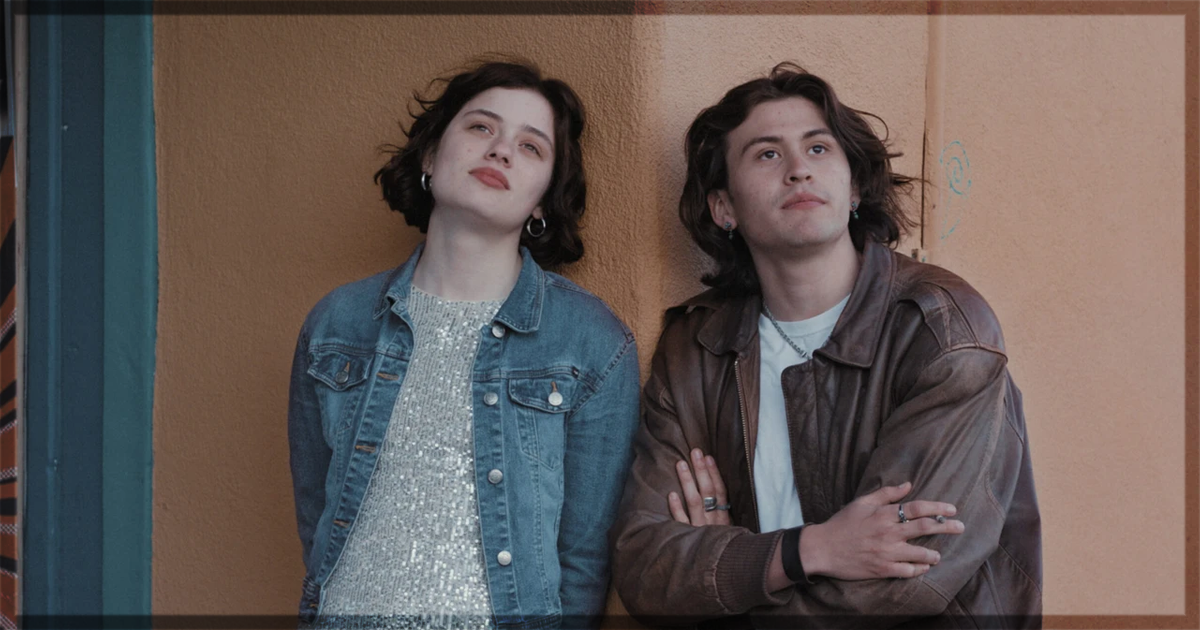
Franny gets a pair of rollerskates and starts learning her own way around. She’s friendly and curious, happy to stand up for herself if needed, but with the good sense to largely hold back and wait for other people to approach her. At a school event Franny meets a boy named Elliott (David Flores), who is such bad news literally everyone, kids and adults, and even Elliott himself, warns her against him. For a certain kind of teenage girl there is no stronger catnip and Franny is not immune. Then the host family goes behind Franny’s back and finds her a different family for her to live with (again, unbelievable as it sounds, another thing I personally experienced). And all this happens in the context of taking place in fall 2001.
As America changes from the peace of the 90s into the beginning of the current war machine, Franny has a front-row seat to the systems and the mindsets shifting. The classroom discussions of 9/11 and its consequences have an earnestness that we don’t often see reflected in teenage discussions anymore. The ways in which the boys especially consider joining the army and participating in the war as a good thing has none of the cynicism those ideals might meet these days. What’s also remarkable is how the adults simultaneously expect Franny both to have adult insight into her circumstances and also no clue at all. Her peers alternate making crass jokes about Nazis with telling Franny that of course she belongs, of course she’s American, and there’s no reason she should feel any different to anyone else in town. And Franny really wants to feel at home in this place. She is a bookish girl who mostly wears jeans and t-shirts, and her teenage angst is only lightly expressed, such as through the song at the talent show (especially remarkable because of how rarely PJ Harvey licenses her work for film). She sees the wounded Elliott as a mirror of herself, a common habit of lovestruck young women, but doesn’t quite appreciate there will be consequences to her choice.
Guilia Schelhas’ camera stays close to Franny as she reads while sunbathing or pines after Elliott or goes to bonfire parties with her friends. It also makes great use of the local landscape, especially the white sand desert where Franny and Elliott go on a date. The second host family is much kinder, which means we see them a lot less, which is a shame. For the movie to dwell on Franny’s awkwardness and unhappiness when this seems overall to have been a positive year doesn’t quite manage the mood. But that is the toughest part of being a teenager. You don’t always know what’s the right thing to do, and you don’t always know how to behave, especially when you’re navigating a culture not your own. The unnecessary lessons are what you remember.
Not all of Ms. Rivilis’ choices are perfect: the culture clash here is American vs German with little attention to the complex array of ethnicities in this New Mexico town. The rituals of the school year are entirely absent. Prom is such a globally famous rite of passage, for example, that it’s surprising we don’t see Franny participate in any of these American experiences for herself. Her own family is entirely absent as well, with the very few phone calls only heard from Franny’s side. But the emotional accuracy of being a sixteen-year-old in a strange land in I’ll Be Gone in June is so strong that its flaws feel minor. It’s a beautifully evocative film.
I’ll Be Gone in June recently played at the Cannes Film Festival.
Learn more about the film at the IMDB site for the title.
You might also like…