In 1979, Iran underwent a severe transformation after the Iranian Revolution. Mohammad Reza Pahlavi, the last Shah of the country, fell due to the dissatisfaction of the population, which organized itself politically. The figure of that revolution grew to power, Ayatollah Khomeini, a central individual who established the morality police in the country, and suppressed the participation and personal liberties of women. In this sense, similar to other regimes of oppression, filmmaking responds to a logic within the project of artistry that the regime wants to export. One of the similar examples is the Socialist Realism in the post-Stalin period in the USSR, where the artists would follow an aesthetic that served the government to get funding and authorization to work. Yet, some filmmakers manage to escape the forces of the regime on the artistry by shooting secretly, which is the case for Jafar Panahi’s It Was Just An Accident, shot with a hidden crew in the streets of Tehran. Another film to take the international stage and challenge the morality of the regime is Mohammad Shirvani’s Cesarean Weekend.
Shirvani’s films have been in the international debate since the beginning of his career. His 1999 short film, The Circle, was part of the Semaine de la Critique at the Cannes Film Festival. His 2013 feature, Fat Shaker, was selected in the Sundance Film Festival and won the Tiger Award at the prestigious International Film Festival Rotterdam. Hence, a decade later, the filmmaker returns to a major international stage with his new work. At first, the film catches the audience’s attention through the differentiation of the exported Iranian films. Under the construct of homogeneity of the Iranian film production, there is the idea that Iranian films are about the moral or political dilemmas that challenge people. In its first seconds, Cesarean Weekend showcases its handheld digital camera that feels utterly close to the characters. The scenario is a house at the Caspian Sea, in a summer villa in the Northern Iran.
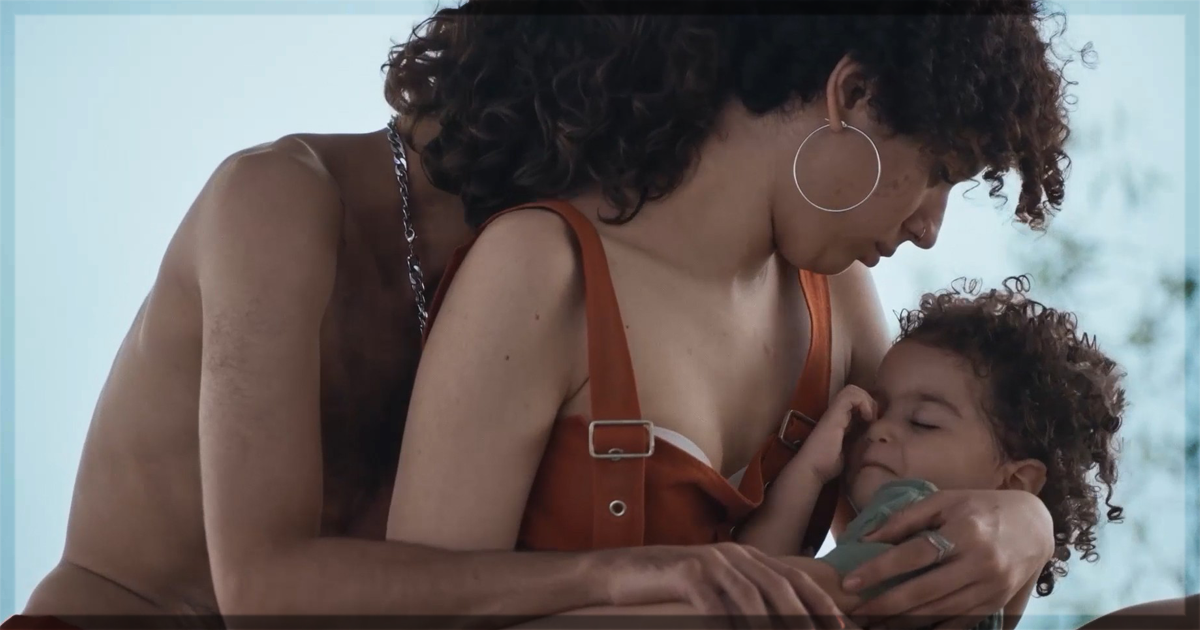
Additionally, the central character, Milad (Milad Ahmadzadeh), is an outgoing young man who invited multiple friends, mostly women, to spend the weekend in the family’s villa. His brother, Armin (Armin Shirvani), is the contrary; he is a shy man who spends most of the night sleeping. Thus, the new work by Shirvani is on the contrast between the two siblings. In the first moment, the film is a fascinating portrayal of the contemporary Iranian society. Despite the prohibitions of costumes by the morality police, such as the interaction between men and women, and the clothes that women ought to wear. Consequently, the first minutes feature Milad dancing with different women, shirtless, around the women, and dancing to the beat of an electronic song. Therefore, the handheld camera positions us among those characters, immersing the audience in the middle of their party. It is a particularly engaging proposition of the contrast between the seduction and sympathy incarnated in Milad and the shyness of Armin. In this sense, the film is a study of the relationship between the siblings and their family, who arrive there during the parties. It leads to profound conversation on moments of leisure, such as a bath in the sea or a warm pool.
Cesarean Weekend is an exercise of freedom, both formally and textually. The director positions those characters over the contradictions of the customary Iranian values to their desires. Milad finds out that one of those women is pregnant and it’s his, but he still finds time and energy to flirt with all the other ones in the room, even around her. There is an unusual element of contradiction in his actions. Yet, the most challenging element of the film is the director’s approach, which pushes the boundaries of the formal aspects of the film. The camera is constantly near the characters, added to the long, shaky takes of the men in that family in the hot water, while the film invites you to enter its wavelength. It is an experiment of the form, an almost clandestine sensual film shot in the Caspian Sea, released in the month after the violent repression of the Iranian regime against protestors. Despite its complications in the proposition, it is a tough watch due to its directorial choices. Cesarean Weekend is a statement of the Iranian society, and an affirmation of love and the constitution of families, which the director reminds us is also a political element.
Similar to the long and shaky shots of its approach, the new project by Mohammad Shirvani is inherently a highly challenging statement in both formal and textual departments, while experimenting with the notions of the Iranian filmmaking, and evidently, its society.
Cesarean Weekend recently played at the Berlin International Film Festival.
Learn more about the film at the Berlinale site for the title.
You might also like…