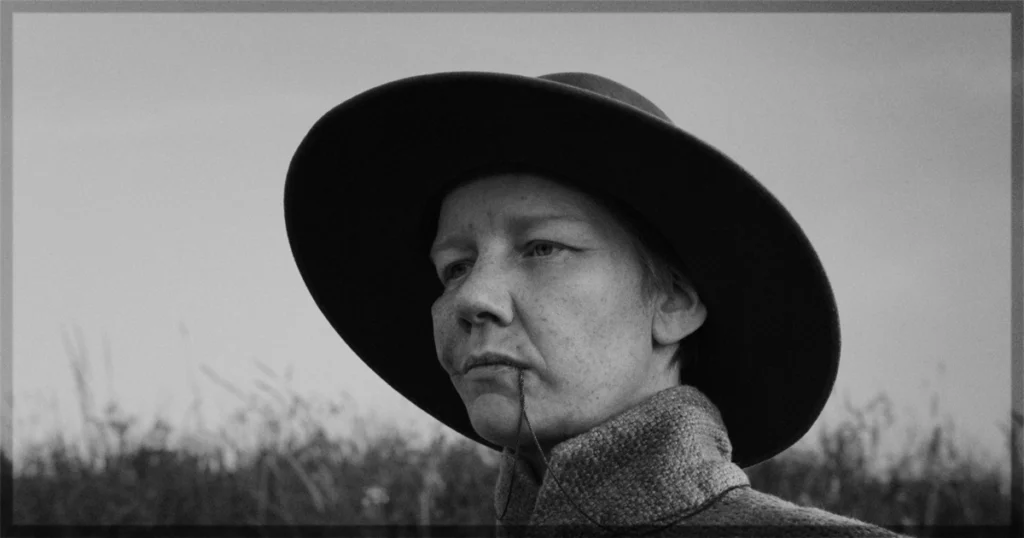
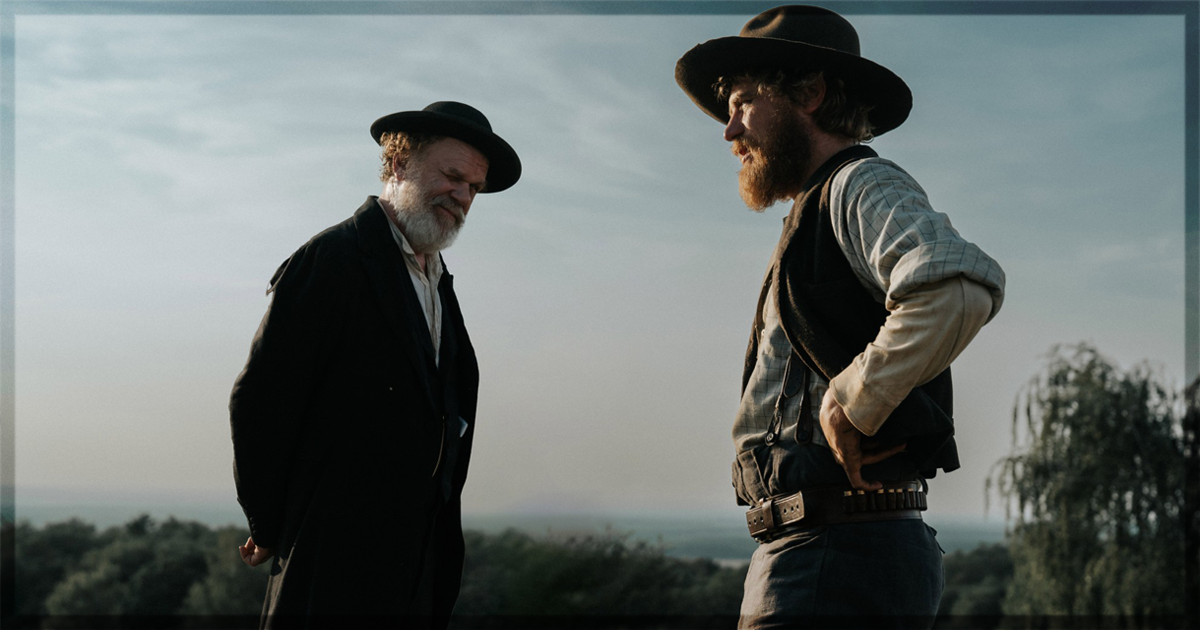
A Prayer for the Dying has had the bad luck to arrive a year after Train Dreams, which also has a forest fire at its center, and a few years after Nosferatu, another shocking and stylised horror movie about a place consumed by a plague. But it is also very much its own, very good thing. A Prayer for the Dying is smaller in its setup but that makes the horror more consuming, because we have the time to get to know everyone in the trap. The hope we hold in our mouths that somehow someone – anyone – will escape makes this as tense a movie experience as can be enjoyed.
Writer-director Dara Van Dusen and cinematographer Kate McCullough chose to make heavy use of whip-pan camera shots to emphasize how disorienting and horrible everything is. Other people at the Berlinale complained about it but it’s a pretty good metaphor for a world turning upside down. There’s also a glorious focus on colour and how the approaching menaces change how people see the world. It’s 1870 in a small town in Wisconsin, which is so small the sheriff, the preacher and the undertaker are the same man, Jacob Hansen (Johnny Flynn). Hansen is summoned to the discovery of a stranger’s dead body on a remote farm, but it’s only after he and the farmer’s children have carried the body to the home of Doc Guterson (John C. Reilly) that they learn the man died of diphtheria. If Hansen and Doc tell the town the plague has arrived, they will not be able to contain it. But if they keep their mouths shut to enable an informal quarantine, everyone they know and love will sicken and a lot of people will die. And if that wasn’t enough, Hansen’s baby daughter has developed a cough and the wildfire burning uncontrollably in the area is getting closer.
It would be nice if people who don’t believe in vaccines were forced to watch this movie. It’s horrible to watch people you care for die in screaming agony, or worse. But people who reject the science of vaccines also don’t believe in the power of art to build empathy or that a child is its own person instead of a possession of the parents. Here the children of the town, down to the tiniest citizens, are full participants in their world, spoken to on equal terms and expected to contribute to the best of their abilities. They also have unusually loud personalities, which establish very quickly precisely who they are, so we understand as well as Doc and Hansen do just exactly who is at risk as things keep getting worse. And as it does, people begin to snap. The seminal 1973 work Wisconsin Death Trip by Michael Lesy is thanked prominently in the credits, though this is an adaptation of a novel by Stewart O’Nan. The ways the people of this town try to survive are vicious, understandable and utterly heartbreaking. A little rabbit toy next to a small body does not make the death of a child easier to look at. But it does make the hope that someone – anyone – can survive this perfect storm of horror even more important.
Mr. Flynn makes an enormous impression as a war veteran clearly capable of great violence who has chosen to reject those abilities and instead nurture others in life and in death. Mr. Reilly leans hard on his likeability and decent air to depict Doc as someone who has gotten used to pain and always tries to do the right thing but who still hurts very deeply. That is the true horror of this story: everyone here is trying to do the right thing but still hurts very deeply. They are terrified, their lives are at stake and they have no idea what the best choice is, but they are trying to do the right thing. It’s so overwhelming they can’t discuss it, which chatty modern minds often interpret as not caring. But nothing could be further from the truth. As the camera emphasizes how the menaces are creeping ever closer – or in one shocking interlude, a travelling circus, which includes clowns inside a homemade elephant walking through the forest – it becomes harder and harder to figure out the way out of the trap they’re all in. But they will all die trying. We all die trying.
This is what so shocking about Ms. Van Dusen’s achievement here: A Prayer for the Dying manages to take the story of one small town and turn it into an allegory for all of us. It has an unusual beauty and staying power that many films with bigger oomph in the moment lack entirely. The care it takes is a remarkable, horrible surprise. It might not change how we see the world, but it might help us appreciate how modern science enables us to cheat death just a little longer.
A Prayer for the Dying recently played at the Berlin International Film Festival.
Learn more about the film at the IMDB site for the title.
You might also like…