
Sometime in 1998, Filipino filmmaker Sari Dalena and co-director Camilla Benolirao Griggers set out to record and revisit little-known genocides committed by colonial U.S. forces in southwestern Philippines during the Philippine-American War of 1899 for their hybrid, avant-garde first feature Memories of a Forgotten War, released in 2001 and screened at the International Film Festival Rotterdam in 2010.
Filming in the Jolo gravesites, several cast members were possessed by the spirits of their ancestors and actual warriors who fought in the war. Seeing her actors collapsing, speaking in tongues, and recalling memories of past lives, Dalena took some hard lessons from that experience about what it really means to engage with some of the most horrific parts of Philippine history and the traumatic legacy of the empire.
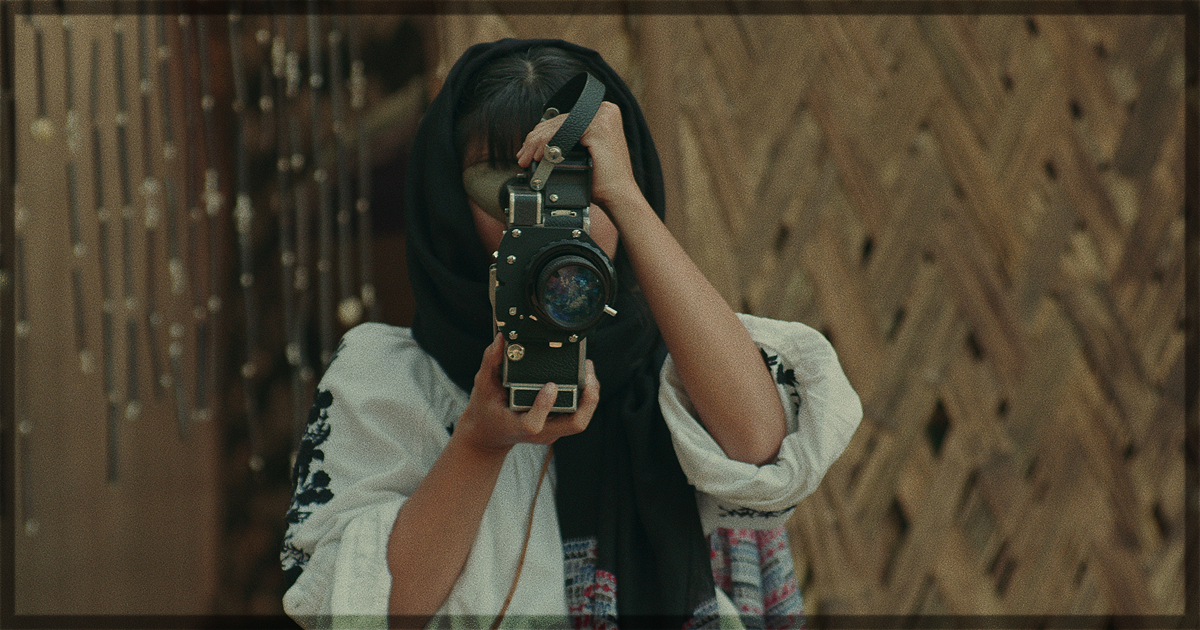
Those lessons inescapably shape the narrative motives of Cinemartyrs, a mosaic movie about forgotten massacres, interspersed with footage from Dalena’s debut, and forgotten pioneering women directors of Philippine cinema. Shifting between genres and various shooting formats — 16mm, 35mm, Video-8, audio recordings in ¼ Nagra reels, and cassette tape — the film, now playing at Rotterdam after its Cinemalaya premiere, also honors a bygone era of alternative filmmaking in the local industry. Cinemartyrs is a distinct work that is by turns funny, furious, and fascinating.
I spoke to Dalena over email a few hours after she arrived in Rotterdam.
The Interview with Sari Dalena of Cinemartyrs
Lé Baltar: Will you be in Rotterdam for the film premiere?
Sari Dalena: Yes, it’s a dream to present Cinemartyrs at this year’s IFFR edition. I am returning 15 years after I first presented Memories of a Forgotten War in 2010. It’s a full circle moment for me.
Lé Baltar: Based on your research, how limited or obscured is public knowledge about the Bud Dajo and Bud Bagsak massacres in the context of the Philippine-American War?
Sari Dalena: The Muslim people’s place in the history of the Philippines has long been ignored. I’d never heard about the Bud Daju and Bud Bagsak massacres because accurate information about this war only exists in scattered fragments, and there are conflicting accounts on what really took place. I knew I was recreating an untouched piece of history that has been never been seen on celluloid when I went to shoot Memories, but when I visited the original locations in Jolo where historical violence took place, and talked to the descendants and village historians, I literally ditched my script — it was like unearthing a vast wealth of undocumented stories and details of war.
That film gave them the opportunity to recreate their own history, as told by themselves and played by themselves, an act of reclamation and their gift to the rest of the Philippines and the world, who have never heard of their heroism during the Philippine-American War.
Lé Baltar: Can you talk about the multigenre and multiformat approach to the movie? What made you realize that it had to be told this way?
Sari Dalena: The film came together naturally, like weaving together bits and pieces of 1899 film celluloid from Edison’s propaganda films, video artifacts from the ocular in Jolo in 1999, then 16mm from the filmic dramatizations, and then there’s the forgotten 35mm LVN films of the women directors — the shape of the film is structured like a glass mosaic, it’s similar to the experience of gazing at those beautiful, colorful glass window mosaics inside a cathedral, you sit there and wait for the sun light to shine through it. It’s quite magical actually.
Lé Baltar: The film emphasizes the legacies of Philippine cinema’s pioneering women directors such as Carmen Concha, Susana de Guzman, and Consuelo Osorio. But apart from incorporating the late film historian Teddy Co’s audio recorded interview with Concha and the movies the three of them made, there’s also a scene where you imagined these women conversing with each other. How did you arrive at that idea instead of solely relying on the archival materials you gathered?
Sari Dalena: Besides Teddy Co’s generous gift of a cassette tape of his original interview recording of Carmen Concha, the first Filipina director, the idea came when I was reading Lena Strait Pareja’s thesis “Roles and Images of Woman in the Early Years of Philippine Cinema (1912 to 1941),” which laid the historical survey and overview of women in the early years of Philippine cinema. I was floored to learn that at the same time she was working on her doctorate thesis, she had six children and ten grandchildren — she was 65 years old!
Taking off from Dr. Pareja’s seminal research work was visual artist and film professor, Avie Felix’s MA thesis, “Filmmaking as Feminist ‘Elsewhere’: Susana De Guzman, Melodrama and Women Directing Films in the Philippines from 1947 to 1969,” where the researcher imagined herself having a conversation with Susana De Guzman.
This particular scene shows the feminist film historian’s important role as she sheds light how virtually ignored first women directors were written out of film history — Cinemartyrs summons these women, a communion with the forgotten mothers of Philippine cinema.
Lé Baltar: Speaking of the archival materials, how difficult was it to secure?
Sari Dalena: Nearly impossible. It took me seven long months to secure permission, until I gathered the courage to reach out to Direk Mike De Leon and he was very supportive of my request. He even suggested that I include a few titles that may highlight the works of pioneering director Susana De Guzman produced by LVN Studio.
Lé Baltar: The treatment of women across cultures is another thematic layer in the film. We see the microaggressions and misogyny hurled towards Shirin, Vangie, and Karsum. How important is it to you to foreground that lived experience?
Sari Dalena: It is no secret that the film industry is misogynistic, and it’s so ingrained that sometimes even in the most progressive of sets, when you get down in the trenches, these aggressions still occur. As a film teacher, it also struck me that it’s strange that the majority of film students are female, yet they are still the minority when sitting in the director’s chair. There is clearly a reason for this that still has not been addressed, so we have to keep probing.
Lé Baltar: Talk to me about the image of Jesus, played by Lav Diaz here, as a revolutionary.
Sari Dalena: Cinemartyrs opens with Thomas Edison’s expansionist propaganda films from 1899 that used cinema to project the imperialist dream to colonize the Philippines — and my film is an act of resistance, a decolonizing tool, as counter-cinema.
I wrote the scene with a messianic Filipino revolutionary leader leading the resistance — with Lav Diaz in mind and nobody else. Lav Diaz is a revolutionary filmmaker in every sense of the word that he subverts the notion of how cinema should be made or defined. Not to mention he has fantastic screen presence!
Lé Baltar: Cinemartyrs is essentially a film within a film, or more specifically, a film about making a film. Were there any films of this kind that sort of helped you put your vision together?
Sari Dalena: Structurally, Kidlat Tahimik and Maya Deren’s films influenced how I would weave the film together — using dream logic, experimental and associative juxtapositions and surrealist imagery. And to take the adage from Tarkovsky that the process of filmmaking is “sculpting in time,” this approach is very much true in the way this film is molded together.
Lé Baltar: What also really fascinates me about the movie, especially upon multiple viewings, is how raw and elemental the music feels. How did you go about it with composer Teresa Barrozo?
Sari Dalena: Music served as the howling, abstract character in the film, that haunts every scene like a looming spectre. Teresa and I talked a lot about music as sound design, not as a typical orchestral background for films. We jammed on Philip Glass, Kronos Quartet, and many other experimental music that otherwise we can consider as visual music.
Lé Baltar: You really got to play here, in that you weren’t hesitant to draw attention to the movie’s sense of artificiality. Was that something you had been aiming for from the get-go, visually and tonally?
Sari Dalena: Metacinema is a powerful self-reflexive construct, allowing the viewers to have immersive engagement with the absurdities and complexities of filmmaking. It also gave me a lot of freedom to play with the formats, textures, tonal shifts that break away from conventional filmmaking, where experiencing cinema is more important than storytelling itself.
Lé Baltar: The penultimate scene literalizes the birth of Philippine cinema, which feels silly but also very sincere, in that it embodies what alternative cinema truly is. How did you arrive at that moment prior to the closing montage?
Sari Dalena: I realized women give birth to revolutions, but are often forgotten by history. It’s time for a rebirth, to reclaim women’s rightful place in history and cinema.
Cinemartyrs recently played at IFFR.
Learn more about the film at the Rotterdam site for the title.
You might also like…