
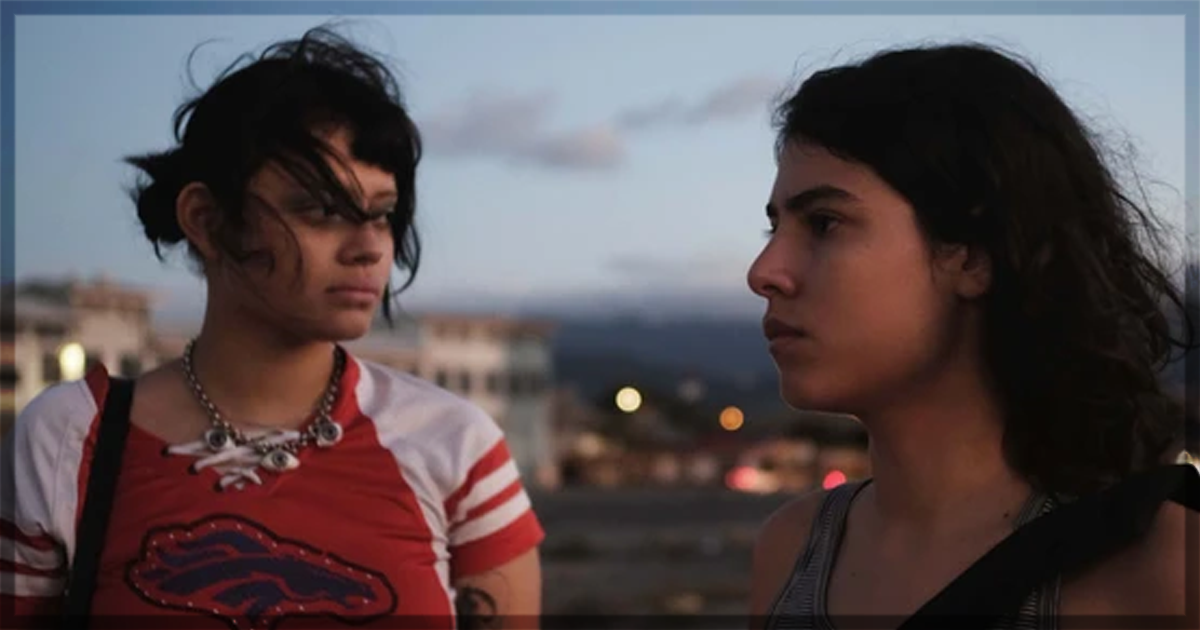
In 2022, the debut feature film Tengo Sueños Eléctricos (I Have Electric Dreams) by the Costa Rican filmmaker Valentina Maurel made a potent appearance at that year’s Locarno Film Festival. It won the directing, actor (Reinaldo Amien Gutiérrez), and actress (Daniela Marín Navarro) awards in the main competition. Later, the film was the country’s selection for the International Feature Film submission for the Academy Awards. Four years later, the young director presents her sophomore effort, Forever Your Maternal Animal (Soy Tu Animal Materno), which premieres at the Un Certain Regard section of the Cannes Film Festival. It marks the director’s return to the Croisette after her short Paul is Here participated in the 2017 Cinefondation slate, and her 2019 Lucia in Limbo was in the Semaine de la Critique.
Forever Your Maternal Animal narrates the return to Costa Rica of Elsa (Daniela Marín Navarro), a twenty-eight-year-old woman who lives in Belgium to study. She is the daughter of a poet, Isabel (Marina de Tavira), whose first poetry book is in the process of reissue. Meanwhile, she moved houses to get some time to herself from her twenty-year-old daughter, Amalia (Mariangel Viegas), who is an esoteric girl who dropped out of college. Therefore, Elsa finds her formerly known universe completely out of order. Her mother is drifting away from the mother and wife responsibilities, demanding time and space to conquer her individuality again. Her sister is in limbo, taking care of their childhood house and of her savings poorly. Thus, the woman, who is in Costa Rica to get documents to return to Belgium, feels the need to take care of a complicated family, immersed in the complexities of each one’s personality.
At first, the new work by Maurel is highly biographical. She is the daughter of a poet and an actor, and she moved to France and then Belgium to study film. In a sense, each of her new films is an exodus. Even in a scene, she acknowledges that mom and daughter are talking about the cover of the poetry book, which uses the painting Exodus by Marc Chagall. It is a series of paintings produced over a decade and a half, portraying the biblical event while narrating the painter’s immigration journey. On the same wavelength, the Costa Rican filmmaker draws that line in the introduction of the film; she is a native, but a foreigner within her own home. As the film reveals, it becomes a generational clash drama, and Maurel establishes Elsa as an outsider of the family’s logic. Her remembrances of home are from the past, the one from her high school era, where even if she applies a moral judgment upon the family members, she allows herself to cheat on her boyfriend, Sven, with a high school sweetheart. Both have partners, he even paints her fianceé and gifts Elsa, but her separation time empowers her to become the moral compass.
The relationship between Amalia and Elsa delivers the best dramatic moments of the film. While the older sister has a degree and perspective on life, the younger sibling sees ghosts in the house and is paranoid of everyone around her. Still, there is a fascinating composition in the writing of Amalia – she is esoteric, spiritualistic, but a catholic, who believes in saving herself for marriage. Yet, she confesses to the pleasure of the unwelcome sexual encounters with ghosts, which she draws lines of salt on the floor to protect herself from them. Despite her social stability, monthly allowances from her mother, and the possessions of the house, Amalia does not care for these privileges (especially in the context of LatAm), wandering in San José’s parks with her friends. The crucial beauty of those characters, the sisters, is the constant clash in the philosophy and worldview, based on the older one’s growing, the moral judgment of the younger one. Even if universally recognizable, the siblings’ clash is highly characteristic of the Latin culture, the sudden screams in public spaces, followed by passionate, forgiving requests.
Beneath the sharp writing of those characters lie the effective performances by Marín Navarro and Mariangel Viegas. Navarro searches for the rational, the judgment of the materiality, while Viegas represents the spirituality and discoveries of that twenty-year-old. On top of that, the Academy Award nominee Marina De Tavira delivers a compelling performance as a mother, also in the process of finding the world around her. The scenes that feature them as duos or the three in the same sequence, which is rare, provide the complex portrayal of the women of that family, the mirroring of the maternal animal, a poet in distress. In the end, the sophomore feature of Valentina Maurel is the overview of exodus, both in the individual’s conscience, geographical spaces, and maturity, all reflecting on the background of their creation.
Forever Your Maternal Animal recently premiered at the Cannes Film Festival.
Learn more about the film at the Cannes site for the title.
You might also like…
‘The Gymnast’ Film Review: A Conventional, but Well-Done Sports Drama