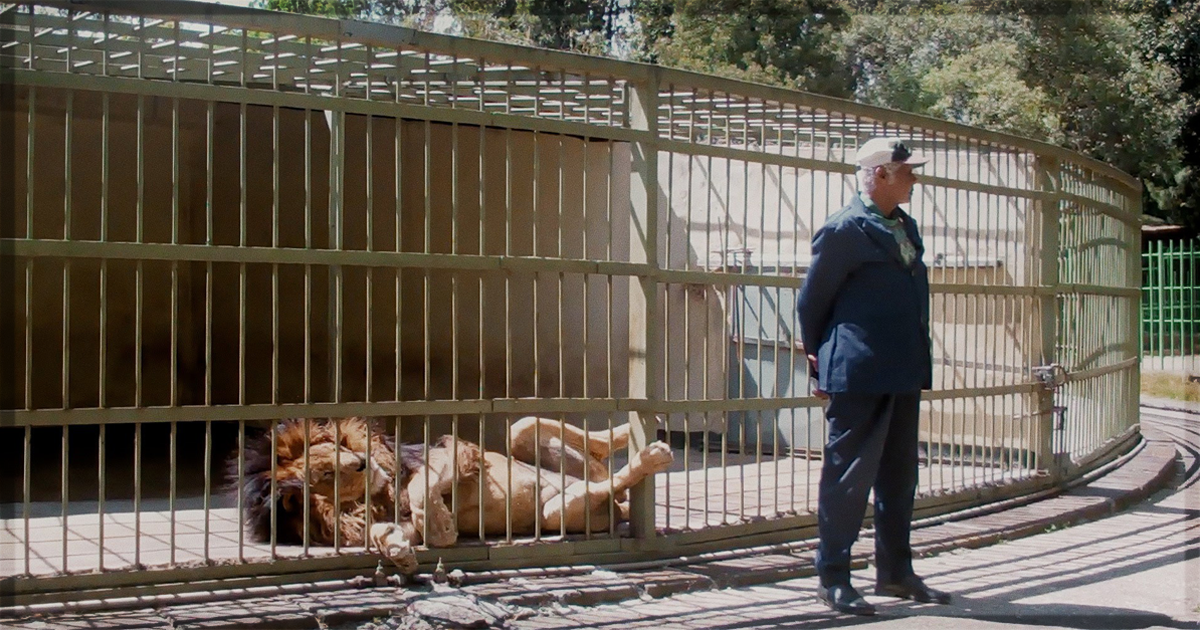
The concept for WAX & GOLD is almost laughably deranged. It aims to examine the history of Ethiopia generally and Haile Selassie personally by filming only within Hilton Addis. Mr. Selassie was personally involved in bringing this Western hotel to the country, to the point of helping to design it, and its opening in 1969 was seen as a demonstration of Ethiopia’s arrival on the world stage. It’s a testament to Austrian director Ruth Beckermann’s skill that this documentary succeeds at all. Unfortunately it hinges on the kind of cultural tourism that is not always a great idea, with some cringe ideas about colonialism and culture analysis. At least its curiosity and obvious respect for the people who participated saves the day. But while WAX & GOLD just barely stays on the right side of history, it’s mainly about the limits of how well a tourist can get to know a place.
The concept of the film is this: Ms. Beckermann arranged to spend a few months living in the hotel and filming the parts of Ethiopian society that came through its doors. This is not as limiting as that might sound because Hilton Addis is the venue for many of the most prominent events which take place within both the city and also the country. Weddings and trade fairs, both of which were filmed, are common events there, but it’s also the venue for a great deal of international diplomacy and trade. Thanks to an extensive security cordon it’s one of the safest places in town. The hotel also clearly makes a lot of money pandering to tourists: a group of dancers greet visitors on arrival despite their indifference, and there’s a lady whose entire job seems to be preparing traditional-style Ethiopian coffee for visitors seeking a dose of authenticity without leaving the safety of the hotel. (One of those coffee enjoyers was a black American who says he voted for Trump thanks to his business acumen, and the way other tourists from all over the world immediately pounce with follow-up questions is fascinating.) But it’s also a fancy place for locals with a bit of cash to come spend a nice afternoon, and a pretty great place for the local staff to work.
If Ms. Beckermann had decided to focus solely on the hotel’s people as a route into Ethiopian society this would have been a much stronger film. Instead she spent far too much time trying to get people to speak on camera about Mr. Selassie, who was a childhood obsession of hers. She goes as far as hiring local actors and musicians to perform parts of Polish journalist Ryszard Kapuściński’s book of “literary journalism” The Emperor, which was about Mr. Selassie’s downfall. Everyone is willing, but their teeth are gritted and their discomfort is obvious. It’s strange that it took Ms Beckermann so long to let this fixation of hers go. Her previous film, Favoriten, was an exceptional documentary that followed a diverse classroom of Viennese elementary-age children for about three years. But kids are more open about their feelings, and hopefully not attuned to the dangers of speaking frankly about politics in a country not particularly removed from dictatorship and authoritarianism. Her research should have made it easier for her to understand that these conversations really should not have been about her agenda.
One exceptional person Ms. Beckermann did manage to find was an Austrian woman who converted to Rastafarianism in her youth and has lived in Addis Ababa for over thirty years. Her conversation about how her race and her religious beliefs are seemingly at odds, and her trouble in being accepted anywhere as a result of this, could have been an entire documentary in itself. But it’s only at the very end of the film, when Ms. Beckermann takes her camera into the back of a taxi to film the streets and construction projects around the hotel, that we get a sense of the hotel in the context of its city. The rest of the time it’s only a world of its own. It’s hard not to wonder what kind of documentary the hotel workers could have made instead with the funding Ms. Beckermann received. Maybe the world isn’t entirely ready for that, but that means WAX & GOLD instead mainly demonstrates the importance of own-voice storytelling, especially in documentary.
WAX & GOLD recently played at the Berlin International Film Festival.
Learn more about the film at the IMDB site for the title.
You might also like…

‘Árru’ Has a Frozen Heart Worth Mining (Berlinale 2026 Film Review)