In 2011, in the context of the Arab Spring, the Yemeni revolution took place in Sanaa, Yemen’s capital. Thousands of protestors organized themselves in the streets of the city, and the government murdered dozens of them. The result was the popular uprising against the state’s violence, which led to the Yemeni civil war. The Scottish-Yemeni director Sara Ishaq documented it in her short documentary Karama Has No Walls. It got an Academy Award nomination for Best Documentary Short in the following year. Fourteen years later, the director finally presents her debut feature in The Station (المحطّة). The film is a Semaine de La Critique selection in the Cannes Film Festival.
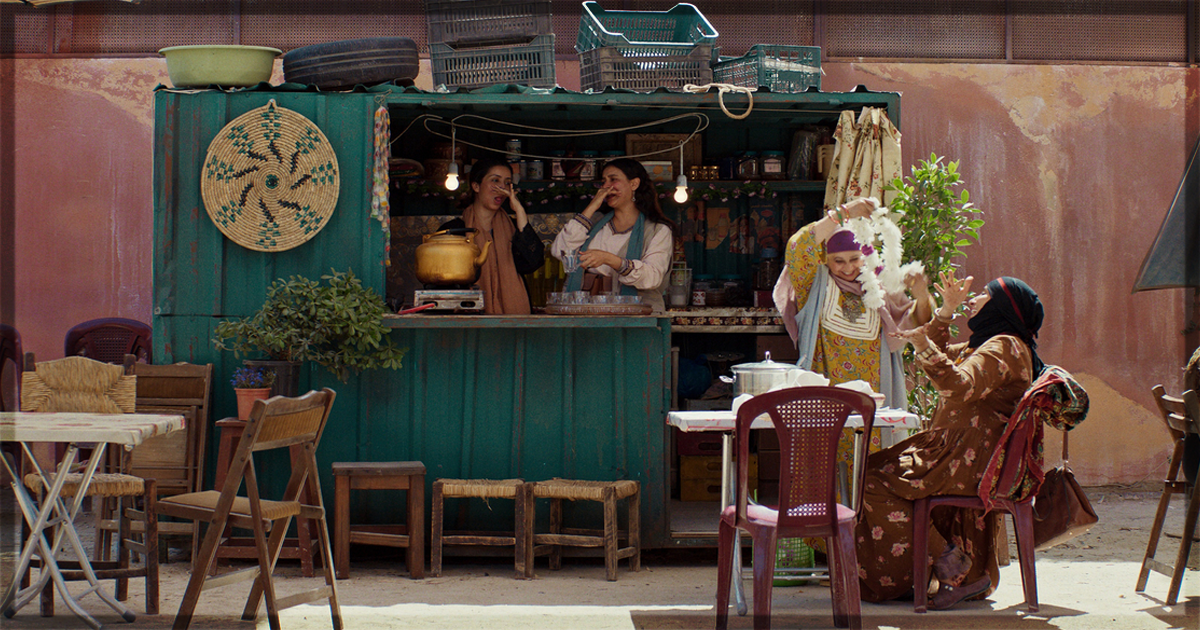
Set in a countryside town of Yemen, Layal (Manal Al-Maliki) runs a women-only gas station. Besides selling fuel, it becomes a villa for the community women to gather, talk, enjoy meals, and work amidst the hardship of the war. The twelve-year-old Latih (Rashad Alrajeh) lives with Layal, his sister, while he observes the boys from the village to join the military camps. Yet, his sister protects him from the army due to the destiny of their sibling, martyred on the war front. Suddenly, the local leader demands a fee for Latih’s absence from the training camps, resulting in the visit by their older sister, Shams (Abeer Mohammad), a member of the opposing group. Consequently, the reunited family must decide whether to stay in the village or leave it for protection.
With this debut, Ishaq, discusses several themes that reflect the hardships of the civil wars in the Middle East: misogyny, child participation in the army, and the blockage of supplies. Similar to other films from the region, the director attempts to portray the current situation in her homeland, the divided forces of two different groups that promote the killing of their opponents, regardless of age and gender. Despite an intriguing logline at first, the female resistance in the middle of the inferno, the filmmaker is unsure of the approach she wants to take. There is an upsetting tone shift that seems lost between the uncertainty of the shock and the moral discussion. Despite portraying the violence, mostly by filming children with rifles in checkpoints, the director is not portraying them as actors of that brutality, but a generalization of the political landscape.
It lands in scenes similar to the early-2010s progressive portrayals of feminism and empowerment. The biggest example of that is the throwing of hijabs to stop men from breaking into the station. Dramatically and ideastically it works as a point of representation of the female power. Yet, the inconsistency of tone diminishes the impact of that scene. Ishaq portrays the men as vile and bloodthirsty; still, the sequence demonstrates the uncommitment to an approach. Following that, the coming-of-age arc of Latih, who befriends Shams’ chaperone, Ahmad (Saleh Almershahe). Finally, he finds a mate in the village, mostly because the other children mock him for being too feminine, a notion inherited by their parents and leaders, who spread that statement to the village: Latih needs a male influence in his life. Yet, the relationship with those boys comes from the power dynamic of Ahmad subserving to Shams, but promptly, they find the common place between them: the infancy. Yes, Ishaq wants to discuss the robbed infancy of thousands of children who become soldiers, but her creative ideas are utterly shallow.
In this sense, even the visuals in the film feature an off-key element, a mostly warm palette that lends an uneven perspective. The filmmaker goes for lenses that create a sense of polish, a contradiction to the nature of the Civil War and the danger the director suggests. Therefore, The Station infers constant risk and brutality that never reaches the screen; it is in the writing, and it leaves us with an utterly spoken film. The arcs surrounding Latih do not add much to the project, despite being the motivation and the story’s spine. He is the reason for the protection and the resistance of the exodus for his sister, but the story undermines that, and the acting by the young performer is subpar to the adult co-leads, mostly due to the directing.
In this sense, even if Sara Ishaq continues to portray the reality in the post-Yemeni revolution, The Station becomes a failed attempt to develop a more profound conversation. Unfortunately, the director leans towards the spoken, rather than the visual which simplifies the discussions and lands in thin, shallow territory.
The Station recently premiered at the Cannes Film Festival.
Learn more about the film at the IMDB site for the title.
You might also like…