The Education of Jane Cumming commits three cardinal sins. Firstly, the title character is not the heroine. Considering the power dynamics of the true story is based on, the kindest that can be said about that is this is not a good look. Secondly, the story here is based on a hunger for true life queer stories instead of the genuine historical record. So many presumptions are made that it feels neither accurate as a history nor genuine as a love story. But worst of all, a plot which is entirely based on racist and/or sexist assumptions is completely empty of direct racism or sexism. It’s all glances and bad vibes, which modern audiences sensitive to bad language prefer but that minimises or erases the true actions and feelings of everyone involved. It’s pretty gross to force a lesbian framework on historical fact while refusing the address the racism that made those facts possible. The wish to make queer history visible is laudable, but The Education of Jane Cumming is worse than nothing at all. Some spoilers follow.
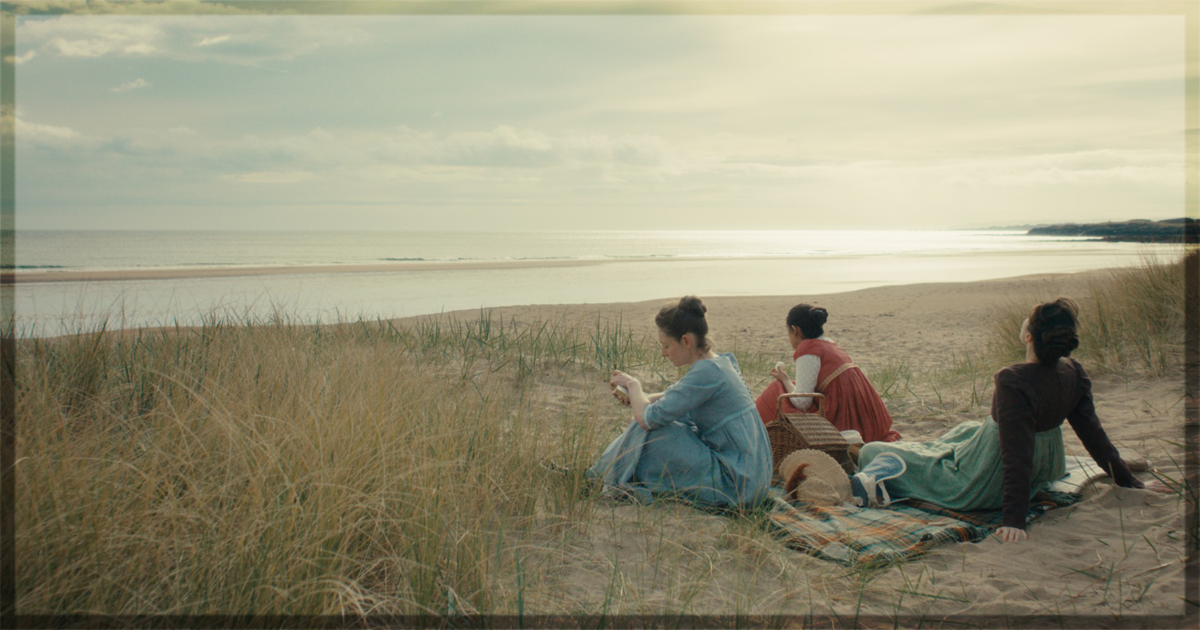
It’s 1810 or so in Scotland when Lady Cumming Gordon (Fiona Shaw) deposits three of her granddaughters at boarding school. One of them is in her mid-teens, named Jane (Mia Tharia, who does as much as anyone could in this part). Her father died in India and her mother was a mystery, but anyone can tell by looking that she wasn’t white. The school’s owners – teachers Miss Jane Pirie (Flora Nicholson, who cowrote the script with German director Sophie Heldman) and Miss Marianne Woods (Clare Dunne), with Marianne’s Aunt Ann (Sadie Shimmin) as housekeeper-cook – are determined to treat Jane like any other pupil. But the other pupils have never met anyone mixed-race before, and won’t treat Jane like she is one of them. They just won’t. Jane pretends she is fine with being ignored and bullied, always reading alone while the other girls are hanging out, but of course she isn’t. A further problem is that the building doesn’t have enough beds, so everyone must double up. None of the girls will share with Jane, so Jane must share with Miss Pirie, which nobody is happy about.
But the real issue is that when summer comes one of Jane’s cousins has her debutante season, the round of balls and dances that will help her find a husband. Lady Cumming Gordon thinks it will go more smoothly if Jane isn’t around, so pays Miss Woods and Miss Pirie to keep her until school starts again. Kate Reid’s swoony, handheld cinematography and Balz Bachman’s calm music make it clear how much of an idyll this is for Jane, obviously the happiest time of her life. But summer doesn’t last forever, and if hell hath no fury like a woman scorned, that’s nothing to what a teenage girl is capable of.
The Scottish court case taken by the real Miss Pirie was the foundation of The Children’s Hour by Lillian Hellman, which had the good sense to change all the names and place the characters into a modern setting. At the Berlinale, Ms. Nicholson and Ms. Heldman spoke about what they felt was the importance of restoring lesbian voices to their true place in the historical record. They don’t seem to have considered that people don’t use up decades in suing for libel, damaging their health and finances, if what was said about them was true. This is such a fundamental misunderstanding of human nature that it calls the entire project into question. What’s worse is that once the court case is set in motion, Jane disappears. She is entirely absent during scenes of bewigged lawyers wondering if sex between women is even possible, which also goes against the most basic story structure lessons taught in screenwriting 101. Most of all, considering how much of those discussions are entirely based on racist assumptions about Jane’s knowledge of sex, her vanishing feels ugly indeed. What, in fact, did she learn from all of this? What does anybody?
Ms. Dunne’s fragile warmth and Ms. Nicholson’s more steely demeanour provide a good contrast, and Ms. Shaw of course has only to scowl at someone for the full force of her presence to be felt, but these solid performances are utterly wasted in this historical cosplay. At least Bridgerton is clear that it’s only ever a fantasy, but The Education of Jane Cumming wants us to believe that it’s telling the truth. It should have paid closer attention to its own plot and remembered no one likes a liar.
The Education of Jane Cumming recently played at the Berlin International Film Festival.
Learn more about the film at the IMDb site for the title.
You might also like…
‘Ghost School’ – High Noon in Pakistan for Girls (Berlinale 2026 Film Review)