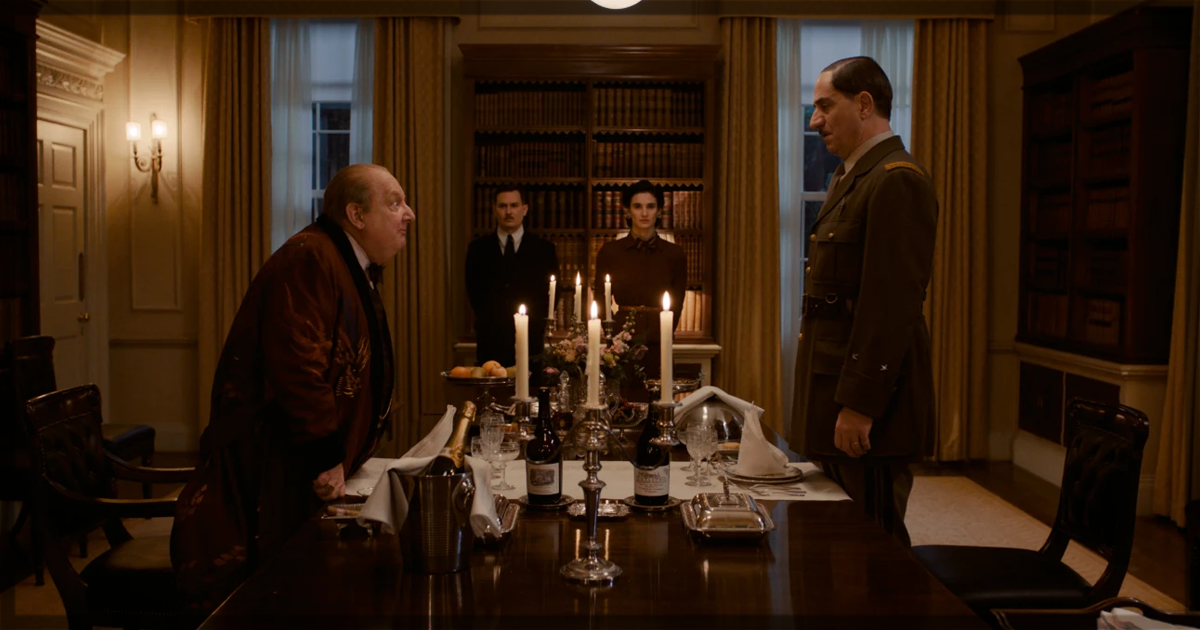
I had to go to France just to see De Gaulle: Liberté, and the movie is so good I just might do it again. Along with its first half, De Gaulle: Résistance, this is an extremely important movie for two reasons. Firstly, French cinema is now focused on films for the home crowds, telling its own blockbuster stories in its own way. Secondly, these blockbusters make it crystal clear that France no longer thinks of America as a friend. The villain of this movie, set during the Second World War and with the Nazis right there the whole time, is Franklin D. Roosevelt (Campbell Scott, more on whom later). This is a horrifying thing to witness as an American cinemagoer used to our nationality automatically making us the good guys. But the world has changed for reasons which need no explanation, and many countries, including France, are done with catering to our good sense of ourselves. (For example, it is true that the French military was racially integrated during the Second World War, which to our eternal shame the American military was not.) De Gaulle: Liberté is one of the best films of the year for how it uses its historical story to comment directly on the world history happening right now.
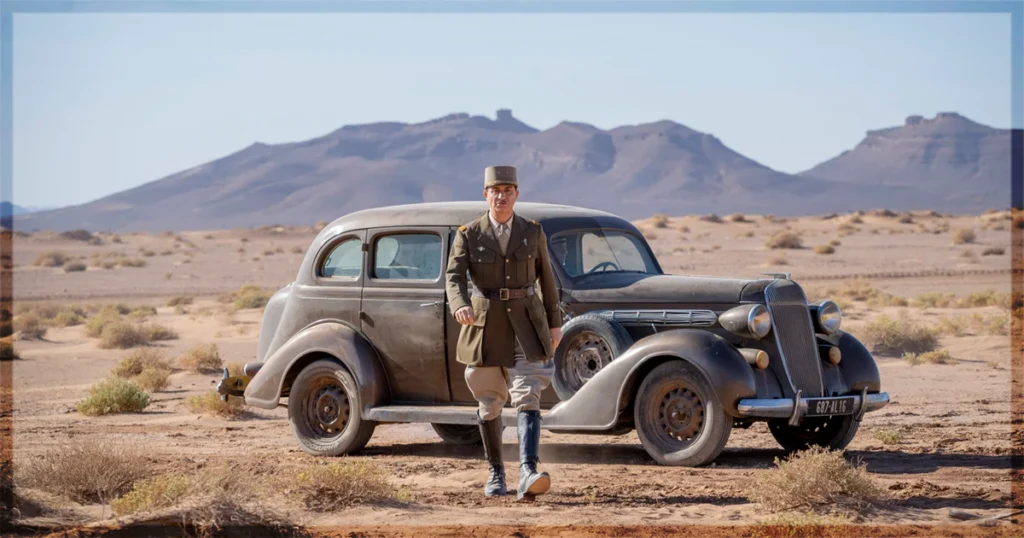
It’s 1943 and Churchill (Simon Russell Beale) and FDR have decided the Free French, led by Charles de Gaulle (Simon Abkarian) are not the true representatives of what used to be France. Instead that is General Giraud (Thierry Lhermitte), who heads the Vichy military after the murder which ended De Gaulle: Résistance. De Gaulle refuses to sign any accord with Giraud, but makes the mistake of shaking his hand, meaning the photos of that handshake give the impression de Gaulle is now working with the Vichyites. This badly rattles de Gaulle’s leaders within the Free French, desert rat army general Leclerc (Niels Schneider) and leader of the underground resistance Jean Moulin (Félix Kysyl). Moulin even makes a secret trip to London to speak directly with de Gaulle, emphasising his importance to the underground network working desperately to fight the Nazis from within. Without the knowledge there are others fighting externally as well, how can they survive?
These three men, fighting separate battles on separate fronts with limited ability to communicate, are deeply intertwined. But because their communications are so limited, they all must rely on their consciences to do the right thing. When General Montgomery (Pip Torrens) asks Leclerc’s battalion to fight what is essentially a suicide mission, Leclerc reminds his men that they have the luck to fight the Nazis in daylight and with weapons, unlike their relatives and friends in the resistance at home. When Leclerc’s defiant words to a journalist – paraphrasing: because right is on our side, we will never retreat and never surrender – make it to the press, a copy found by Moulin’s lieutenant Livia (Anamaria Vartolomei) becomes her litany against fear. Moulin is as good as De Gaulle at manipulating the people around him on behalf of the bigger picture, ensuring the underground leaders never become so distracted by internecine struggles that they forget the real enemy. And when De Gaulle realises that the Americans and the British have decided the nation of France no longer exists? Well, the nation of France exists, so we know who won. But certainly some of the steps needed to ensure that victory have not been told by anyone in Hollywood.
Director Antonin Baudry, who once again co-wrote the script with Bérénice Vila based on a non-fiction book by Julian Jackson, clearly again simplified the historical record to manage a two hour and thirty-seven minute run time. Livia is an entirely fictional character, sadly, but almost no one else is, and the time flies by even when we know the complexities of wartime have been pared to fit a riproaring fictional setup. The fact that some of the facts, especially around the real Mr. Moulin, remain lost to the fog of war helps enable these shortcuts. But Mr. Baudry is broadly telling a true story here from an angle no major blockbuster has previously attempted. Did General Eisenhower (Daniel Betts) really give De Gaulle an in-person nod that allowed one of Leclerc’s squadrons – including anarchist fighters whose truck was painted with the slogan ‘death to assholes’ – to be the first fighters to liberate Paris? Maybe it didn’t happen exactly like this, but it sure is cinematic, and it does make it clear the respect that military leaders of every nation had for De Gaulle’s leadership skills.
But the real issue is the attitude of the allies of the Free French. And this is where the casting of Campbell Scott is so unbelievably interesting. For he is the son of George C. Scott, who famously won an Oscar (despite his best efforts at rejecting the accolade) for the 1970 war film Patton. As anyone who knows American cinema knows, Patton begins with a verbatim (except the swearing was toned down) rendition of General Patton’s 1944 motivational speeches to the Third Army, shot in front of an enormous American flag. The scene is so powerful it has been quoted countless times – most recently Tom Cruise didn’t stand in front of the flag in Top Gun: Maverick for nothing – and it also overshadowed the rest of Mr. Scott’s career. So the choice of his son to play the American president here is as pointed a piece of casting as has ever existed in world cinema. But it is also very appropriate, because the issue here is how the US and the UK feel their allyship gives them rights over France. They barely even alert De Gaulle to the D-Day landings before they start; Churchill’s deputy Anthony Eden (Tom Mison) has to throw a tantrum to get them to make a courtesy call.
Now, again in real life did Winston Churchill ever actually say that, if forced to choose, the United Kingdom would always choose America over any other nation – or group of nations, such as Europe? Possibly not. But in real life America really was planning to divide France in two and put what remained of ‘France’ under military occupation. This is not something the American history books talk about much, but it’s easy to see why this is an issue that France would not forget. It’s equally easy to see how De Gaulle would become convinced that France’s allies were just as dangerous to the existence of France as her enemies. And you don’t need to be a historian to realise this is the right moment to bring all these issues up again. If America only has its own interests at heart, how can the rest of the world work around that? What is the world if the USA is the bad guy?
Mr. Scott brings smarm and Mr. Russell Beale brings spite to their parts, while Mr. Abkarian does an exceptional job of making us feel the calculations de Gaulle has to make in real time. Ms. Vartolomei gets some solid action scenes and Mr. Kysyl does fine work as one of the very few people who could ever get De Gaulle to change his mind. However it’s Mr Schneider who runs away with this film, making motivational wartime speeches, covered in grit and filth, begging his men to think of the bigger picture instead of their individual lives. (Motivational wartime speeches sure do play well onscreen, don’t they.) Théo Cascio’s music adds tension and pace without ever overshadowing the action, and once again Pierre Cottereau’s cinematography centers the faces of the people going through all this horror as they struggle to keep their honor and make their lives worth living. And the mere existence of these films, which combined cost €74m/$85m to make, makes it extremely clear the world of cinema has permanently changed.
The French title, J’écris ton nom [I write your name], is the refrain of a 1942 poem called ‘Liberté’ by Paul Éluard, which lists all the places he will write the word ‘liberty’ whenever and however he can. It is hard indeed to watch this movie as an American and realise their enemy is us. Not all of us, of course: there are plenty of Americans currently fighting fascists with as much venom as the Maquis ever did. But we are no longer automatically the good guys, and De Gaulle: Liberté is the important first step in reflecting what that world looks like onscreen. It is an exceptional movie and deserves to be seen by as many people around the world as possible. The UK and US release dates still have not been confirmed, which is a big mistake. There is a global hunger right now for anyone who can fight the real enemy, and distributors who are nervous about these films are leaving money on the table.
De Gaulle: Liberté will be in US theaters later this year.
Learn more about the film at the IMDB site for the title.
You might also like…
Days of Glory in ‘De Gaulle: Résistance / La Bataille de Gaulle: L’Âge de Fer’ (Cannes 2026 Film Review)