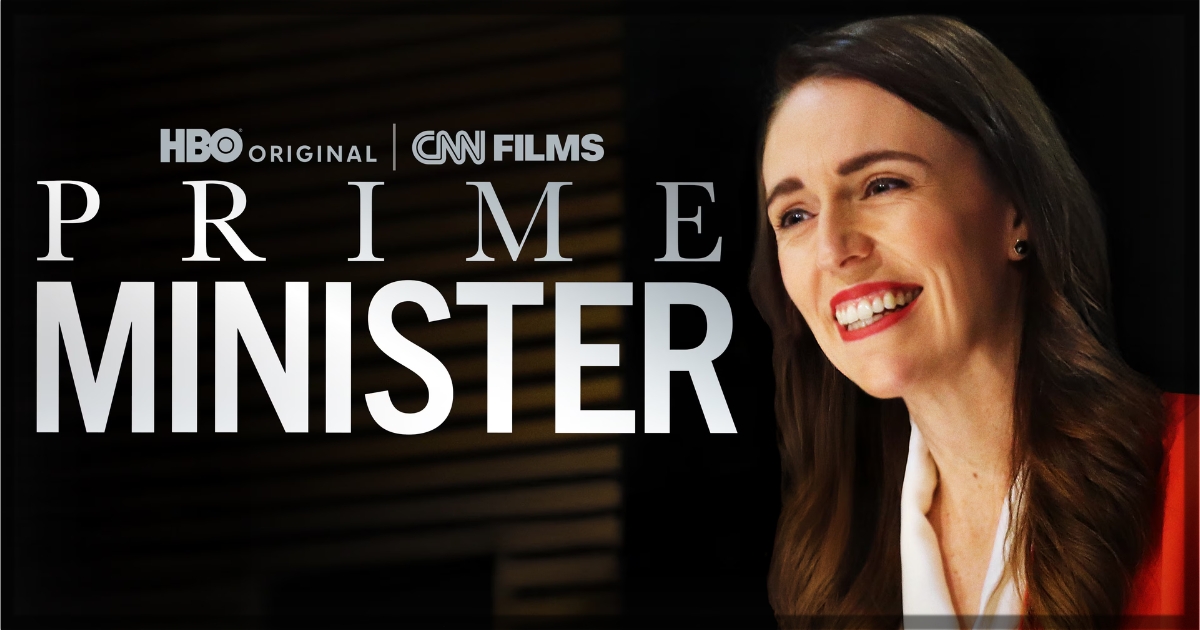
Political filmmaking goes beyond documenting political movements and principally records the individuals who make the choices. A classic example of that is Rob Epstein’s The Times of Harvey Milk, a groundbreaking documentary that immortalized Milk’s work and brutal murder. In this sense, these sub-genres of docs crystallize the life of a crucial figure in modern American politics. Similarly, Michelle Walshe and Lindsay Utz capture the life of Jacinda Ardern in the documentary Prime Minister. Tracing a chronological logic to her work as the Prime Minister of New Zealand, the duo studies the groundbreaking aspects of her time in the office. Therefore, it is an overall view of a presidential mandate that had groundbreaking events in New Zealand politics in the final years of the 2010s.
It is a conventional approach to the general documentary portrait of a politician. It is more than a look at the third female Prime Minister of the Oceania country, following Jenny Shipley and Helen Clark. Hence, the directors do not spend time emphasizing her status as a female PM, despite her being a minority in the geopolitical scenario. Actually, the filmmakers comment on how the media and the other parties do not respect her properly as a politician. Although the world has welcomed more women as the leaders of countries in the 21st Century, the discussion around it is still in the medieval era. The directors include excerpts of the public’s opinion on a premier’s maternity leave or pregnancy while in office. Despite a sense of progressivism, the society reacted differently to a new female PM, particularly because she is the first one to serve the role in the online era.
Prime Minister is a documentary about a left-leaning politician thrust into the position as the political pendulum swung. Despite the overall social democracy of the early 2000s, the world shifted toward the far right after Donald Trump’sfirst election in 2016, and we entered a post-truth society. Thus, the best scenes are those in which Ardern enacts policies that go against the interests of entrepreneurs and bureaucrats. One of the central scenes involving it is a press conference at the United Nations council, where the New Zealand PM is in the street, and talking to journalists from multiple countries. The press asks her about the impressions of Trump, but she emphasizes her personal opinions do not matter; what matters is representing the population. The film’s subject is a fascinating figure, not only for her policies but also for her sharp views on the political landscape.
However, the film’s structure seeks to paint an overall picture of her six years in the country’s administration, from 2017 to 2023. Yet it is a rather basic vision of Ardern’s trajectory, pinpointing the journey of a woman who did not want to become the country’s Prime Minister. However, Andrew Little’s resignation made her the leader of the opposition, the leader of the Labour Party. Therefore, it is notable that her desire is not to become the country’s PM. Nonetheless, she needed to assume the position for her party, implementing a left-leaning administration fighting for children’s, women’s, and working-class rights. Likewise, in our current political pendulum swinging freely to the right, it is a statement to fight for minorities’ rights, as was the case for the former PM. Also, a crucial chapter of her course is how New Zealand dealt with the COVID-19 pandemic, when Ardern was a vocal advocate for vaccines and strict lockdowns. Consequently, she swam against the prevailing political currents of that period, particularly because of the anti-vaccine and Anti-science tendencies in modern societies. After decades of relevant scientific work, the politician who works most efficiently for their population is the one who does not spread misinformation to their citizens.
In the end, Prime Minister is an engaging view of a politician that is lacking nowadays. She is truthful to their citizens and interested in helping the country. In this sense, the documentary by Michelle Walshe and Lindsay Utz is a conventional look at her trajectory as the Prime Minister and a vision of the years that followed. Yet it is an effective documentation of a politician’s mandate who swung left when the world was leaning right. Also, someone who dared to follow the science in an era where anti-scientificism is an efficient tool to conquer voters, even though it is not the most ethical campaign strategy.
Prime Minister is streaming on HBO Max.
Learn more about the film on HBO Max.
You might also like…