
In 2020, due to the pandemic and the lack of releases in theaters, a few films got unusual spotlight. One of them was a black-and-white documentary about a pig. Viktor Kossakovsky’s Gunda is one of the films from that year that people remember and discuss. NEON released it in the United States and appeared on the Academy Awards shortlist for Best Documentary Feature. Four years later, Kossakovsky returned to the Berlinale, now in the competition, while Gunda was an Encounters selection. His latest project, Architecton, is an observational study on the surfaces that humanity inhabits. Throughout its duration, the director invites us to contemplate buildings, intact and destroyed, and the foundation of it all: the rocks. Therefore, the film is an ode to the structures that surround us, both in the ancient setting and in the current timeline.
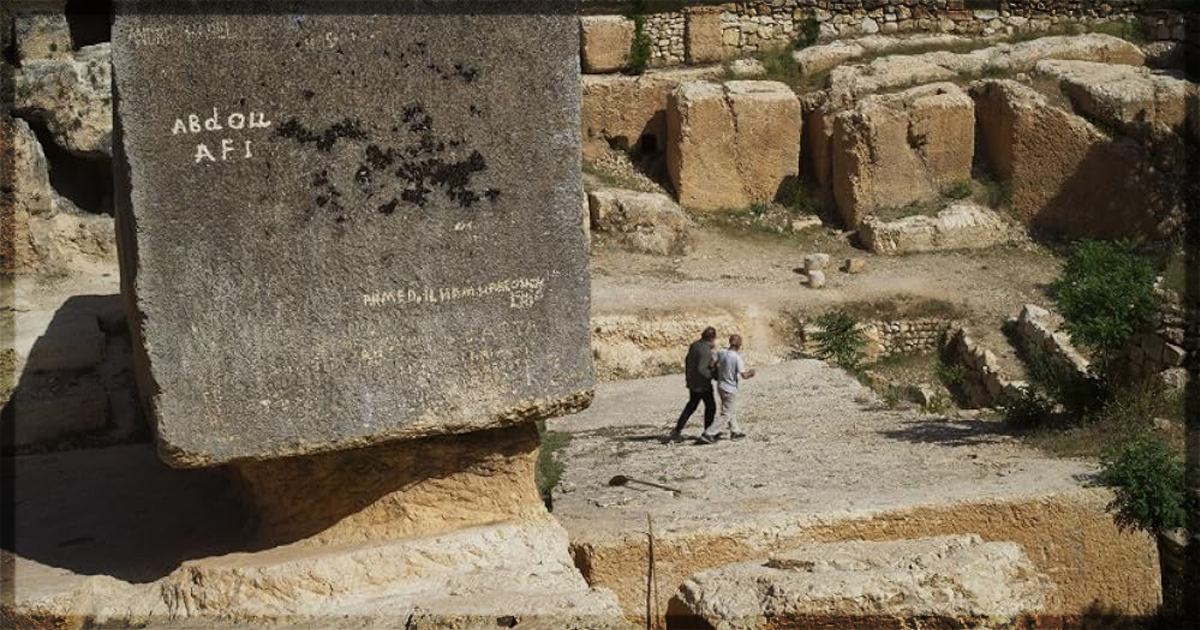
In its introduction, we observe destroyed buildings. The director rejects the direct discourse in this first moment; hence, the conclusion comes from the spectators. Immediately, we think of the world’s conflicts, particularly the Russian-Ukrainian war. The director is a Russian citizen, born in Leningrad, which is now known as Saint Petersburg. Still, the reflective nature of his directing and work allows the humanity in himself. He observes the destruction of those residential buildings, which is, by definition, a war crime. Yet, the humane infliction of devastation is only an aspect of the filmmaker’s approach to architecture. Even though he dedicates a central part of the film to the modern aspect of it, the film precedes the beginning of it, the rocks and the basilar units that allow a more complex organization of the human constructions. Consequently, the film shifts from the observation of rocks in nature, buildings, and two Italian men conversing about stones while positioning them on pedestals.
Throughout this organization, Kossakovsky tackles an overall look at architecture, both in the basis, the construction, and impressive organization of it, and the aftermath: the humane destruction opposed to the natural winding down of it, how it is supposed to happen.
Eventually, the director chooses not to divide the different approaches into chapters. There is a constant transition between each of the topics the director is studying. At first, he begins the film from the last part of the cycle, the destruction – after construction comes the obliteration. According to his background and statements in the press, the devastation is a result of his homeland’s conflicts, which stem from a long period of tension. In a sense, it converses with the rocks that Kossakovsky and the cinematographer Ben Bernhard (All That Breathes) capture in a context of friction, movement that affects and provides texture to each different type of them.
On top of that, the segment with the Italian duo positioning rocks on pedestals is the mid-length between the destruction and the construction. It is an acknowledgment of the importance of the study of those rocks and how they stand the test of time in the crucial role of construction and the geology. In a sense, Architecton works as a reflection of structures, the hierarchy of the solid materials, and how each of those elements is crucial to the human being. Fascinatingly enough, Kossakovsky invites us to reflect on the inherent cycle of nature, whether it regards the naturally gifted or the humanly built from the natural sources, such as the concrete.
Throughout his observational display, the director juxtaposes the two different stages of those materials, either in the initial composition or the final usage of them. Hence, there is a logic to the three different arcs of the film; a cycle that completes each one. The rocks become fascinating elements or construction material, leading to the ultimate destruction of the same, returning to their form of dust and stones. Due to the director’s approach, it is a thesis that underlines the film; it is not present as direct speech to the audience. Thus, the film is an exercise of patience and observing the imagery present in the director’s camera. It is a slow-paced effort that demands attention to the wide framings by Bernhard, who invites us to understand the inhabitance of Earth through the components that form the ground beneath us. In a general sense, the documentary is an observational effort that provides enough room to think about the construction of the planet, architecture, and admiration.
Four years after studying a farm and piglets, Viktor Kossakovsky dives into architecture and geology with his Architecton, which is a challenging exercise of attention, but invites us to analyze the cycle of nature.
Architecton is now available at your retailer of choice.
Learn more about the film at the IMDB site for the title.
You might also like…
‘The Love That Remains’ Movie Review: A Magic Realism Take on Divorce