
The Brazilian director Daniel Nolasco has been creating a trademark for himself as a filmmaker. Drawing inspiration from his personal interests and his academic path, his films approach the stories of the LGBTQIA community in a conservative state. In his debut feature, Vento Seco (Dry Wind), he approaches the monotonous life of Catalão, a city in the South of Goiás. Nevertheless, his works, including his short films, converse about fetish, gay culture in a conservative country and state, and the hardships of LGBTQIA life. In his sophomore effort, Mr. Leather, he documents the surroundings of Mr. Leather Brazil, a competition about the leather kink community. Finally, six years later, Nolasco presents his new feature, Apenas Coisas Boas (Only Good Things). The director utilizes the countryside setting to design his western.
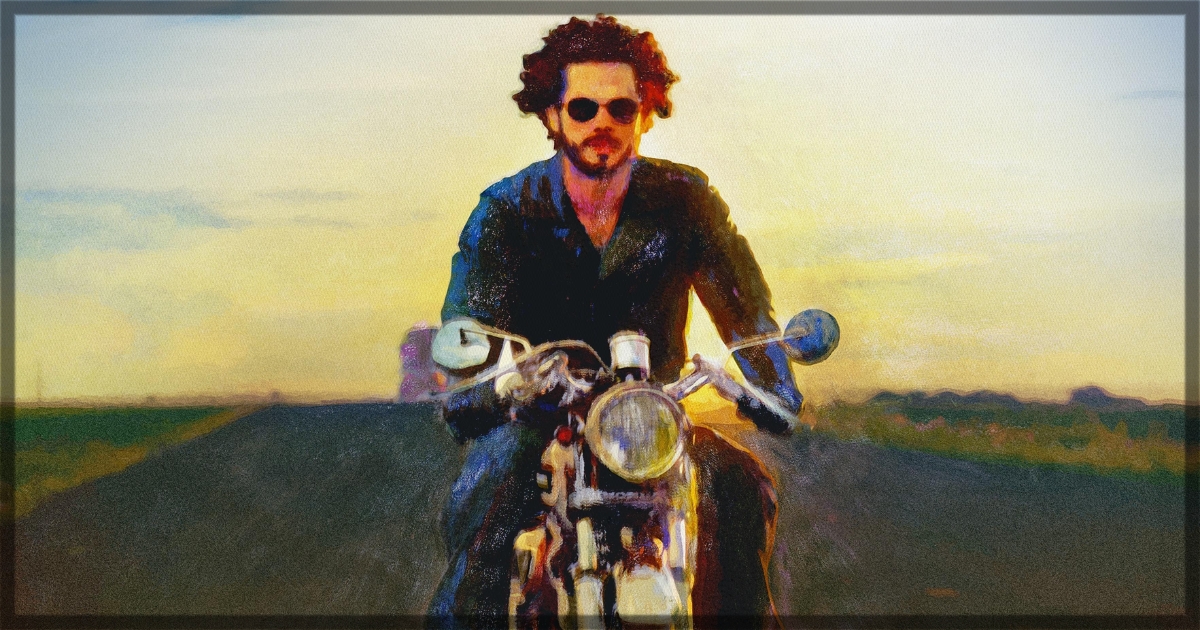
Furthermore, the director throws back to 1984. Similar to his past works, including his shorts, Catalão is the passage for the narrative. On a road, Antônio (Lucas Drummond) finds a man severely hurt after a crash. He takes care of Marcelo (Liev Carlos) and takes him to his farm, where he produces milk and cheese. Suddenly, as soon as he gets better, they start developing a romance, which is going to hurt both of them. On the other hand, we also see the consequences of that love in the future, as we watch Marcelo (Fernando Libonati), who remembers the moments of passion around the São Marcos River in the city. Therefore, Apenas Coisas Boas (Only Good Things) is a story about the past, the regional arrangements, and the memories of those involved in that passion.
In the first place, Nolasco borrows from the genre conventions of the American westerns. Aesthetically, evidently inspired by the colors of the classical Westerns in the 1940s and 1950s. The first to come to mind is Nicholas Ray’s Johnny Guitar, one of the genre’s best productions from its golden era. Obviously, the Brazilian director draws inspiration from the colors, particularly the bright red in Ray’s masterpiece. Yet, it is a general visual tendency present in plenty of other films of that era. Hence, Nolasco’s Cowboys is a mixture of the individuals from 1940s to 1950s productions with the post-New Hollywood movements of directors like William Friedkin in Cruising or John Schlesinger in Midnight Cowboy. Nolasco’s western men are not the chivalrous guardians or moral protectors in the Hays Code era of filmmaking. His characters are more complex in the modern period, adding another characteristic of his works: the importance of the leather world, both in community building and as a symbol of fetish.
The director creates a fascinating tale of two unknown men getting to know each other. The film unveils itself calmly; it has no rush to develop the relationship between the two characters. At the same time, the director glances at Antônio, who is producing cheese, tending to his farm, and living his life calmly. It is an engaging approach to the story, which alternates between the past and the present. The past resembles the ancient, the old period. The lead character lives in a rural area, dealing with his sexuality, at the end of the Brazilian dictatorship, which would murder people in that region. Yet, living on that farm around the river is a manner of protecting himself from the exterior violence; prejudice, armed forces, and any other threat to his liberty. It is a film that utilizes the conventions from its genre, the western, and constructs something else. A film that focuses more on the characters’ emotions and their current emotional situation. In a sense, it resembles the French director Alain Guiraudie, particularly in his Stranger in the Lake. Both authors care for the emotional unveiling of their characters; hence, it is a fascinating construct of the story.
In Apenas Coisas Boas (Only Good Things), Daniel Nolasco continues to build his filmography, basing it on his primary interests: genre conventions, fetishism, and queer experiences. Hence, he explores the sudden aspects of passion, encountering someone out of nowhere, and engaging in a romance with that individual. The director thrives on building a world that draws inspiration from westerns, particularly the colorful ones of Nicholas Ray in the 1950s. Similar to the master, Nolasco imprints colors and textures in the screen to analyze human emotions, such as loneliness, passion, and sexual desire. In only his third effort, Nolasco conveys his curiosity about the interactions that appear impromptu, requiring these men’s reactions and willingness to engage with the unknown.
Only Good Things has recently played at several international film festivals.
Learn more about the film at the IMDB site for the title.
You might also like…