
In recent years, documentaries have become a space for personal histories. Filmmakers saw the non-fiction form as an opportunity to reflect on their lives and eternalize the memories, shadows, and complexities of their backgrounds. Therefore, throughout archival, diary, and poetic structures, directors expose their intimacies, unveiling their emotions and the wounds that shaped the artists they are now. Arguably, this broad description applies to Taekyung Tanja In Wol Sørensen’s directorial debut, Homesick (Hjemsøgt). The Korean-Danish filmmaker exposes the hardships of being an adopted child, attempting to understand and connect to the background that shaped who they are. In a sense, their film becomes a more profound look at transnational adoption, a common practice, especially from couples of the Global North who adopt children in the Global South due to the facilities in their systems for European and North American adoptees. Consequently, the director expands on multiple details of their life.
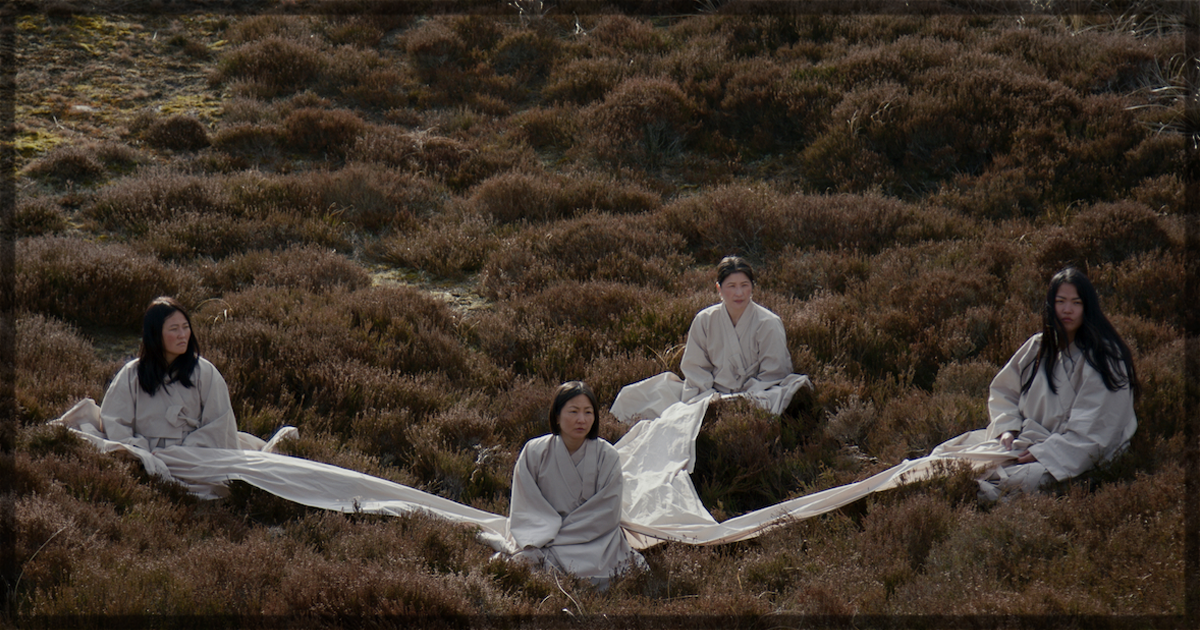
Initially, Homesick is the narrative of an individual seeking to comprehend their true identity. Therefore, Taekyung is amidst the duality of anyone who grew up far from their birthplace, the complexity of feeling far from their actual home, even if raised there. Still, in South Korea, they are a Danish child raised in the West Coast of the country, who is reclaiming their birthrights. That duality is a fascinating exercise in understanding our notions of home and where we belong. Hence, throughout the poetic endeavors, the director finds in the South Korean mountains the connection they are seeking to the land. Visually, it is an effective exercise in establishing a metaphor that aligns with the rites of the events, the dances, and the traditions of wearing white costumes while in those windy mountains. Nevertheless, it is an encounter between the spiritual and the artistic, embodied in performances that highlight the soul to the artistry involved in exposing the sentiments of the spirit.
In this sense, the filmmaker differentiates the two countries through their approaches. In South Korea, the director connects with the land and people through the traditional performance on the cliffs. Yet, in Denmark, it has a more traditional assignment. Taekyung is behind a paraphernalia of cameras, sound equipment, and lights, while asking their brothers and parents about their origins. Fascinatingly, there is an encounter point between the performative, the poetic, and the raw, the confrontation to comprehend the reasoning behind it all. In this aspect, the Danish segment works better as a whole, providing a compelling conversation between generations, whether the director with their parents, or them with their brothers. Thus, the interviews with the family members are a crucial moment to understand the perspective of the other actors in that history. The parents who adopted from South Korea, the other brothers who embraced a new child into their family dynamic, and those born within that familiar structure.
Curiously, the interactions with the brothers assign a whole different identity to the film. While Taekyung and the parents feel more dry, especially due to the ethical conflicts of adopting a child from another country, there is a lot of affection in the conversations with their brothers. The introduction to their interviews is the director, framed wide, standing next to each of them. The manner in which the filmmaker blocks the shot alludes to the caring element in the relationship between brothers, regardless of whether they are older or younger, and their sisters. There is an emotional aspect to the connection between the brothers and their sister. Taekyung’s introductory question to them evidences that. How was the life before me? In one of the cases, the brother answers that there is no life before them; they were already there when he was born. Even if the interview with the parents carries a more substantial nature in comprehending motives, the conversations with the brothers feature a poetry of raising together Danish boys with their Korean sister, a relationship of care that grew beyond the nationality.
Ultimately, Homesick (Hjemsøgt) feels like multiple films within one. There is a poetic performance in the Korean mountains that connects the director with the land. Another effort is the confrontational and understanding conversation between the filmmaker and their parents, and lastly, there is the encounter with the brothers. There are different levels to how each part works within the personal structure that Taekyung Tanja In Wol Sørensen introduces. Still, even if it is not the most sharp execution as a whole, the project is an emotional unveiling of the hardships of transnational adoption, the sentiment of belonging in the middle. Taekyung feels homesick, but which of the two? Well, throughout this journey, we understand the intricacies, even if there are moments less effective than the others.
Homesick (Hjemsøgt) recently played at the CPH.Dox film festival.
Learn more about the film at the CPH Dox site for the title.
You might also like…