
Dollars to donuts director Rodrigo Sorogoyen was not happy to learn about Sentimental Value. Its brief outline is the same to that of The Beloved – volatile director tries to reconnect with his daughter by working with her on a movie – but of course Sentimental Value came out last year, took the international awards circuit by storm, and its star Stellan Skarsgård even served on this year’s Cannes Film Festival jury. The Beloved’s immediate reception has not been quite so rapturous. It did not win a single award at the festival, possibly because of that resemblance, but considered separately it’s quite good. The Beloved takes place almost entirely on film sets and is an equal pairing of Javier Bardem and Victoria Luengo, who has worked with Mr. Sorogoyen before. And above all its focus is on mood, and how our personalities shape the way we walk through a world.
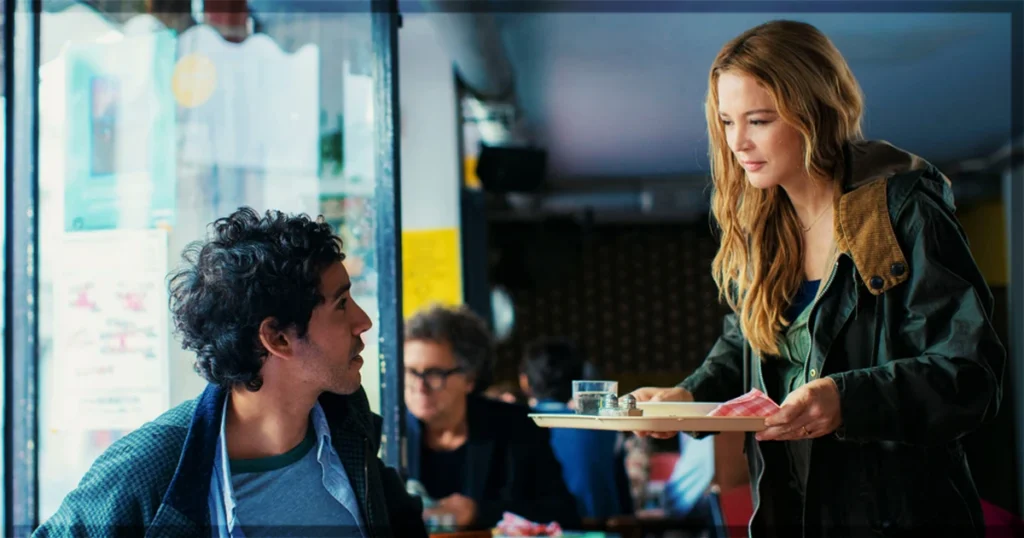
Esteban (Mr. Bardem) is a world-famous director – the brief photo of him holding a Palme d’Or was extra funny in context – but with a professional reputation for being difficult not improved since he stopped drinking. His biggest hit remains his first movie, a small and sexy three-hander, but that film’s lasting legacy was the daughter he had with the leading actress. Emilia (Ms. Luengo) grew up with her mother’s surname and not much of a relationship with Esteban. She has her own so-so acting career, mostly in telenovelas, and in between jobs works in a bar in Madrid. She’s on her way without playing the dad card (though their connection is not a secret) and is pretty happy with how things are going, but Esteban wants to cast her in his new film “Desierto” for two reasons. One, because he think she can handle the part and deserves an opportunity to stretch her skills. But two, he wants them to become closer, and he thinks them working together will be a great opportunity for them to connect as adults and not just father/daughter. The fact his children with his clear-sighted blond wife are old enough to ask questions is probably just a coincidence.
Esteban makes his pitch to Emilia over lunch in a fancy restaurant, where cinematographer Álex de Pablo keeps the camera so close to their faces we don’t even see their plates of food. Emilia drinks a couple glasses of wine and listens closely. The movie is set in the 1930s in the Western Sahara, a Spanish colony, and Emilia would be playing a soldier’s wife who gets caught up in events. A juicy part in a big-budget movie examining a little-known part of Spanish history would be a big step up for her career. But even if Esteban wasn’t her dad, his reputation is volatile enough to make every actor think twice. The charge of nepotism won’t be avoided, but for Emilia the risk is largely personal. How will she deal with Esteban as an adult when she never got to know him as a child?
On set it doesn’t always go smoothly. Emilia has access to Esteban in ways the other cast and crew don’t, which they try not to resent. Emilia is also chattier and funnier with her colleagues than she is with Esteban, which he resents. He retaliates by offering personal advice she didn’t ask for, especially about her drinking. This offends Emilia – even if the criticisms were justified, how could they not? – and causes her to increase the behaviour he complains about. Those interpersonal tensions spill out into the shoot, in ways which affect everyone. The bravura sequence of a complex dinner shoot that starts out positively before the actors start to buckle under the pressure is absolutely wonderful. Of course Emilia and the others, including two children, would have gotten over their giggles eventually. A little bit of silliness would have made everyone feel happier and brought them all closer together. But Esteban loses his temper so viciously, and insults Emilia so publicly, milk practically curdles to his touch. One of the children is so frightened he has to be pulled from the scene, continuity be damned, and Esteban’s refusal to apologise to anyone makes the whole thing worse. Everyone knows if something is smashed up deliberately it’s the person who did the smashing who must make the repairs. But when that person is the one with the power, what’s right and what’s fair are two very different things.
Mr. Bardem is so casually good here it’s delightful to see. His Esteban has tremendous talent, but is used to being deferred to because he is a director before he is anything else. His talent is serious enough there’s always someone willing to tolerate it, after all. Ms. Luengo is more than Mr. Bardem’s equal in an unequal part, but she quietly ensures we see the dichotomy that Emilia has had to live with all her life. She has always been a daughter first, and now has to deal with Esteban wanting to treat her as an actress above all, when he’s never really treated her as a daughter to begin with. Mr. Sorogoyen co-wrote the script with frequent collaborator Isabel Peña, who also writes horror films. Their dynamic could very easily tip into horror, if Emilia wasn’t so sure of herself, or Esteban was truly uncontrollable. Whether or not their relationship can be controlled is the key push-and-pull throughout The Beloved, and the ways in which the ending satisfies is truly remarkable. It’s a very smart and subtle film.
The Beloved (El Ser Querido)recently played at the Cannes Film Festival.
Learn more about the film at the IMDB site for the title.
You might also like…