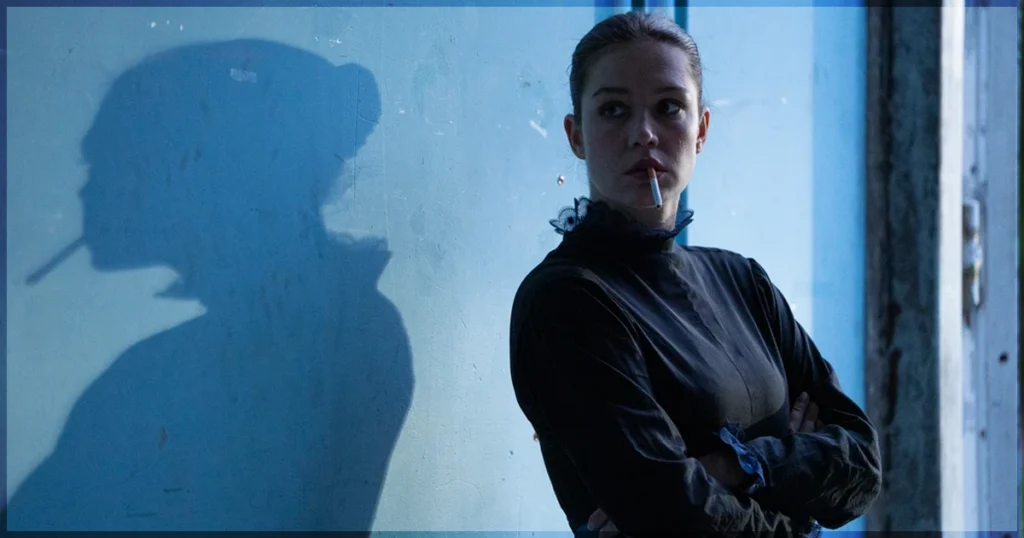
We must congratulate director Andrey Zvyagintsev both for winning the Grand Prix at this year’s Cannes Film Festival, and for using his thank-you speech to ask Putin to stop the carnage of the war in Ukraine. Mr Zvyagintsev now lives in exile in France thanks to his political beliefs, but after his health troubles in 2021 he is very lucky indeed to be alive at all. Minotaur, the first film of the rest of his life, tells a seemingly simple story that becomes more complex the more it is considered. It’s a vicious metaphor about the burdens and privileges of power, and the ways people who have power use it for their own benefit and/or the greater good. It’s not a huge amount of fun, but the more you think about it the better it gets.
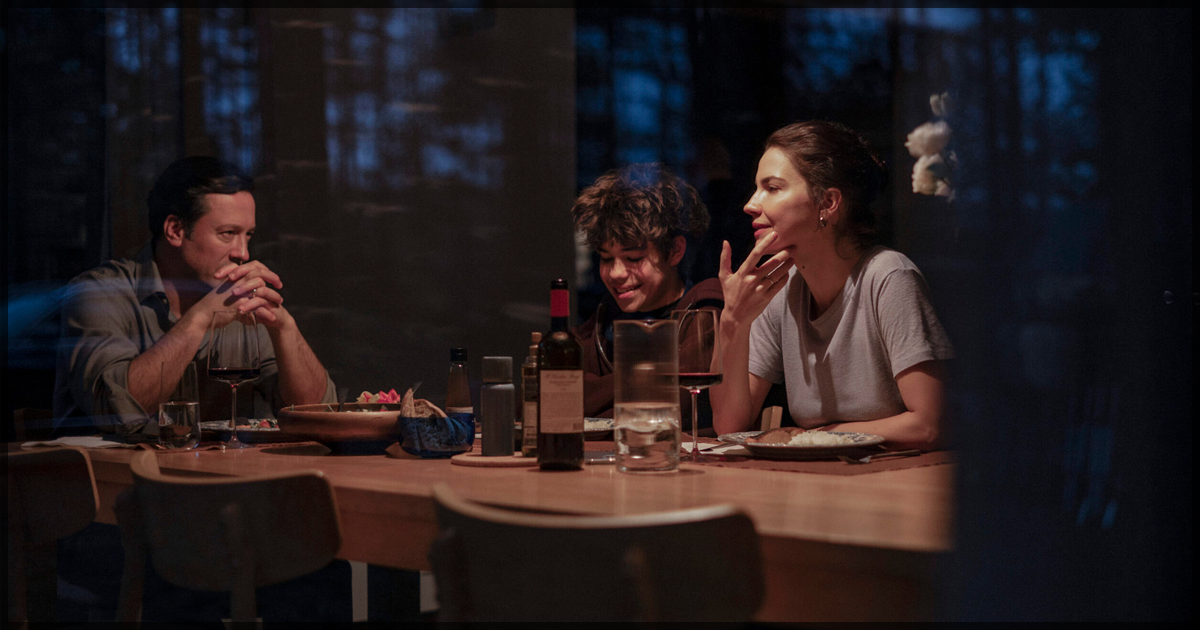
It’s 2022 and Gleb (Dmitriy Mazurov, who plays this part like James Gandolfini might have done) owns and manages a trucking and logistics company in a small Russian town. It’s a successful business, which you know from seeing the large modernist lakeside home where Gleb lives with his wife Galina (Iris Lebedeva) and their preteen son, but the beginning of the war has obviously led to setbacks. Gleb is an alert, attentive dad, but things are not great in his marriage. Gleb becomes convinced that Galina is having an affair and starts poking his nose into his wife’s business. He is also summoned to a meeting of all the major business owners in town. At this meeting the mayor (Vladimir Friedman) informs them not enough locals have volunteered to join the army since the war began. That means a quota has been set, with each business required to ‘volunteer’ employees for the war effort instead within five working days. If they refuse to provide names, armed men will simply kick their doors down and take the first employees they lay hands on. Gleb must supply 14 names. Does he refuse to comply, and risk his business? But how can he choose from his team of loyal employees? Though does any of this matter, if Galina no longer loves him?
The horrible solution Gleb finds for his workplace ‘dilemma’ is so elegant that one almost wishes the movie had been made from the point of view of his second-in-command, Natasha (Varvara Shmykova), instead. She’s the one who ends up unknowingly doing the dirty work, after all. But this would have removed the subplot of what Gleb does when he finds out Galina is indeed sleeping with someone else. Without spoilers, suffice to say it is not elegant, but involves some very dirty work indeed by lots of people, most of whom also don’t realise they’re doing it. Some of these people are fully aware of what’s going on, of course, and that means they have to live with their choices. How these people decide to do that is the final half of the film.
Yet none of this would have worked as well as it does without the extended scene of Gleb and Galina having a cheerful dinner in a fancy restaurant with four of their friends. Well, three of their friends, and the new, much younger girlfriend one friend has abandoned his wife and children for. This girlfriend tries very hard to make nice, so hard that she tells two jokes which were the funniest in this year’s films in competition at the festival. (This was an unusually grim year at Cannes, so a low bar to clear, but still, the jokes were pretty good.) The men go out for a smoke and tease each other about their professional responsibilities as well as their sex lives. Galina and the other wife immediately leave the girlfriend to vape alone at the table as they primp in the bathroom. After some commiseration about their absent friend, the discarded wife, they agree that a happy wife is an ignorant one. These six people have enough money and power that they can refer to their employees as ‘serfs’ in some sincerity (and knowing exactly how offensive that is). But they live in a society with strict social strata, and they have for whatever reason – luck, strategy, talent – come out on top. It’s very clear Gleb is not the only person at that dinner table or in this world who will do what’s necessary to remain that way. The only real mistake anyone here makes is trusting someone else’s judgement instead of their own.
The metaphor of the minotaur is never directly addressed, but the final sequence of the film is of Gleb and Galina’s kid filming clouds from the window of a plane going to Crete, where the minotaur lived. Only the clouds over the island at peace as indistinguishable from the smoke bursts from weapons fired in a land at war. If life is a maze in which we are trapped, Galina is so unhappy about her choices that she is becoming dangerous, while Gleb has to do bad things to maintain his position in it. And the marvel of Minotaur is that the movie is not necessarily sympathetic to their struggles. This is the burden of being responsible for the lives and livelihoods of other people, such as your employees, or your child. Horrible choices sometimes have to be made and horrible things – well, they don’t have to be done, but being a good person can mean paying too high a price. In these circumstances, is the friend who discarded his wife for a younger woman really a bad guy? Does the quality of Gleb’s parenting make up for who he arranges to be conscripted to fight an unjust war? Does the fact Gleb keeps those decisions to himself, sparing his subordinates from unintended consequences, make them any better? Or is everyone here just a bull in a maze desperately trying to find their way out?
My immediate reaction was that Mr. Zvyagintsev and his co-writer Simon Lyashenko chose the easy way out of every possible plot point. At first glance that could be because Minotaur is a modernisation of a French film from the sixties called The Unfaithful Wife, the same film which Adrian Lyne also used as the base of his 2002 ‘erotic thriller’ Unfaithful. However, on reflection, that seeming simplicity is the point. Cinematographer Mikhail Krichman, who has shot all of Mr. Zvyagintsev’s films, holds his camera like an uninvited guest, curious about what it is witnessing but knowing better than to get too close. The way it sometimes moves slowly, as if reluctantly following someone around a corner, makes us watching feel like we’re fully present. Galina’s unhappiness has unintended consequences just as Gleb’s success at business does. The fact neither foresaw what their actions would lead to doesn’t let them off the hook; the issue here is how the consequences land. But this is the great dilemma of having power. One phone call, or a quick chat over a cup of tea, and things or people can vanish as if they never existed. You might be faithful to your idea of yourself, but in return you have betrayed your humanity. The trouble is holding on to your ideals at gunpoint, or when a husband is losing his temper, has a tendency not to work out. And if there’s one thing that Russia doesn’t tolerate is people speaking out about doing the right thing.
That’s why Mr. Zvyagintsev’s speech was so brave, and why Minotaur is so brilliant. It’s just business. Life is not fair, success always comes at a price, and you can’t win the game unless you keep playing it. These clichés are the modern folk tales we tell ourselves these days. Minotaur is a such a folk tale, taken to the extreme. It’s a marvel of simplicity without being simple at all.
Minotaur recently played at the Cannes Film Festival.
Learn more about the film at the IMDB site for the title.
You might also like…