The French title of this film, Garance, is the uncommon name of the heroine and also that of the flower which is known in English as the rose madder. The choice to use Another Day instead of something like “Rose Madder” for the English title dampens the effect of that metaphor, because this is a story of addiction and enablement, with all the madness that implies. Maybe they thought the heroine not being called Rose would too confusing in subtitles. Either way it’s emblematic of how close Another Day comes to succeeding, without quite ever doing so. Metaphors on metaphors, eh.
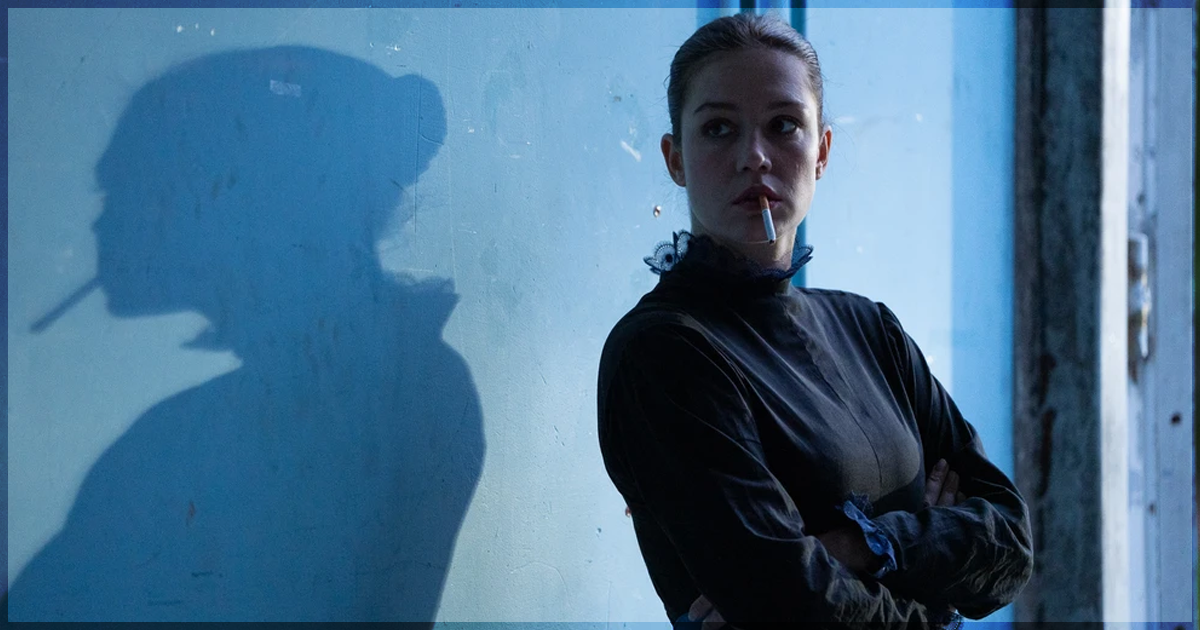
It’s 2017ish and Garance (Adèle Exarchopoulos) is the junior female of a Parisian theatre troupe. This is a highly sought-after position but not the best one: in the prestige dramas, Garance plays the maids, and only takes the lead in the shows aimed at kids. She’s good, puts her back into it and could work her way up if she tried, but Garance has other priorities. She is an alcoholic, but so open and matter-of-fact about it that people mostly don’t take her seriously. But her addiction is long-standing and serious, and slowly we see how very. A break-up with a loser boyfriend leads Garance into living with friends of friends who are serious party animals. Staying out till 5 am on a Monday serious. Garance never misses work, but sometimes she wakes up on the bus with her skirt pulled up and her panties pulled down. She shows up late to meet her friends without her keys, without her phone, without her coat, but with plenty of excuses. A brief relationship with a woman named Blanche (Jehnny Beth in way too small a part) leads Garance to reassess her sexuality and eventually begin a more serious relationship with a set designer named Pauline (Sara Giraudeau). When everyone crashes into lockdown Garance moves in with Pauline, in her rural home outside Paris, without realising that gives her relationship with wine no place to hide. But if it was that easy to stop drinking, she would have done it already.
Writer-director Jeanne Herry does four things here very well. Laurence Briaud’s editing emphasizes of the repetitive nature of most of Garance’s work – the tedium of backstage work, the tedium of being part of a family, the tedium of slamming shots when you know you should have gone home hours ago – while somehow always propelling the story forward. Every choice Garance makes, even if it’s one she’s made thousands of times before, somehow feels new every time. Garance’s realisation that she prefers dating women also feels utterly organic and natural, and her immediate integration into a tight queer gang without anyone batting an eye is really pleasant to see. She even has a trans roommate for a while, about whom the only criticism is that their sizes are too different for them to share clothes. The relationship between Pauline and Garance examines a dynamic less commonly explored onscreen: their attraction is based on anxiety. Garance is so new at dating women she doesn’t bring the confidence that she has with men, while Pauline is so new at being in relationships at all, much less with a fancy Parisian actress, that she becomes a textbook enabler because she thinks that’s all she has to offer. This is also a rare movie to use the lockdowns of 2020 as a passing and appropriate plot device without making a big deal of it.
But the subplot with Garance’s sister Marianne (Anne Suarez) is not so much heavy-handed as weighted enough to sink to the bottom of the sea. The different-sister dynamic between Amy Schumer and Brie Larson in Trainwreck was a subtle masterpiece in comparison. What’s worse is the way in which the movie handles Garance’s drinking is neither original, interesting or mature. If you want to scare kids into believing drinking is bad with this, they’re more likely to yawn with boredom at those parts first. Garance’s continuing ability to find work in a variety of acting roles, even as her reputation takes a beating, is also something of a surprise.
That is of course because she is played by Ms. Exarchopoulos, one of the finest actresses of our time, but whose propensity for playing trainwrecks, screw-ups, the mentally unwell and women with an unstoppable appetite for self-destruction is becoming a cliché. She is practically impossible to criticize as an actress – at no point here do you feel the work she is doing, even when Garance is completely off the rails – but the similarity of many of her parts is becoming a bad idea. She even plays a similar role in another movie at this year’s Cannes Film Festival, Orange-Flavored Wedding. And while it’s not like we roll our eyes when Robert De Niro plays a gangster again, he varies things up enough that returning to his wheelhouse never feels stale. Ms. Giraudeau has a distinctive knack for seeming feeble onscreen without ever being such, and the contrast of her personal style with Ms. Exarchopoulos’ makes a solid case for opposites attracting. There’s a lot of good in this movie, but the uninspired addiction arc does not make best use of anybody’s talents here. You really want to like Another Day, but in the end its problems are too great for you to hang around. Metaphors on metaphors, eh.
Another Day recently played at the Cannes Film Festival.
Learn more about the film at the IMDB site for the title.
You might also like…