Playing in the Orizzonti competition program at the 2025 Venice International Film Festival, Thai director and screenwriter Nawapol Thamrongrattanarit’s latest vision Human Resource doubles as an intimate character study and a meditative portrait of contemporary Thai life mapped through the soul-sapping mechanics of corporate grind, a kind of a white-collar counterpart to Boys Go to Jupiter, Julian Glander’s vaporwave drama about blue-collar hustle culture.
Befitting the filmmaker behind Happy Old Year, Thailand’s submission for the Best International Feature Film at the 93rd Academy Awards, Human Resource recalls the realism of that romantic drama, but as Thamrongrattanarit reveals in a Variety interview, it’s also a response to Die Tomorrow, his 2017 anthology movie wrestling with the ever-frantic question of death. This time, the director explores the opposite end: life and the challenge of sustaining it in a world that is increasingly in flux. As a panorama of the kind of existence peddled by the capitalist structure, where a steady upward mobility is achieved at the expense of the socially deprived, Human Resource is substantially bleak and emotionally sobering.
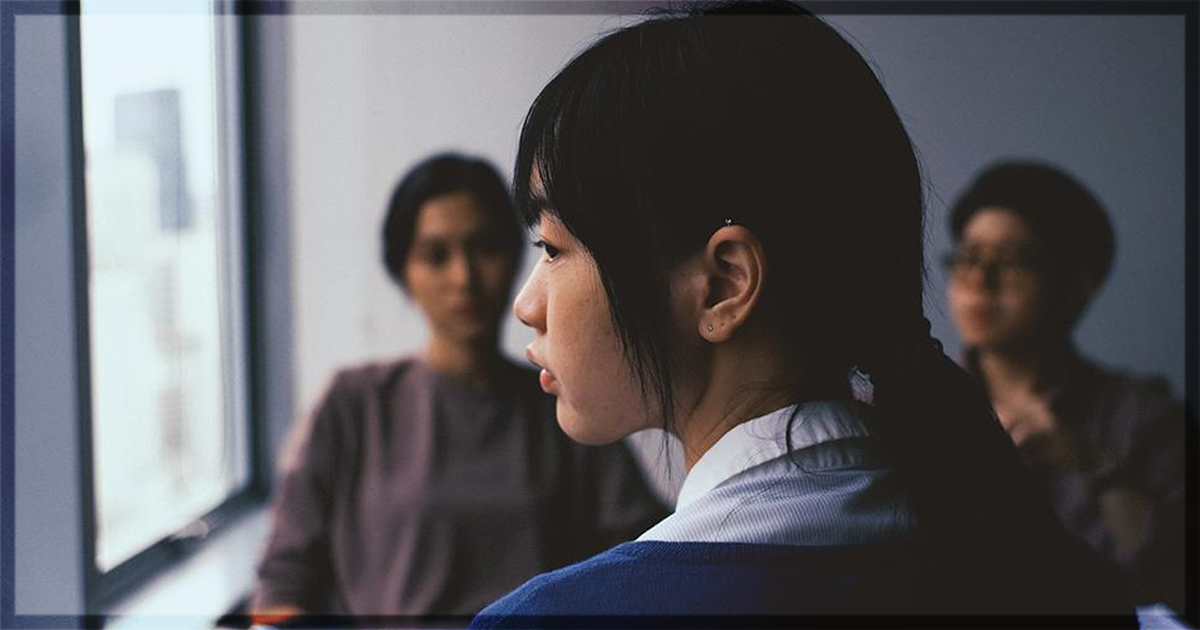
As the movie’s title readily indicates, the story’s protagonist, Fren (played with pulsating ache by Prapamonton Eiamchan) is an HR worker, who discovers that she’s five weeks pregnant. The doctor suggests avoiding stress and keeping her emotions in check, which could prove extra difficult considering the demands of her job. Fren and her office mate Tenn (Chanakan Rattana-Udom) must find a new recruit, who is willing to put up with possible mistreatment from a boss known for his bullying and tantrums, which only ever happens off-screen, forcing a new hire to suddenly stop showing up to work. Tenn insists on hiring the most qualified applicant for a position that offers measly compensation and a single rest day in a week. Inevitably, the shortlisted candidates demand for higher pay and more adequate benefits, and as Fren gathers more insights from the people she sits down with, she begins to fret over the future of her unborn child that she’d rather keep her pregnancy a secret from her pro-life husband Thame (Paopetch Charoensook), who is selling a stab-proof vest for police officers in “an increasingly hostile world.” Fren must make a decision before the three-month period, when abortion remains legal under Thai laws, lapses.
The opening frame, a still close-up of what might as well be a monochromatic painting until later revealed as an ultrasound scan, instantly establishes the film’s patiently measured and languid mounting, which contrasts the flair of the Thai filmmaker’s earlier works or even the brisk and feverish visual grammar of his 2022 parody Fast and Feel Love. Eiamchan’s take on Fren is contained and intense, ably embodying the anxiety at the film’s center. There’s a sense of detachment that blankets the central character, and, at times, it’s hard to deduce what she completely feels. At work, she often dissociates from seminars where workers are repeatedly reminded of improving their skillset, or keeps her distance from the fresh graduate she and Tenn eventually hired (“If she can’t handle it, she’ll just quit,” she tells her colleague; later, a heartbreaking encounter in the office elevator will heighten this sentiment.) At home, she has to indulge her husband’s egotistical fixation on money and status, and his clashing views on abortion. Thamrongrattanarit navigates this griefscape by wielding the urban palette, with cinematographer Natdanai Naksuwarn creating a dreary, though fascinating, aesthetic—the exact opposite of White Lotus’ third season—from the harsh lines of the city’s towering buildings to the gray of concrete roadways, often presented via stylized overhead and wide shots. The immersive soundscape, courtesy of Onecool Sound Studio, allows the emotional undercurrent to linger and eventually hack into the lead character’s psyche, even more so the future that she barely sees herself in, peaking in a car-wash scene which finds Fren bearing all that weight, forever transformed by the lack of desired choice.
Clocking in at about two hours, what Human Resource sketches in its saturated image-making is a picture that, while imbued with modern Thai sensibilities, is not only remotely distinct to its locale. The broader ideas that motor the film’s dramatic specifics, from how patriarchal systems cast a shadow over women’s bodily autonomy to the commodification of labor under the capitalist framework, are subject matters that continue to crater the state of the modern world politically, socially, and culturally. News reports and chatter over meals constantly detail these volatile shifts. More than anything, Thamrongrattanarit is bent on making the viewer contend with the class disparity that gives the film its recurring thread. Upon learning that Fren’s pregnant, Thame swiftly acts concerned and already thinks ahead, reserving a slot at an international school for his unborn child’s education, a kind of education that the couple did not access growing up. This privilege is paralleled through Thame’s outright revulsion at errant motorcyclists they regularly encounter on the way home, an attitude that builds up the tension between him and Fren. It’s not that Thame thinks he’s above these drivers because he obeys traffic rules, it’s more to do with his classist ideals. And even when he’s in the wrong, he gets away with it, certainly due to powerful connections.
In many respects, Human Resource views the world matter-of-factly. It is the kind of movie that is not beholden to alternatives or neat answers, which is to say, it’s also a far darker picture than it lets on for most of its brilliantly slow and static takes. Strangely, there’s a kind of solace that emerges from its rather pragmatic, if not cynical, mindset. So crushingly honest and elegiac it could tear you open from the inside. “We must learn to live with disappointment,” we are told. Maybe the tragedy is that, like Fren, we only ever get to fully grasp this crucial fact of life when it’s already too late, or that we’ve been used to it for far too long that we can no longer tell the difference between what’s acceptable and not.
Human Resource recently played at the Venice Film Festival.
Learn more about the film at the Venice site for the title.
You might also like…