
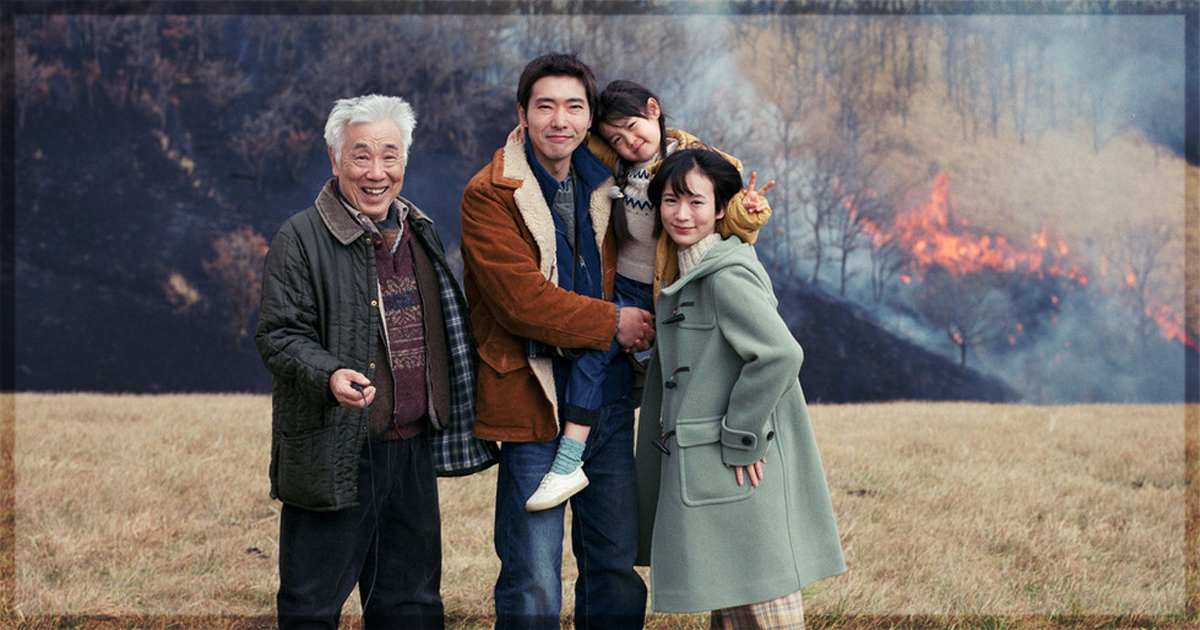
Memorizu is an incredible movie about the power of the image and the way images keep us connected to each other. It also does this within the context of a three-generation family which loves and likes each other and wants very much to stay connected, even if each generation has slightly different methods as to how. It demonstrates through imagery a culture shift that anyone with a camera in their phone has experienced personally but one we don’t articulate much, it has become so normalised. But writer-director Miiku Sakanishi, who won the Best New Narrative Director award at this year’s Tribeca Film Festival, has made that shift clear with this gorgeous film.
Yuki (Hoshi Moeka) is happily married to Yuta (Emoto Tasuku) and they have a daughter, Hana (Inoue Shiki), who’s about five. Yuki works as a guide and translator for Chinese tourists who would like help navigating Tokyo, and Yuta has the kind of office job you can do remotely. That means when Yuki’s father Makoto (Issey Ogata) breaks his leg, it’s Yuta who takes the ferry to the small town in Kyushu to look after him for several weeks. Makoto owns a photography studio and print shop, so does things like engagement announcements, enlargement of photos for funerals, and the occasional development of rolls of film for the elderly locals who never gave up their cameras. Yuta minds the shop, which isn’t busy, working his own job from his laptop on the counter. Every morning he carries out the flag that indicates they’re open and also brings out a bowl of water in case any passing dogs get thirsty. He also carries Makoto’s bags as he navigates around town for events like school picture day, and takes care of Makoto’s small apartment over the shop. They get along great, so the stress here is only how much Yuta misses his girls.
So a lot of the movie is Yuta and Yuki observing their surroundings and sending each other little pictures, or short videos, of the things they see as they move through the world. Light shining through tree branches, an unusual branded towel hanging out to dry, Hana making a funny face. The kind of little thing you send your loved ones without thinking twice, to keep them in the loop of the minutiae of your day. And what’s fascinating is that Makoto’s life’s work is doing exactly the same thing, only with the technology that used to be cutting edge but isn’t anymore. The images that Yuki and Yuta swap are throwaway, meant only for each other (and Hana). If they were together they would just nudge and point, but because of the distance they have to film what they see for each other. This kind of happy family cannot be taken for granted, and it takes work, of the kind that is rarely thought of as work. But a little message from someone you love that lets you know they are thinking of you is always a gift.
And slowly we think about how images on your phone feel private, while physical photos somehow feel public. Makoto has made a career out of paying attention. His work has always involved public performance, such as physically touching up photos if needed, or putting the pictures in a nice frame and keeping the negatives in order. There’s a skill to being a good photographer, knowing how to put the subjects at ease and making them look both natural and at their best, which is very important for more formal images. Who wants unflattering wedding photos? So Makoto’s expertise still commands a price, even in his small town.
Of course that level of formality in the images Yuta and Yuki exchange would be ridiculous. But in both cases the question remains the same: how do the images shape what we remember? Memorizu is the very rare movie where a documentary about how it was made would be just as interesting as the movie itself. Writer-director Miiku Sakanishi, in his first film, has made a story so ordinary and organic that it barely feels staged. Yoichi Kamakari’s cinematography, which feels like it was filmed with natural light, Shinichi Fushima’s editing and Young Chang Hwang’s sound all combine to make the day-to-day lives of this family feel like they are happening across the street. The realism and the kind feeling is so low-key and ordinary that it becomes sublime. This kind of attention to detail is extremely hard to build, even in the heightened space of a film set, and the fact it all feels so gentle and loving is remarkable. In other words, Memorizu is an album of images you’ll want to return to again and again, both for what it tells us about how we look, but also for the things it wants us to see.
Memorizu recently premiered at the Tribeca Film Festival.
Learn more about the film at the IMDB site for the title.
You might also like…
‘What Is To Come’ Hopes for the Best (Tribeca 2026 Film Review)