
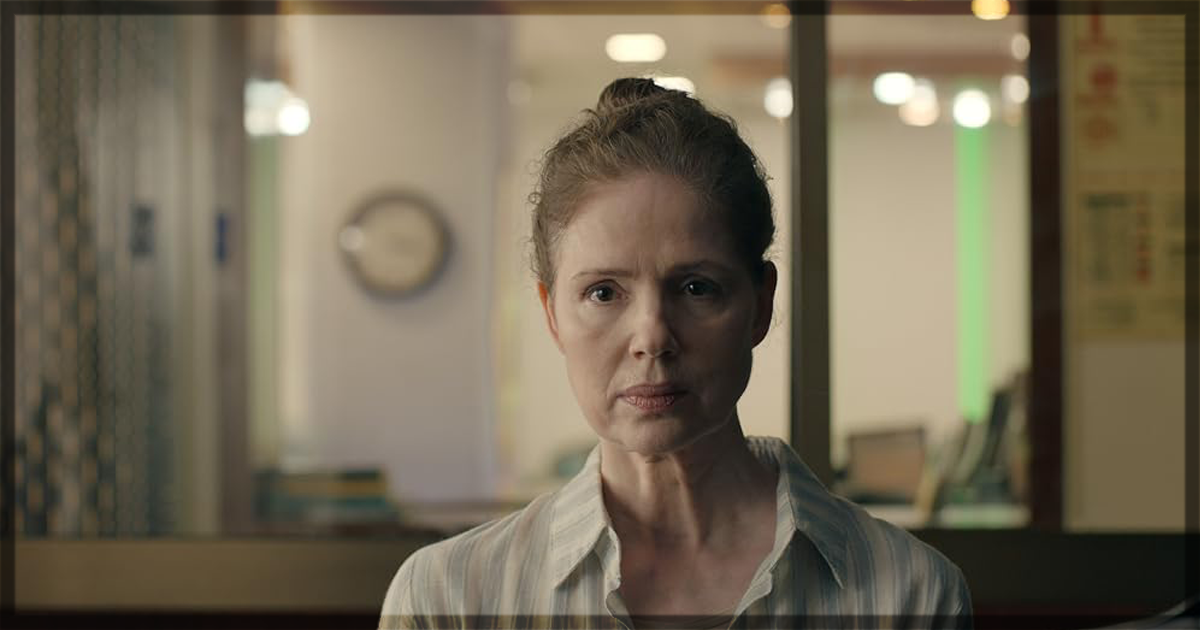
It’s hard to believe that a movie which begins with a suicide pact is able to feel so heartwarming, but What Is To Come is about a woman moving from the lowest point of her life into – well, something else. This Israeli movie about the importance of never giving up and being honest with yourself owes a considerable debt to the 90s American movie Ruby in Paradise. They are both about a woman with justified trust issues starting over alone in a beach resort town, but What Is To Come makes its heroine both more and less sympathetic. You don’t often see a coming-of-age story where the person growing up is already sixty, but What Is To Come has a kindness towards her problems that’s rare from anywhere in the world.
Yehudit (Ronit Yudkevitz) and her husband have gotten into so much debt on the farm that a joint suicide seems the only way out. At the last possible second Yehudit changes her mind. Unfortunately staying alive only means a different set of problems: even at the funeral neighbours to whom her husband owed money let her know she owes them now. There’s only one solution. That’s tell her sister she’ll be out of touch for a while, grab up all the cash in the house, leave her mobile phone behind, and get on a midnight bus going anywhere. Well, not anywhere, but Eilat, a beach town at the very bottom of Israel, on the Gulf of Aqaba. She finds a crappy motel and starts asking for cash-in-hand work up and down the boardwalk. Thanks to her age she’s mostly laughed out the door. Eventually she stops being able to pay for her room and the motel manager, whose name we learn is Eli (Yaakov Zada-Daniel), has to come throw her out. But Yehudit cries so hard Eli takes pity and offers her a housekeeping job. She accepts, though under the name Gila, and while the work is about as bad as you’d expect – kids on spring break party the same everywhere – Eli starts chatting to her, and smiling when he does it.
Thanks to the job, Gila dares to use the last of her money to find a crappy apartment in the side of town where nobody asks questions and people with Israeli passports rarely go. She is surprised the apartment is furnished, but the landlord explains the previous tenants left all their stuff behind when they skipped out. But they come back: an African family of a father, a pregnant mother (Tovit Adit Semay) and a little boy. The father threatens Gila into allowing them to stay and then disappears again. It’s obvious they are not in Israel legally though this is never spelled out. And while Gila is not delighted to be sharing her space, she is hardly going to sling a pregnant woman and a little kid onto the streets. The mother – whose name is not given in the English subtitles or the press notes – is remarkably pragmatic about being abandoned, and slowly the two women start to help each other out. They share food, they look after the boy, and sometimes they sit on the steps together and chat. It could be a lot worse! And considering this is the first time Yehudit/Gila has been on her own, she’s managing just fine.
Writer-director Ruthy Pribar is interesting in exploring how a woman who has never had to manage her own life for herself suddenly copes with being off grid. Danielle Nowitz’s cinematography and Neta Dvorkis’ editing ensure we stay close to Yehudit’s thoughts as she starts moving through the world as herself, not her parents’ child or her husband’s wife. Yehudit is not entirely alone of course, as she does have her sister back home. Besides, Eli is so lonely that he’s delighted to play the white knight towards Gila, and Gila is delighted to let him. They hold hands as they walk around town and at one point even dance together thanks to a street musician and Karni Postel’s beautiful score. It’s obvious there’s an opportunity here, if she wants it. But that would involve telling a lot of truths to Eli, and in this patriarchal society not even a man as kind and eager as Eli might be ready to listen.
Ms. Semay doesn’t have much to do, but she provides her character with a quiet but very strong sense of herself that sets the movie’s whole tone. Mr. Zada-Daniel provides a very specific kind of ‘divorced middle-aged man’ energy in ways we don’t often see: Eli is thrilled that this pretty lady needs him, and therefore most of his attraction to Gila is due to his ability to take care of her. So not a bad man, but maybe not the best, though plenty of women in Yehudit’s position would leap at it. For her part Ms. Yudkevitz carries the movie with ease as a woman who had to shield her thoughts from her husband, without realising this meant she was also shielding them from herself. As Yehudit starts navigating the world as her own person – as Gila – we see her start to figure out what she likes because she likes it and not just because someone else wanted her to. It’s a gentle and not particularly rapid self-discovery – the 82-minute runtime feels longer – but that’s because it moves at the speed of Yehudit’s thoughts, and that takes time. So What Is To Come is about how you own the choices you’ve made in life, starting with yourself. Maybe it’s teaching a little boy how to sing to the plants so they grow. Maybe it’s being happy with a job cleaning obscenities off bathroom mirrors because you’re earning your own money. And maybe it’s knowing that it’s more important to be happy with yourself than to be happy because of someone else.
On top of all this, What Is To Come shows a slice of ordinary workaday life in Israel that is rarely expressed in art. Plenty of potential viewers might not be sympathetic to this, but in the context of the current political climate What Is To Come makes a very strong case for empathy and kindness for all. Revolutions don’t always come through a giant gesture. Sometimes they start small, such as by a woman standing up for herself. Thanks to the title, we know the focus here is on the future and not the past. And if we don’t begin by judging people (and movies) without prejudice, we have no way to change things for the better.
What Is To Come recently played at the Tribeca Film Festival.
Learn more about the film at the IMDB site for the title.
You might also like…
The Gorgeous Glimpses of ‘Leonora in the Morning Light’ (Film Review)