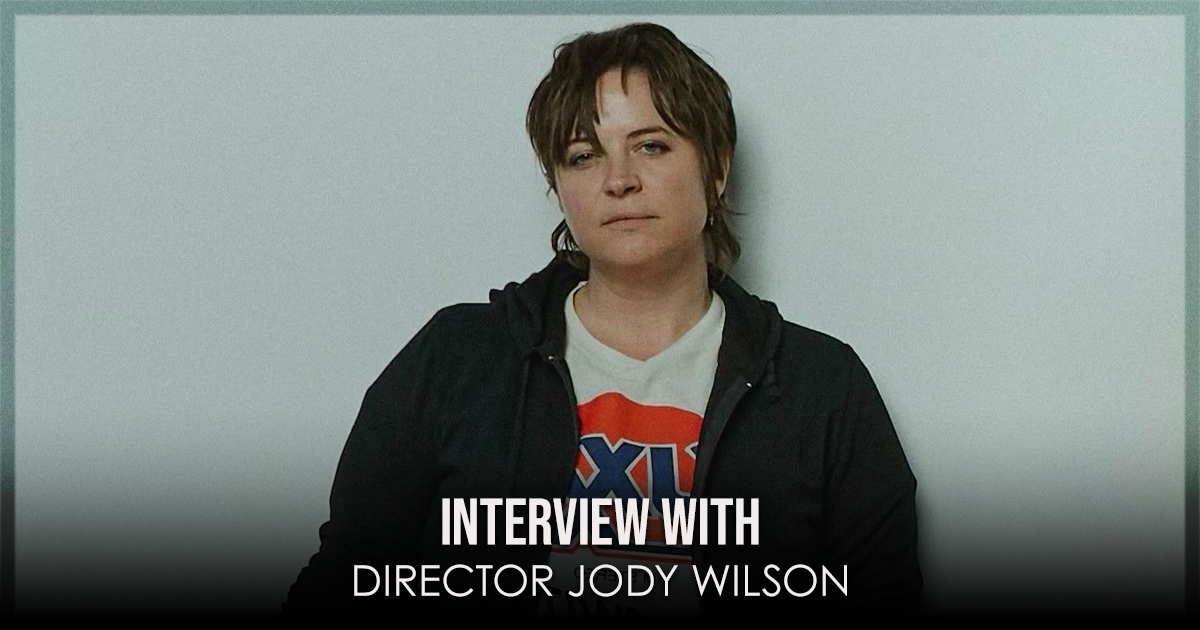
Canadian filmmaker Jody Wilson’s feature debut The Bearded Girl centers on a sideshow in Paradise County, where Cleo (Anwen O’Driscoll) is expected to follow in her mother, Lady Andre’s (Jessica Paré) footsteps and continue the proud tradition of bearded women. However, Cleo’s mother remains a controlling influence over their sideshow act, and rejects Cleo’s new ideas, which leaves her daughter feeling disillusioned and questioning her place in their tightknit group. So, when Cleo gets a peak beyond her small community, the wider world offers a tantalizing future where she can shape her life on her own terms — maybe without a beard.
Wilson has worked as a visual effects consultant on the dystopian drama series The Last of Us, as a visual effects production manager on Sonic the Hedgehog 2, and as the VFX line producer on Sin City 2: A Dame to Kill For. Her debut short film, the sci-fi drama Indigo, revolves around Takumi and his companion, a toy robot, who must choose between returning to their home planet or remaining here on earth.
In conversation with Paul Risker of Movies We Texted About, Wilson discussed Canada’s robust film production system and her determination to not fall short of making films. She also reflected on the desire to create a heightened and fever-like dream, and using cinema to create a catalog of her own history.
The Interview with Jody Wilson of The Bearded Girl
[Editor’s Note: This interview has been lightly edited for clarity.]
Paul Risker: Why filmmaking as a means of creative expression? Was there an inspirational or defining moment for you personally?
Jody Wilson: I was around fourteen, and I was into music at the same time. I lived in the very small town of Jasper, Alberta in the mountains, and I remember walking home at night with my walkman, listening to Daft Punk and seeing these images. They would just come to me and I just thought it was cool that this music was creating these images that I was not even inviting in. So, from that point on, I wanted to be a music video director because of how music lent itself to my creative process.
At the same time, I was also writing short stories, and so when I got a little older and realized how much I also loved movies, it all came together. And I’m the only artist in my family. I come from a family of cowboys and tourism folk and people who work very blue-collar jobs. Even in my extended family, I think I’m the only person that’s making a living as an artist — there’s probably someone who is a good painter or something somewhere. But when I knew that I wanted to do this, I was not going to accept anything less. So, I just went after it. I went to film school and somehow found my way. It was just pure stubbornness of knowing that there was nothing else I wanted to do.
I would work restaurants and bar jobs to make money and I just knew I was going to be doing this. And even when I worked as a visual effects coordinator at Digital Domain – I was probably twenty-five-years-old – I said to my manager, “One day, I’m going to come back here as a director.” And they ended up doing the visual effects on my film — it was a beautiful full circle moment. I remember when I said that to my manager, she said, “Okay, sure.” I never listened to anybody telling me I couldn’t, and there’s a lot of people who gatekeep directing specifically, who will make you believe that it’s not easy to do it and that everybody wants to do it. That is true, but there are avenues.
One of the things that I love about making films in Canada is that we have a very robust system in place for supporting women and underrepresented talent. We’re supporting indie filmmakers with Telefilm. I spent my twenties in the States, in California, and they don’t have anything like what we have. So yeah, we’ve managed to utilize those, and with my experience working on big Hollywood movies and mixing my knowledge and my contacts, I’ll hopefully be able to keep going and make more films.
Paul Risker: What was the genesis of the idea for The Bearded Girl, and would you describe it as a journey of discovery?
Jody Wilson: The idea evolves as it should, especially when you’re growing older.
The original idea for Bearded Girl came from two of my friends named Blake [Barrie] and Thiago [Gadelha]. They wrote the original story and then, a few years later I asked them if I could take the project and rewrite it and make it my own and that’s what I did. It was a really interesting basis for almost reimagining a contemporary fairy tale — that’s how I looked at it. It had the same elements or beats in place, but it was quite different from the story they had written.
So, for me, it was a nice foundation to be able to talk about complex issues, without preaching to anybody. Instead, it allowed the audience to feel and recognize the characters’ otherness and what they might have in common, even though they might not have a beard, or they might not be a little person.
This is a relatively short feature, and I intentionally kept it short and simple for a first feature, so it would be something that was easy to digest. I’ve watched it now a thousand times, and I still stay for every screening. I think the biggest win for me is that I like it because if I didn’t like it, there would be problems, and emotionally, I don’t know if I would have had the vigor to keep on going. I am proud of the film and I love what my team was able to do. It makes it a lot easier when you like the film that you’re showing and watching a thousand times.
Paul Risker: There’s something deliberately offbeat, heightened and performative about The Bearded Girl. Given that the characters are performers, this is a logical choice of tone, but what were you looking to achieve by taking this approach?
Jody Wilson: […] I was looking for actors who had some experience in theater and who would take these characters and heighten them. And that lends to the fantasy feeling of the whole film. Some people would not even consider this a fantasy or a genre film, but we constructed it like one.
Some of the dialogue is super-grounded and almost feels very conversational, but then in other scenes it’s not — the milk shop scene with the twins where we set up the adult world is a weird one, with some really heightened acting. But you see that Cleo’s awkward in that scene too and is wondering what is going on. So, it’s giving the audience a chance to ask, is this awkward or is this heightened? It’s just this mix of things that, in the end, makes you feel like it’s a little bit of a fever dream because you are dealing with these heightened emotions. And even the way she and her mom talk to each other is theatrical.
Paul Risker: In as much as cinema is trying to ground itself in reality, we are influenced by the way people talk and act in films. We can feel empowered in our imagination, but how we imagine something playing out is often, in reality, a disappointment. I sometimes wonder whether we don’t acknowledge the extent to which cinema influences the way we want to talk and act.
Jody Wilson: Hey, you’re speaking to a filmmaker who believes that as well. And that’s why it’s such a beautiful privilege to be able to know that something that I’ve created is informing and talking to culture. And especially to younger people who might see it and feel something, because I was extremely influenced by films as a kid. I grew up in the late 80s and 90s when we would just watch the same VHS over and over again, and you knew every word. I could still watch some of those films and quote them.
Back then you were influenced by just a few films, whereas nowadays, kids are probably influenced by thousands of films because there’s so much happening. So, to make something that is simple and people could watch over and over again was something that I subconsciously wanted to make because of my early relationship to film — I’d watch the same things over and over again. And I think sometimes it’s the predictability of a story that can lend itself to someone wanting to watch it over again, because they know it’s comfortable for them. So, I do believe cinema influences our culture.
Paul Risker: There’s an intriguing contradiction in that you’ve described the film as being simple, and yet it deals with complex themes. Is it about trying to find that sweet spot or paradoxical space where it’s simultaneously both simple and complex?
Jody Wilson: You want to be in that paradox as a filmmaker — in that sweet spot of not over-complicating things. I use the movie Tenet as an example, because that’s one film that I literally didn’t understand. I didn’t even pretend I did. I like movies that are simple but have that paradox of giving you space to think this is probably what the characters are feeling. It’s about the complexities of being a human and what we hide, which you’re watching play out in front of you.
I know the backstory for these characters is very dense. There’s minimal dialogue and there are not a lot of scenes — it’s not a long movie. We had to economize those character traits into a few scenes. One of the things that led to that was I spoke with each actor a few days before and gave them all the backstory. There was the backstory of why Lady Andre’s husband left and how she had grown up and had Cleo when she was only sixteen-years-old. Then there was the backstory between her and the card reader, Madame Tilly. This big backstory was something I had to take out of the original shooting script because we didn’t have time for it. But knowing about all of those storylines lends to the complexity even if you’re not seeing or hearing it all in the dialogue. The actors know it, and so it informs their choices, which gives a complexity to something simple, right? So, that was my intention and I hope that it’s something that translates when you watch the film, and you do feel those things.
Paul Risker: Looking back on the experience of making The Bearded Girl, was it a transformative experience?
Jody Wilson: I don’t know if it changes me or whether it’s a good point of reference for the change. Having these films that you’ve created at these very distinct stages, you can reference how you interacted with the material at that time versus how you would now, especially when you think about the choices that you made for it. And so I think films are a good point of reference for looking back at my life and seeing how I’ve changed. It’s a nice catalog of my history, especially if I go back and look at different drafts of scripts, because I write too. Writing is probably my first, and my foremost interest.
And, yeah, we do change. I’m a very different person now than I was when I started this project — I was quite young. My next projects will hopefully evolve from this, but still have a throughline that you can possibly see with Indigo and this. Maybe there will be little elements that hold it in the space of the films that I create.
The Bearded Girl recently played at the Fantasia International Film Festival.
Learn more about the film at the official Fantasia site for the title.
You might also like…
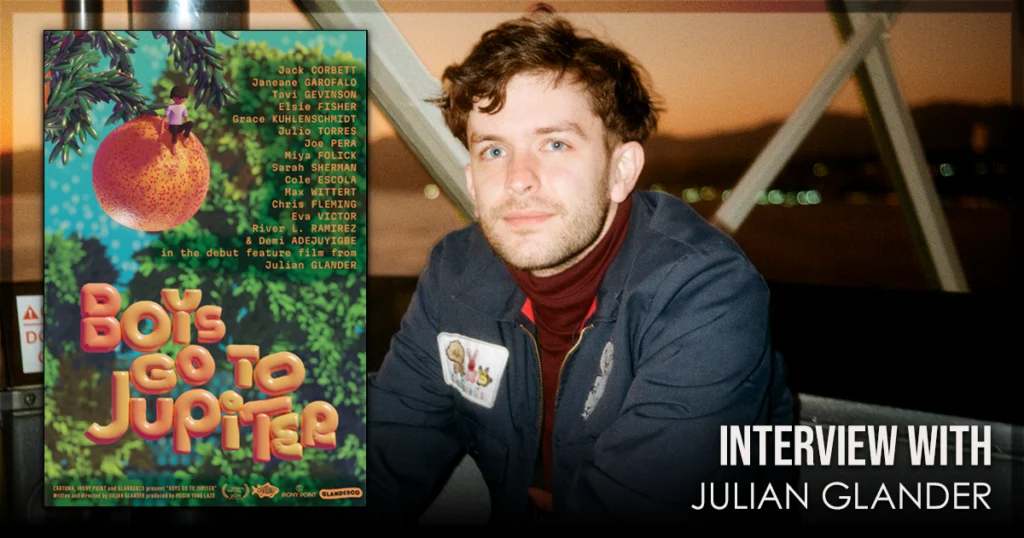
Interview: Julian Glander on the Surreal, Sorbet-tinged ‘Boys Go to Jupiter’