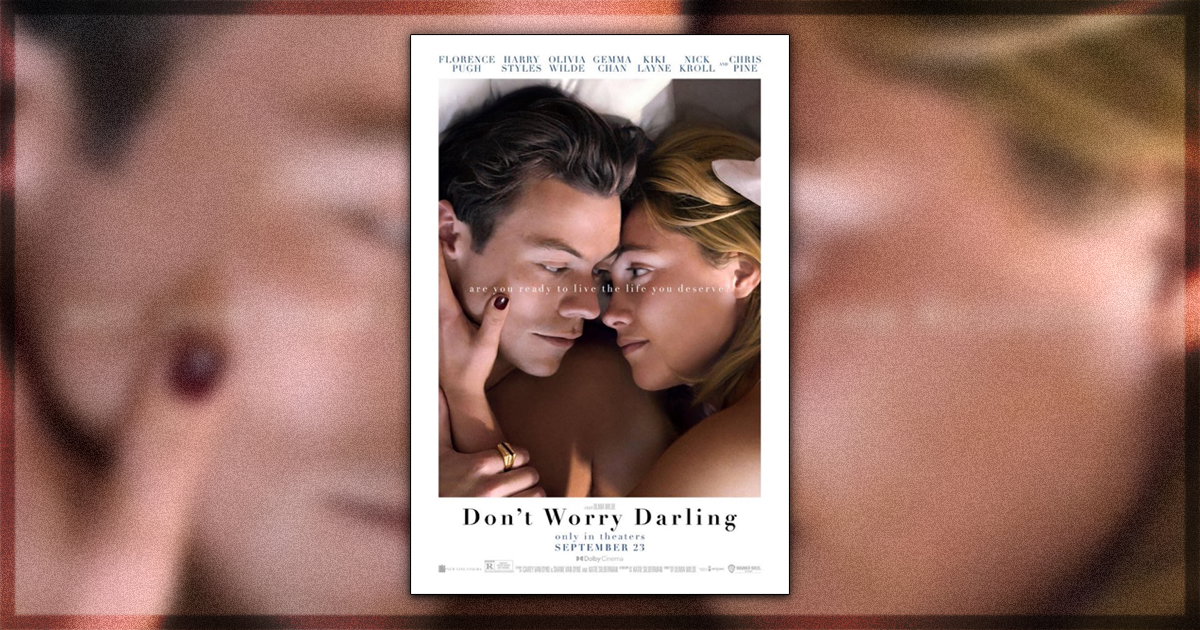
After the laugh-a-minute riot that was Booksmart, Olivia Wilde turns her attention away from comedy to attempt a pulpy, adult thriller in the form of Don’t Worry Darling, a film that embodies the notion of sophomore slump as it wears its message on misogyny loudly, proudly and with a nuanced and barefaced cheek.
Don’t Worry Darling opens with a supposed male utopian suburbia. It’s the idyllic 1950’s, in aesthetic and sensibilities. Attractive husbands have attractive, submissive wives dressed in neat, unsoiled cocktail dresses greet them at the door from an oh-so-hard day of being the breadwinner at the mysterious Victory Project. Manhattan cocktails delivered by subservient children, a seemingly always high sun and suited evening parties. A steak lovingly marinated, cooked, and discarded in favour of voyeuristic kitchen sex. It’s an incel’s version of paradise and in the early going, Alice (Florence Pugh) is drinking that Victory Kool-Aid – along with all the other Victory breads, milks and eggs that contribute to the sinister, manufactured model home sensibility that encompasses the town.
But, down the rabbit hole Alice goes, on a journey into a gaslighted mania. What spell is seemingly cast over her slowly starts to break down, much to the chagrin of the smarmy, cult leader Frank (Chris Pine) and her fellow Stepford Wives (incl. Wilde herself, Gemma Chan, Kiki Layne & Dita Von Teese). Scandalous attempts to break out and make sense of the intermittent dreams and hallucinations that plague her, Alice finds herself at odds with sharply dressed, clean shaven James-Bond-esque husband Jack (Harry Styles), and his myriad of sports cars. He maintains that there is nothing wrong in this town – why would there be, to him it’s a nirvana for misogyny. Alas, there is trouble in paradise, one could say.
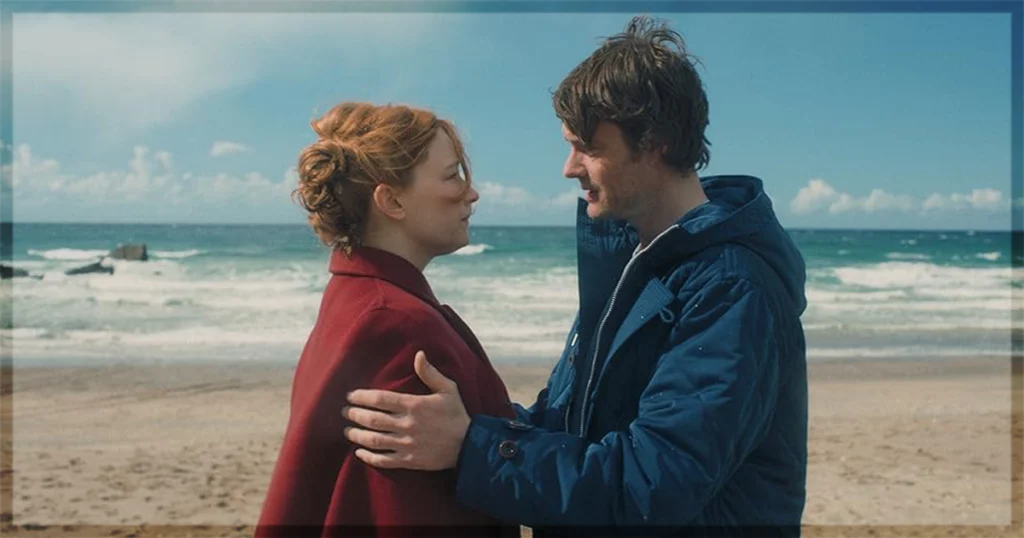
Olivia Wilde and cinematographer Mathew Libatique nail that weird, oblique edge for the town of Victory. Their use of wide expansive desert creates a snow-globe feel to the town, trapping the residents in their own lifestyle. However, this leads to much of the frustration one has with Don’t Worry Darling. Wilde contributes surrealist imagery of Alice being squeezed by her own home and shots of her drowning, but all of these are entirely superfluous because the subtext is there from the technical material and ideas Wilde has already put in the picture. Wilde has high ambitions, and is entirely competent in delivering the cardinal elements of this story, but she cuts herself at the knees by not having faith in Katie Silberman’s sharp script.
Taking the film at face value that Wilde did indeed direct Pugh (the irritating dramatics of its press tour leave a lot to be reanalysed at a future date), she gets a lot out of her talented lead here. Pugh’s Alice is the core of the movie and all the directorial flair in the world can’t save a film if the lead is uninteresting, so one is grateful that Alice’s wide-eyed and panic-stricken performance carries all the weight that co-star Harry Styles can’t quite muster. Styles is competent enough, but his inexperience is front and centre as Pugh acts circles around him. Styles isn’t bad, and he has a decent amount of chemistry with Pugh, but he has such stiffness (for which there is a kinda in-film reason given for) but it’s just not quite enough in the visual language of the movie.
Don’t Worry Darling is a competent production, with Wilde’s ambition not quite living up to her burgeoning directorial talents. This heavy-handed and misogynist version of Get Out, with all its stunning sequences, doesn’t add up to the sum of its parts.
Don’t Worry Darling is available to purchase or stream at your digital retailer of choice.
You might also like…