
During Jamie Adams’ whimsical, flimsy romance, She is Love, a character is told while reading a script that “the less you rehearse it, the better it will be”. This, it turns out, is Adams’ motif. The film and script is crafted through non-traditional methods. The cast and himself will propose a central idea and form what he coins as a ‘scriptment’ – a bare bones outline with no corporeal dialogue set in place. This improvisational style, as per the film’s press release, is an attempt at garnering a “performance-centred process”, of which his previous films, Alright Now and Love Spreads, attempted to do as they were also shot with no script in place.
It’s a concept that one might read about a critically acclaimed movie and fawn over. Films such as Derek Cianfrance’s soul shaking Blue Valentine do this to great effect. The script for which was scrapped before shooting, forcing Cianfrance’s central duo to improvise their scenes. However, this was after actors Ryan Gosling and Michelle Williams had spent months living together in order to acquire a blisteringly emotional tête-à-tête. Whereas, She is Love brings together American actress Haley Bennett and British actor Sam Riley for an all too brief six-day shoot, where they play divorced couple Patricia and Idris, respectively.
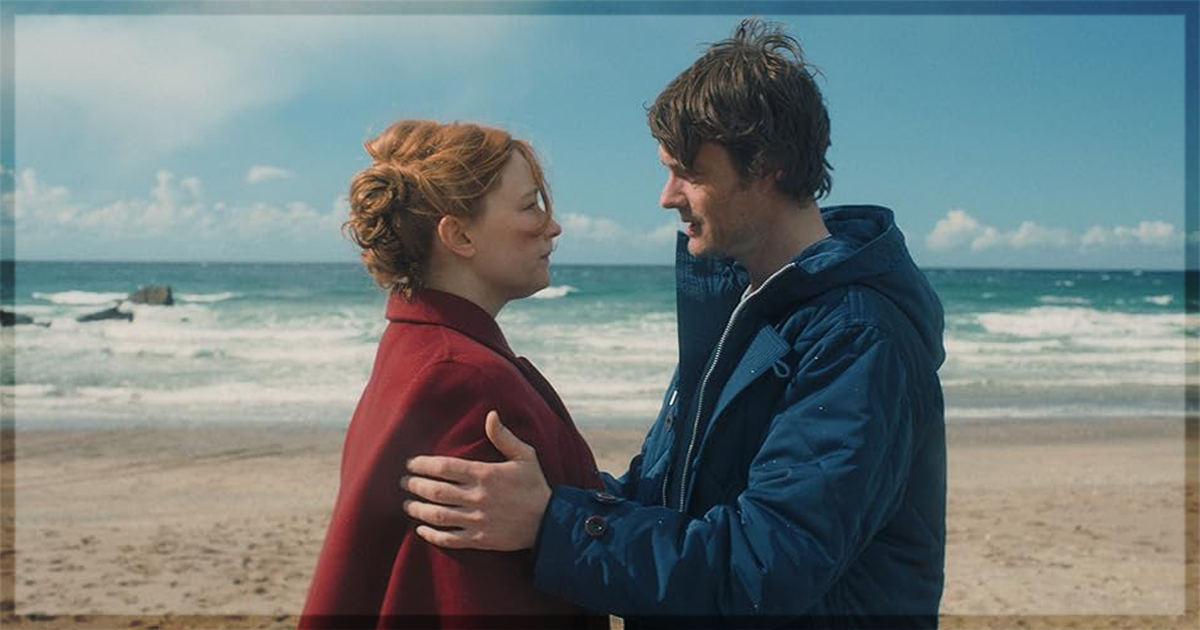
After a decade apart, the two coincidentally reunite when Patricia checks in at the cornish hotel that Idris runs. Over the course of a weekend, their history bubbles up, their relationship rekindling. Unfortunately, and unlike the similarly executed Blue Valentine, there are only brief moments between Bennett and Riley that attempt to indicate the closing distance that has existed between them. Good chemistry can shroud a film’s lacklustre script, direction or narrative choices, like a good magician misdirecting the audience with charm. Alas, here this is not the case, as there’s not enough chemistry between them to fill the vacuum that is left by the improvised script.
Not to imply there is no charm at all within the relationship. Riley and Bennett are established actors and they have naturally attractive movie star charisma which creates some, albeit sparse, pleasing moments that solidify their character traits. When Riley’s Idris first encounters Patricia, one of the next scenes sees him shaving, in an attempt at reinvigorating himself. He says to girlfriend Louise (Marisa Abela) it’s because he is turning 40 and wants to look good, but we are acutely aware that this change only occurs after his encounter with Patricia.
It’s a shame that some of these slightly more subtle moments get overshadowed by clunky exposition, stilted dialogue and strange character decisions. It makes the film feel unnatural, especially in how much time Patricia and Idris spend together “catching up”. This is in spite of Louise’s presence, which only leads to a single moment of conflict which exists, not because of the obviously blossoming relationship between estranged lovers, but simply because Idris is drunk. The way the plot progresses makes everything within the film feel false, as impulsive ideas become realised on screen without rhyme or reason.
Nonetheless, it’s admirable that a film like this, which was shot with minimal budget over six days, still has a mostly coherent narrative, even if it is quite slapdash and shallow. However, between this brief shooting window and a chaotic directing style, it doesn’t feel like any allowance was made for the writing to be adjusted retrospectively, in light of any new improvised material that the actors have come up with after the fact. None so much as a reveal in the final scenes for why the couple originally separated, which re-contextualises the prior two acts, leading to further exasperation at the script as it drops this inauthentic bombshell.
At only 82 minutes long this British indie is unassuming and harmless, but it can be quite uneven. There’s only a vague sense to the characters, who seem defined by broad strokes listed on a character sheet rather than the lead actors having found their rhythm within the roles prior to shooting. This ‘scriptment’ malarky is a nice idea in theory, but it doesn’t pay dividends. Adams wants authenticity but he is trying to manufacture lightning in a bottle, which by its own definition, can’t be synthetically produced.
She is Love is available to stream or purchase at your digital retailer of choice.
You might also like…
