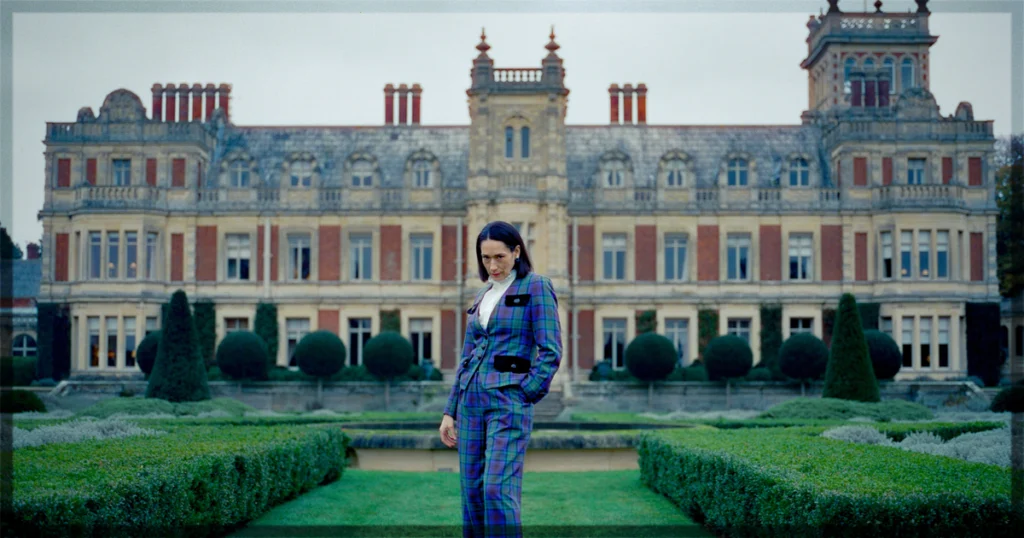
When the screening I attended of Colors of Time finished, the woman next to me mentioned how unusual it is to see a movie without a whisper of violence in it. She is right: some slightly hurt feelings are as bad as it gets here. But this is not to say the movie is easy, or childish in any way, and the entire plot hinges on a house left derelict after a WWII bombing. But the discoveries in that house, and the attempts of people in the now to understand the people of the past, emphasise the importance of art in building human connection. In other words, Colors of Time is a charming fairy tale positively brimming with kindness, both for its people and for our art.
The abandoned house in northern France sits on land a property developer wishes to turn into parking for a shopping mall, and a large group of heirs – second, third and fourth cousins previously unknown to each other – have been identified as the unwitting owners. Four of them are picked to lead the decision-making process: teacher close to retirement Abdelkrim (Zinedine Soualem), beekeeper Guy (Vincent Macaigne), underappreciated businesswoman Céline (Julia Piaton) and the youngest of them Seb (Abraham Wapler), a photographer who lives in Paris with his grandfather Marcel (François Chattot). The house belonged to Adèle (Suzanne Lindon), a farmer’s wife and mother of three, but enough paintings and photographs are discovered that it’s immediately clear Adèle was much more than that. Ecowarrior Guy especially is uninterested in complying with the property developer’s wishes, while Céline is unimpressed with their assumption that the cousins are too naïve to protect their own financial interests. So the cousins start researching Adèle’s life to see what there is to know about how that art came to be in her possession, and this means we are able to see Adèle’s life for ourselves in flashback, too.
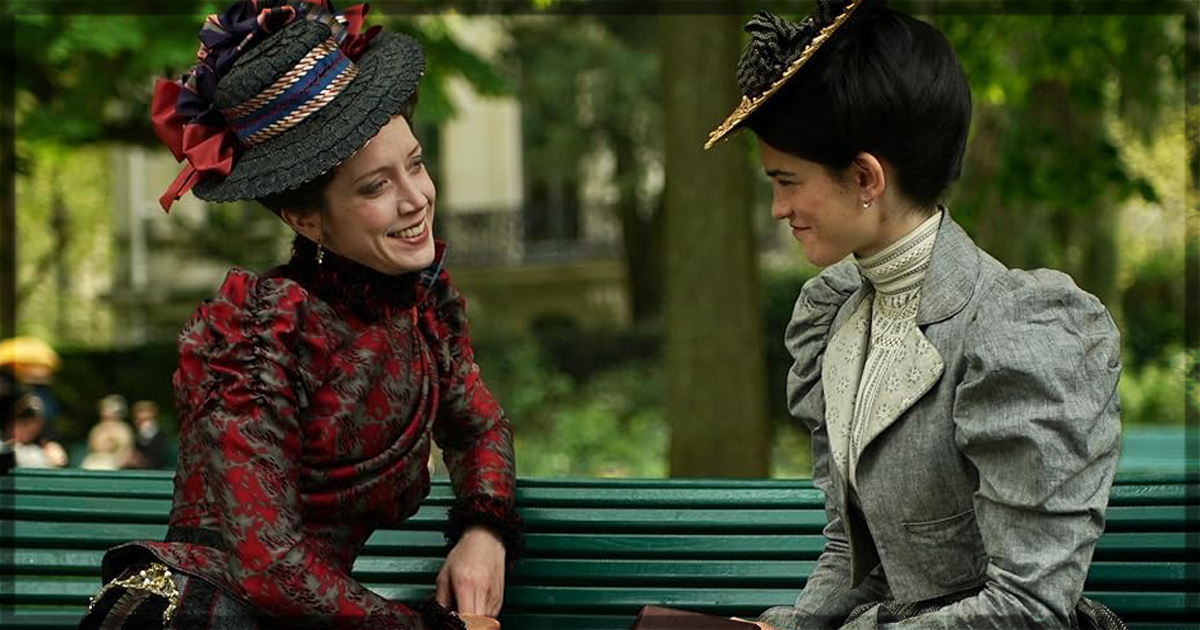
The contrast between life in 1895 and what modern research can turn up is made most apparent when the cousins don’t realise that the letters between Adèle and her boyfriend Gaspard (Valentin Campagne) are so stilted because they were both illiterate, dictating their feelings to someone else knowing someone else would be reading them too. They are sending each other letters because, after the death of the grandmother who raised her, Adèle goes to Paris to try to find her absentee mother Odette (Sara Giraudeau). On the steamboat journey there she meets two cheerful young art students, Lucien (Vassili Schneider) and Anatole (Paul Kircher, who is about five minutes from becoming a superstar) and when things with Odette don’t go as hoped she ends up crashing with them in a small room over a Montmartre bar called The Dead Rat. Its aimable landlady (Catherine Salée) makes the youths help out in exchange for their room and board, which they are delighted to do, and Adèle also begins modelling for Anatole in exchange for him teaching her to read and write. Ms. Lindon manages to convey through body language Adèle’s self-reliance and self-belief, meaning her adventures can be enjoyed without the slightest hint of worry. The world is on her side.
The modern world has its own adventures too. The cousins keep each other informed of developments through zoom calls that allow the viral cat-filter clip from lockdown to be recreated. Seb meets a cute musician named Fleur (Claire Pommet, better known as the singer Pomme) who Marcel is greatly taken with, and all the cousins are intrigued to meet a former student of Abdelkrim’s named Calixte (Cécile de France, always a pleasure), who happens to be an expert in the kind of art found amongst Adèle’s forgotten possessions. In fact the core four become such good friends that Guy’s suggestion they take ayahuasca together in the farmhouse is actually a great idea, not just because it gives Seb an impossible breakthrough that should not be spoiled under any circumstances. It’s such a good plot twist by director Cédric Klapisch, who co-wrote the script with Santiago Amigorena, that a very large disclaimer precedes the end credits. It also provides a sense of romance and excitement that a more so-called ordinary life might be seen as lacking. This means the thrill of the potential discovery adds extra urgency to the now closely bonded cousins’ attempts to figure out Adèle’s life. Though by the end a couple further plot twists are teased at, too.
Mr. Klapisch excels at this kind of complicated ensemble movie. His The Spanish Apartment trilogy shows the shifting romances and friendships of a group of young international students set in five different cities over twenty years, for just one example. Here the sands of time are handled with a light expertise that makes it all feel very easy. It is not, of course: you have to be very able to create the scene where Odette takes in the body language between Adèle, Anatole and Lucien with a single glance and makes a few comments so kind and thoughtful that they permanently alter Adèle’s opinion of her for the better. It’s not just a gentle knowledge of human nature or a serious appreciation of Impressionism that is on vivid display here, but a genuine embrace the fact that everyone really only wants to be loved. Normally that would be embarrassing to write because normally that sentiment is handled in movies with either sarcasm or schmaltz. Instead Colors of Time is thrilled that everyone here has everyone else’s best interests at heart, even if there are some disagreements about what those might be. Its understanding of how art is made and the importance of figuring out how others see the world is its bedrock, from the funny opening scene of a model posing for Seb in front of Monet’s Water Lilies to the flashbacks which show how the first Impressionist paintings were admired, or not, by the critics of the day. But the movie’s beating heart is not the art people leave behind, but people, and the way we look after each other. French society still tries very hard to put its people first, and the communal solidarity as an absolute given in both timeframes is extremely appealing to audiences used to a me-first culture. Abdelkrim’s retirement, which Seb insists on documenting, is the kind of lifetime vindication many people dream about but very rarely happens. He is understandably reduced to tears.
This is all such a heartwarming fantasy critics are reduced to using words like ‘heartwarming’ to talk about it. But good things should happen to good people, and good movies like Colors of Time should be given a whole heap of praise. It’s probably not perfect, but I didn’t notice. I was too busy hoping everything would work out for everybody. And isn’t a work of art that makes you feel better all you really want?
Colors of Time is now in limited theaters.
Learn more about the film at the IMDB site for the title.
You might also like…