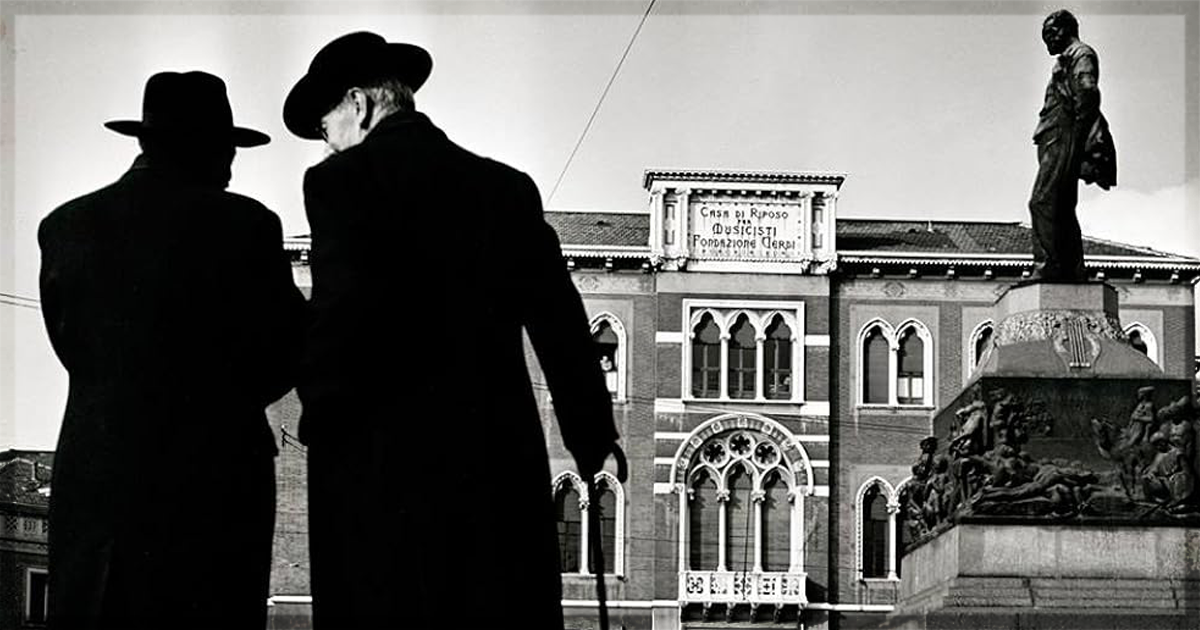
Giuseppe Verdi may have been dead for the past 124 years, but his legacy as Italy’s greatest 19th century opera composer is as alive as ever on stages around the world. Viva Verdi!, however, the documentary by director Yvonne Russo, shows another side of his legacy in music education and pastoral care for artists. Russo’s camera explores the Casa di Riposo per Musicisti – literally, “rest home for musicians” – that is colloquially called Casa Verdi. The composer, married to retired opera singer Giuseppina Strepponi, began planning this residence in 1896 to become a group home for retired musicians to live out their days in peace and art. After willing his fortune to see it completed, his commitment to humanity and artistry lives on over a century later.
Casa Verdi’s residents range in age between 77 and 107; one interviewee in his mid-80s remarks he is among the youngest set. These include opera singers, ballet dancers, instrumental musicians, conductors, and composers – mostly from Italy, but some from the United Kingdom and Japan – who, upon ending their international careers, need a place to live with dignity, safety, and freedom to continue their artistic development. This not only includes their own practices and pressure-free recitals for fellow residents but mentoring the next generation of musical artists who come from around the world to learn from their expertise.
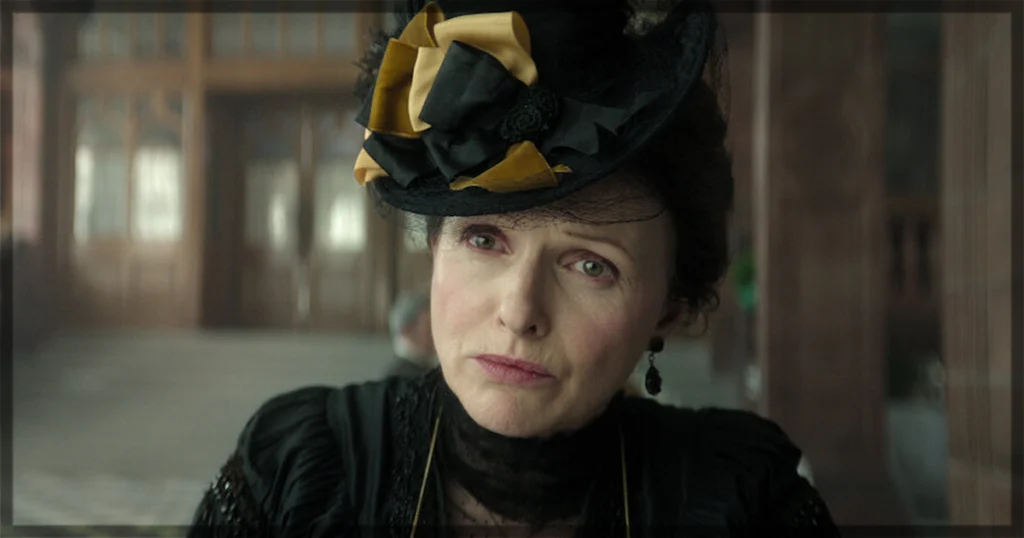
Viva Verdi! bursts with intimate scenes exploring life in the Casa. Through talking heads and historical footage and images, the residents introduce themselves, their long careers, and their attachment to the place, often fostered by decades on the operatic stage (one aged opera singer reminisces fondly of his Metropolitan Opera debut alongside the late superstar tenor Luciano Pavarotti). None of these singers reached Pavarotti’s superstar status, but all were devoted to the art of music, making it their life’s purpose. This calling continues in retirement, where they continue practicing their instruments for hours, teaching their students, bursting into song in the corridors, and participating in sharings for their companions.
These voices – both in testimony and song – are the documentary’s most moving aspect. While some of the luster may have left their voices, they have trained to such a high degree that achingly beautiful music comes naturally to them. The history and rich life conveyed by their voices is captivating; Viva Verdi! gives viewers around the world, far from Milan, a chance to share the gift they give.
Viva Verdi! also stresses the importance of legacy and passing down skills and expertise, just as Verdi created this home for those who came after him. In one scene, a retired baritone coaches an early-career soprano on the dramatic performance abilities needed to sell classical Italian opera. She is merely rehearsing a passage of recitative – singing that connects larger set pieces like arias (solos), duets, or ensembles and largely conveys plot or emotion that the ensuing set piece then elaborates on. But even within this short segment there is high emotion, a change from happy reflection to a desperate challenge. The teacher demonstrates, and the student responds perfectly, her performance taken to the next level.
As a human and composer, Verdi has never been known just for the operas he created, even if those rank among the best in the canon. For instance, in the middle of his career in 19th century Italy, “Viva Verdi!” (“Long live Verdi!”) was a rallying cry that expressed support not only for the beloved composer of Il trovatore, Don Carlos, Aida, Falstaff, and more great works, but also support for the peninsula’s burgeoning unification movement (“Verdi” could also be taken as an acronym for Victor Emmanuel, Rei d’Italia – King of Italy – when such nationalist sentiments were at odds with colonial and regional forces; Verdi himself was a quiet supporter of Italian unification). This identification with social movements was not just linked to state politics; Verdi also worked social issues into his opera, from the double standards facing women (including his wife) in works like La traviata to abuses of power among a country’s leaders in Rigoletto and Un ballo in maschera. Taking this historical context into consideration, Viva Verdi! draws a clear line through his work in his lifetime to his legacy now.
Clocking in at a mere 78 minutes, Viva Verdi! is an impressionist collection of scenes and stories. It barely scratches the surface of the many lives that have called it home in their final chapters, but it still manages to share many vibrant personal and professional memories. There are few more special places in the world than a place where one can retire with dignity, pass on their hard-learned arts to the next generation, and continue to practice their crafts in their twilight years with no pressure or expectations except their own continual drives for improvement. This is a house built and sustained with love, in the service of art. After watching Viva Verdi!, it is hard to imagine a higher purpose on earth. Producers Russo, Christine LaMonte, and Ron Simons have captured it and its inhabitants with vivacity and affection, cancelling out all flaws in its rapid-fire coverage.
Viva Verdi! treats its subjects, its historic patron, and the art of music – from its classical and operatic forms to improvisational electric guitar crossovers – with an openhearted respect. Music has changed and moulded these residents’ lives; it is only right that they can finish their days in a place that honours its magic and passion. This beautiful, life-affirming documentary will move the most jaded souls. “Among my works,” Verdi said before his death, “the one I like best is the home that I have had built in Milan for accommodating old singers not favored by fortune, or who, when they were young, did not possess the virtue of saving… that home is truly my most beautiful work.” Viva Verdi, indeed!
Viva Verdi! will soon screen at the Adirondack Film Festival.
Learn more about the film, including how to watch, at the official website for the title.
You might also like…