Hasan Hadi’s The President’s Cake is a difficult film to watch. For 105 minutes, the Iraqi filmmaker’s directorial debut puts us in the middle of Saddam Hussein’s despotic reign and shows us harsh realities that many Western viewers are unfamiliar with. Even with Iraq’s invasion of Kuwait and economic sanctions imposed on the country by Western powers, the dictator still wants his citizens to celebrate his birthday. With this coming in two days, a soldier masquerading as a “professor” draws the names of students who will be tasked with baking a cake for the President and bringing him fruit in honor of their leader’s latest trip around the sun, despite him directly impoverishing his people.
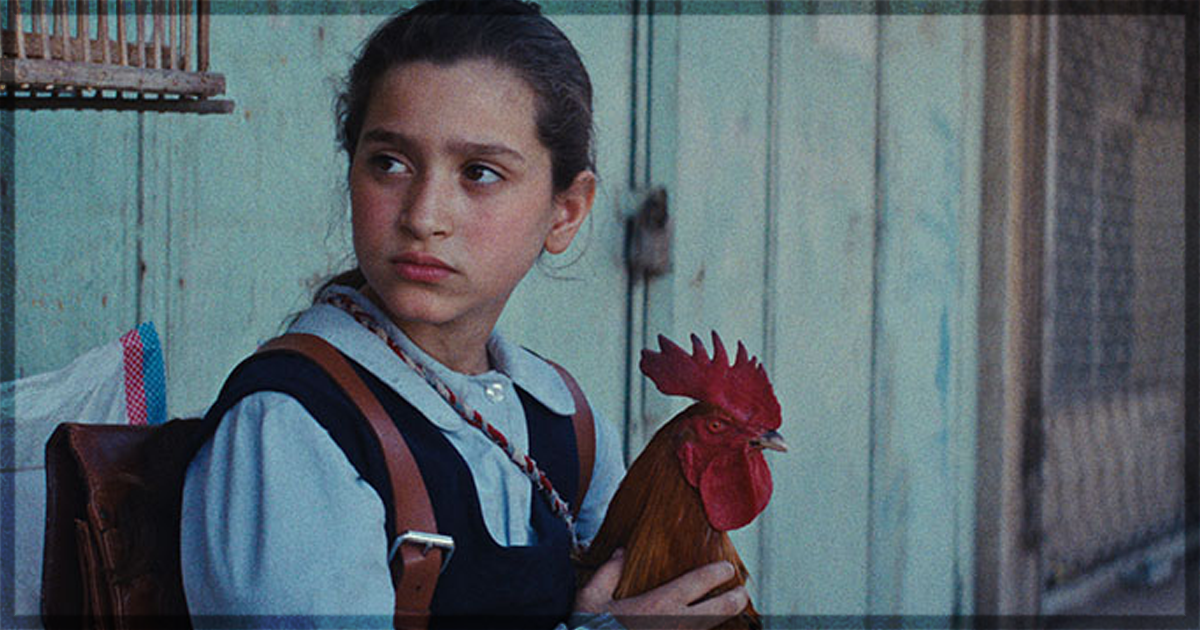
The students drawn are Lamia (Baneen Ahmad Nayyef) and Saeed (Sajad Mohamed Qasem), who must now gather ingredients to bake the ceremonial cake or face severe punishment. However, Lamia has very few means even to afford the ingredients for a cake. Living with her grandmother Bibi (Waheed Thabet Khreibat) and a rooster named Hindi, the young girl is being sent into foster care, but leaves her grandma’s side when they arrive in the city, knowing what will happen to her. It’s there that she meets up with Saeed to garner (or steal) the list of ingredients that will allow them to bake the cake and avoid any severe torture.
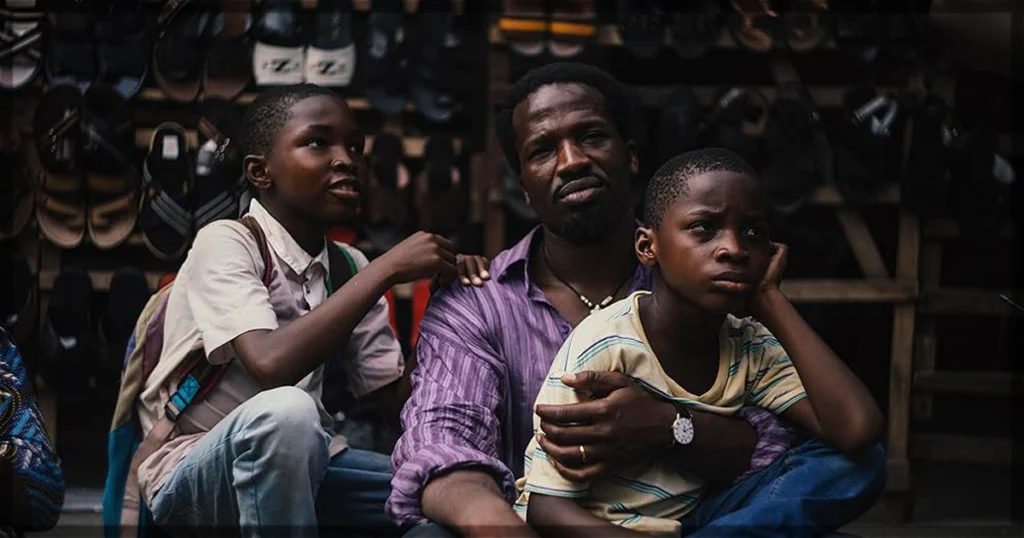
The film then follows both characters in a neorealist light, as the digitally shot photography by Tudor Vladimir Panduru deftly imitates the emulsion of 16mm film and observes the children navigate a desolate environment filled with absolutely horrible people. Some of it is slightly (but darkly) humorous, but the bulk of the film makes you sit with the violence Hussein inflicted upon his own people, and the constant climate of fear and paranoia they live in. Some will argue that children don’t know the full extent of the dictatorship and live in a relatively protective bubble. However, just as Akinola Davies Jr. illustrated with My Father’s Shadow, this cannot be further from the truth.
Children are much smarter than adults think. They see the world differently, yes, but the way in which they extract information might be even more powerful than when we grew up. Lamia is entirely cognizant that she lives in a dictatorship, that she is forced to do something against her will, and that if she can’t garner the ingredients to bake the cake, the unthinkable could happen. It’s terrifying, and the race against time thus feels urgent and raw. But the tension builds naturally, through exchanges Lamia and Saeed have with horrible people, who are consistently trying to use the children (some go so far as to exploit them) for their own benefit. One of them even brings Lamia to a cinema, as she’s desperate for baking powder, but the man’s intentions are not benevolent, and the mounting anxiety that rises as we know full well what could happen is too much to bear.
Even when Hadi stages scenes that are lighter in nature, the spectre of Hussein’s regime is still present, and the resulting feeling of unease never goes away. It leads to a shocking conclusion that many will see coming, but it still doesn’t diminish the film’s emotional impact. The environment Lamia lives in is unsustainable, and a sharp contrast to the luxuriant palace Hussein inhabited, and the incredible birthday party they threw in his honor. The political message, through Hadi’s film, is thus heard loud and clear, and once again draws parallels to what is currently unfolding today (a lavish movie premiere of one of the most expensive propaganda films ever made occurring just a few days after an American citizen was shot in cold blood by ICE agents), intentionally or unintentionally so.
It also helps that both child actors are incredible, and the precise blocking creates a tangible sense of dread throughout the picture. Lamia’s quest is futile, and following Hussein’s propaganda doctrine makes a peaceful life impossible. However, by paralleling Bibi’s journey to reunite with her granddaughter after she loses sight of her, which ends in tragedy, the story draws a profoundly moving portrait of resilience in the face of oppression, offering hope that the protagonist might find solace amid total inhumanity. It will be difficult, but Lamia has proven herself capable of holding her own in situations no child should ever have to face.
Hadi confronts us with the horrors of Hussein’s reign and asks viewers to reflect on the true cost of fascism, even as he does so with a relatively humanist light and prefers a more direct filmmaking approach than the impressionistic journey of My Father’s Shadow. Both The President’s Cake and Davies Jr’s film treat the subject of oppression through the perspective of children who are doing everything they can to survive, even when the odds are stacked against them. Both are vastly different in form and message. All are worth your time, because we must bear witness to the atrocities that were committed throughout history to ensure they don’t repeat themselves. Sadly, it seems to be the case…
The President’s Cake is now in limited theaters.
Learn more about the film at the IMDB site for the title.
You might also like…